Podcast Promotion

How To Promote Your Podcast? (Step-by-StepPlaybook + Templates)

Podcasting isn’t just about recording — it’s about being heard. With millions of shows competing for attention, the key differentiator in 2025 is strategic promotion.

Whether you’re starting from scratch or growing an existing audience, this playbook covers every step — from pre-launch setup and organic marketing to paid amplification and analytics.

You’ll also find ready-to-use templates, KPI benchmarks, and FAQ answers to help you master podcast growth in today’s competitive environment.
Podcast Promotion: The Core Principles

Every successful podcast balances two growth pillars:

  • Discoverability: This is how new listeners find you. Strategies here include optimizing for SEO, submitting to directories like Apple Podcasts, Spotify, and Google Podcasts, and using keywords in your podcast script, titles, and show notes.
    • Tactics: Episode SEO, cross-promotions, social snippets, collaborations.
  • Retention: This is how you keep listeners coming back. Retention depends on the quality of your content, consistent podcast structure, and building a loyal listener base through email marketing and community engagement.
    • Tactics: Engagement emails, community groups, audience shoutouts, and feedback loops.

Think of discoverability as marketing, and retention as brand loyalty — you need both for sustainable success.

Audience-First Approach: Niche Mapping & Listener Persona

Your podcast’s success depends on knowing exactly who you’re talking to. Define your target audience using two evaluation criteria:

  1. Reach Potential – How large is the audience segment? For instance, “new podcasters” (broad) vs. “female entrepreneurs starting podcasts” (focused).
  2. Loyalty Score – How likely are they to engage repeatedly? Niches with strong community culture (e.g., fitness, spirituality, or pop culture fans) often have higher loyalty.

Once you define your listener persona — age, habits, motivations — you can craft better podcast names, episodes, and promotional strategies that directly appeal to them.

Pre-Launch & Launch Playbook (Day −30 to Day +30)

The first 60 days make or break a show. Plan your promotion even before episode one airs.

Episode & Show Checklist

Before launch, confirm the following essentials:

  • Professional audio quality (minimal background noise)
  • 3000×3000 px show cover art (meets Apple’s standards)
  • 30–90 second trailer highlighting the show’s purpose
  • Consistent podcast structure — intro, main content, outro, CTA
  • 50–100 word episode descriptions optimized for SEO
  • Episode metadata (tags, guest names, and links)
  • Compelling podcast script — natural flow with story-driven segments
  • CTA encouraging reviews and shares

Build Your Launch Kit

Preparation matters. Create these assets before launch:

  • Press Release Template — for local media, PR blogs, and podcast news outlets.
  • One-Page Guest Share Pack — includes cover art, hashtags, guest quote graphic, and pre-written captions.
  • Social Creative Templates — for reels, audiograms, and teaser posts.

Launch Calendar & KPI Targets

Map your first month:

WeekFocusKPI Target
Week 1Trailer + Launch Announcement500 downloads
Week 2First 3 Episodes Live200 subscribers
Week 3Guest Cross-Promo25 podcast reviews
Week 4Email Launch + Social Push1,000 cumulative plays

Track KPIs weekly and adjust your promotion strategy.
Organic Promotion Channels

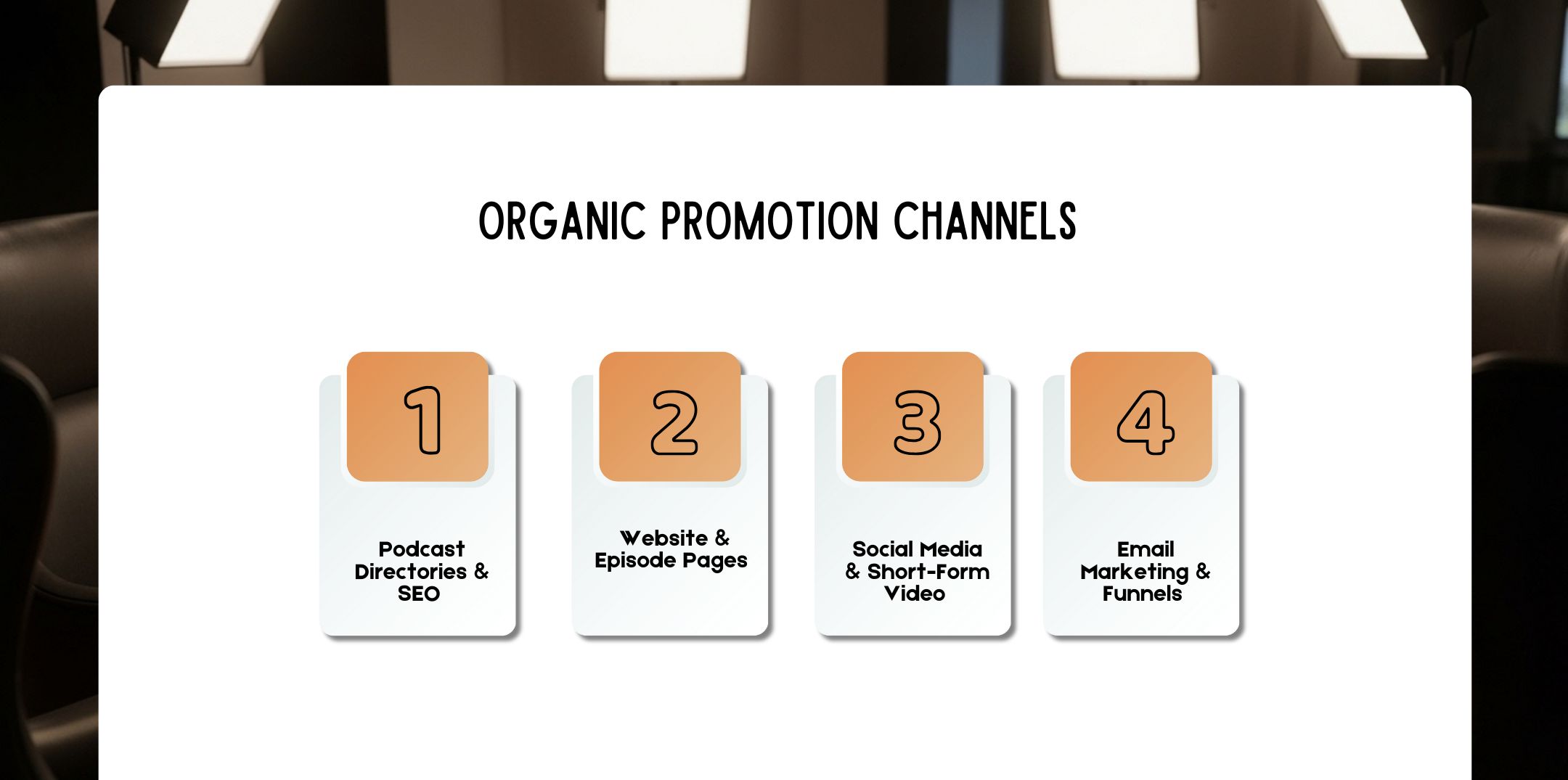
Organic growth is your foundation. Focus on discoverability, credibility, and repeat engagement.

Podcast Directories & SEO

Submit to all major directories (Apple Podcasts, Spotify, Google Podcasts, Amazon, Podchaser). Then optimize each listing.

Episode SEO Checklist:

  • Title includes keyword + intrigue (“5 Podcast Promotion Secrets You’re Ignoring”)
  • Meta description with clear CTA
  • Transcript uploaded for SEO indexing
  • Tags for niche (e.g., “marketing podcast,” “creator economy”)
  • Internal linking between episodes

Website & Episode Pages

Build a dedicated podcast website or landing page.

Each episode page should include:

  • Embedded audio player
  • Episode summary (150–200 words)
  • Full transcript (SEO & accessibility)
  • Timestamped key moments
  • Schema markup for podcasts

Social Media & Short-Form Video

Repurpose long episodes into visual content:

  • Audiograms (sound wave + captions)
  • 1-min vertical clips (Headliner, Descript)
  • Quote videos or bloopers
  • Threads summarizing main lessons on X (Twitter)

Repurposing Workflow:

  1. Identify 3 best soundbites per episode.
  2. Create audiograms and reels.
  3. Schedule one post every 2–3 days.

Email Marketing & Funnels

Email remains a top retention tool.

  • Send a weekly recap email with episode highlights.
  • Segment your list:
    • New subscribers → send a welcome sequence.
    • Loyal listeners → share exclusive Q&As or polls.
  • Include a clear CTA in every email.

CTA Example:

“Enjoyed today’s episode? Hit reply with your favorite takeaway or leave a review — your feedback keeps the mic on!”

Collaboration & Community Growth

Guest appearances are still the most effective organic promotion.

Outreach Email Template:

Subject: Podcast Collaboration Opportunity Hi [Name], I’ve been following [Their Podcast Name] and love your recent episode on [Topic]. I think our audiences align well, and I’d love to propose a guest swap or episode feature. Let’s chat — it could be a great way to cross-pollinate listeners. Best, [Your Name]

Track KPIs: New followers, cross-referrals, website traffic, and episode downloads.

Cross-Promos & Ad Swaps

Partner with other podcasters in your niche for promo exchanges:

  • Mid-roll ad trades
  • Episode mentions
  • Shared newsletter features

Use promo codes or UTM links to measure effectiveness.

Community Building

Create safe and engaging listener spaces:

  • Discord servers
  • Private Facebook or LinkedIn groups
  • Patreon communities for VIP listeners

Encourage discussions, polls, and live listening sessions.
Paid Promotion & Amplification

Use paid ads once your content and branding are solid. Budget Ranges:

  • DIY Indie Podcaster: $50–$300/week
  • Growth Stage: $1,000–$5,000/month

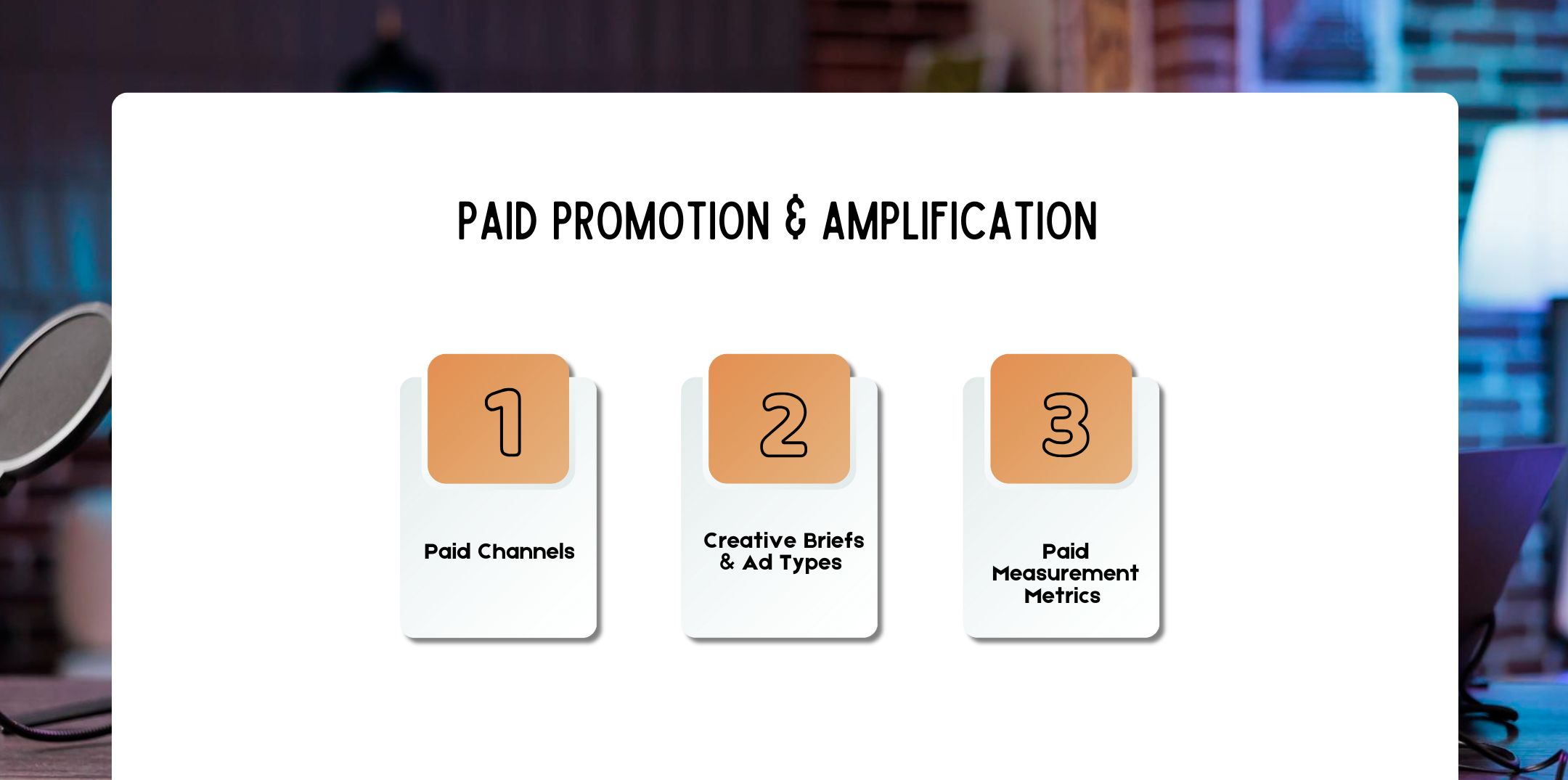
Paid Channels

  1. Spotify Ads — run short audio or video ads targeting listener interests.
  2. Podcast Host Promotions — platforms like Podbean or Buzzsprout offer internal promo slots.
  3. Social Ads — TikTok, YouTube Shorts, Instagram Reels for viral reach.

Pro Tip: Start with Spotify’s self-serve ad platform to test targeting options.

Creative Briefs & Ad Types

  • Trailer Snippet (30s) – best for awareness.
  • Host-Read Ads – most trusted format.
  • Video Teaser (15–60s) – optimized for Reels and Shorts.

A/B Test Ideas:

  • Different CTAs (“Listen now” vs. “Subscribe”)
  • Different visuals (guest face vs. waveform)

Track using UTM links and promo codes.

Paid Measurement Metrics

  • CAC (Customer Acquisition Cost)
  • Incremental downloads per campaign
  • LTV (Lifetime Value) of a listener
  • CTR and retention rate

Repurposing & Distribution Workflows

Transform one episode into multiple assets:

  • Blog post summary
  • 3 reels or Shorts
  • Quote carousel
  • Weekly newsletter excerpt

Tools: Descript, Notion, Canva, Buffer Time Expectation: 3–4 hours per episode for repurposing.

SEO & YouTube Strategy

YouTube remains one of the best discovery tools in 2025.

  • Upload episodes with chapters and engaging thumbnails.
  • Optimize descriptions with keywords and links.
  • Use transcripts as captions for accessibility.

Evergreen vs. Topical Episodes

  • Evergreen: timeless subjects (can be promoted repeatedly).
  • Topical: current events, trends, or news (promote immediately, short window).
  • Maintain a 70/30 ratio for long-term traffic stability.

Measurement, Analytics & Optimization

  • Downloads (7-day & 28-day trends)
  • Listener retention rate
  • Subscriptions and follows
  • CTR from social or email
  • Review count

A/B Testing Matrix

ElementVariation AVariation BResult
Episode TitleQuestionStatement+18% CTR
CTAMid-rollEnd-roll+22% Engagement
ThumbnailGuest faceText quote+15% Clicks

When to Double Down or Pause?

  • ROI > 1.5x: scale up
  • ROI < 0.8x: pause and re-test messaging

Budgeting & Teaming: Tools, Costs & Roles

CategoryDIY RangeAgency Range
Equipment$100–$500$1,000+
Editing$50–$300/ep$500+
Hosting & SEO Tools$20–$50/mo$200+
Paid Ads$100–$500/mo$2,000+

Team Roles

  • Host: Strategy + storytelling
  • Editor: Polishing & sound design
  • Social Media Editor: Repurposing content
  • Paid Ads Manager: Campaign setup
  • Outreach Coordinator: Guest management

Content & Creative Evaluation Criteria

  • Hook in first 60 seconds
  • Keyword-optimized title
  • Clear guest credentials
  • CTA for ratings or follows
  • Shareable soundbites

Pre-Publish QA Checklist

  • Audio & metadata verified
  • Transcripts attached
  • All links functional
  • SEO keywords checked

Expert Tips, Safety & Best Practices

Here are a few tips and best practices for promoting your podcast in 2025 that might be helpful for you in 2025.
  • Legal: Use only licensed or royalty-free music.
  • Release Forms: Always secure guest consent.
  • FTC Compliance: Disclose sponsorships and ads.
  • Accessibility: Include captions and transcripts for every episode.

Templates & Resources

  • Episode SEO Checklist
  • 30-Day Launch Calendar
  • Outreach Email Template
  • Paid Ad Briefing Template
  • KPI Dashboard (CSV)

Case Studies & Real Campaigns

 Here are a few real-world case studies and campaigns on how to promote your podcasts so that you can learn from others.

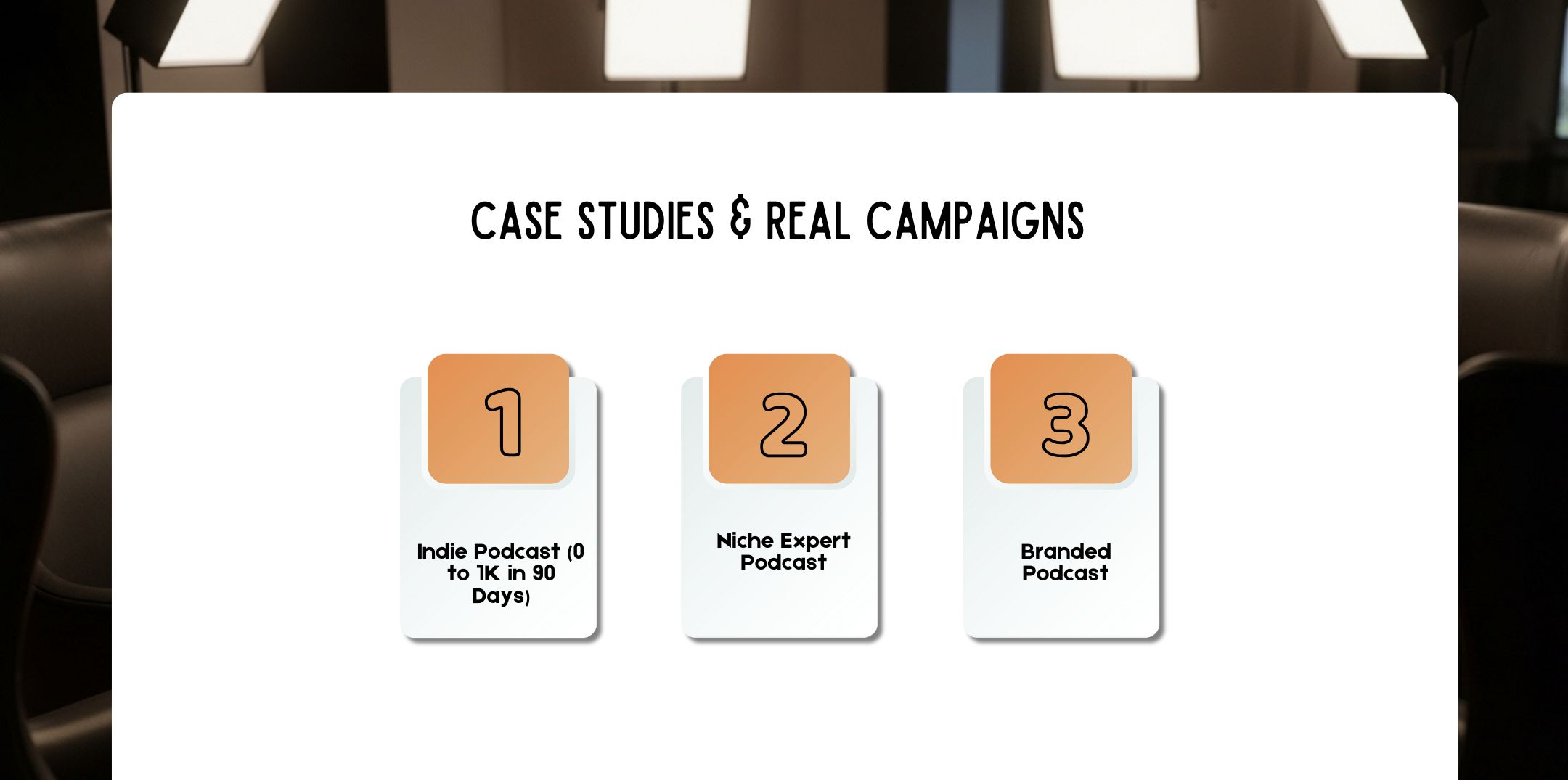
1. Indie Podcast (0 to 1K in 90 Days)

  • Budget: $300
  • Focus: TikTok reels, SEO optimization
  • Result: 1,200 downloads, 50 reviews

2. Niche Expert Podcast

  • Tactics: Guest swaps, newsletter integration
  • Result: 2x growth, 35% higher retention

3. Branded Podcast

  • Tactics: Paid Spotify Ads + agency management
  • Budget: $5k/month
  • Result: 40k downloads in 3 months

Final Checklist & 90-Day Promotion Roadmap

1–4 Weeks:

  • Launch campaign + 3 episodes
  • Secure 25+ reviews

5–8 Weeks:

  • Guest swaps
  • SEO optimization

9–12 Weeks:

  • Paid ads + YouTube uploads
  • Evaluate retention + scale up

KPI Targets: 2,000 downloads, 100+ reviews, 30% retention rate

FAQs

Here are a few questions and queries that others have asked on the topic that you might find interesting at the same time.  

1. How Long Before Seeing Podcast Growth?

Usually 60–90 days. The first 30 days build awareness, while months 2–3 reveal traction through reviews and retention metrics.

2. Do Podcast Reviews Really Matter?

Yes. Apple Podcasts and Spotify use reviews as trust signals for rankings. Encourage listeners to review weekly with CTAs.

3. How Often Should I Post Episodes?

Weekly is ideal for consistency. Bi-weekly can work if episodes are 45+ minutes or highly produced.

4. What’s The Best Length For Podcast Scripts?

A standard script runs 1,200–1,800 words for a 20–30 minute episode. Always write flexible outlines rather than rigid word-for-word scripts.

5. Should I Promote Every Episode Separately?

Absolutely. Each episode deserves unique SEO titles, visuals, and social clips. Treat each as a mini product launch.

6. How Do I Pick Effective Podcast Names?

Choose short, searchable names under 5 words. Avoid puns unless they’re obvious. Use descriptive terms tied to your niche.

7. How Many Guests Should I Feature Per Month?

2–4 is optimal for engagement. Balance solo and guest episodes for content diversity.

8. Is It Worth Paying For Spotify Ads?

Yes, especially for discovery. Start small ($100–$300) and test different hooks before scaling.

9. How Do I Handle Negative Reviews?

Respond politely or ignore. Use constructive criticism for improvement — but never argue publicly.

10. What Are The Best Tools For Podcast Promotion In 2025?

Recording/Editing: Descript, Riverside.fm
SEO & Hosting: Podpage, Buzzsprout
Social Clips: Headliner, VEED.io
Analytics: Chartable, Podtrac
Email & CRM: ConvertKit, Beehiiv

Podcast Promotion 2025

Podcast promotion in 2025 is no longer about “posting and praying.” It’s about strategy, systems, and storytelling. From optimizing your metadata to building a loyal community, every small effort compounds.

Use this playbook, follow your roadmap, and soon, your podcast won’t just be heard; it’ll be remembered and recommended.

author image

Nabamita Sinha loves to write about lifestyle and pop-culture. In her free time, she loves to watch movies and TV series and experiment with food. Her favorite niche topics are fashion, lifestyle, travel, and gossip content. Her style of writing is creative and quirky.

Leave a Reply

Your email address will not be published. Required fields are marked *

Related