How To Add Multiple Photos To An Instagram Story (And Why Your Brand Should Bother)
sibashree bhattacharya, 2 hours ago
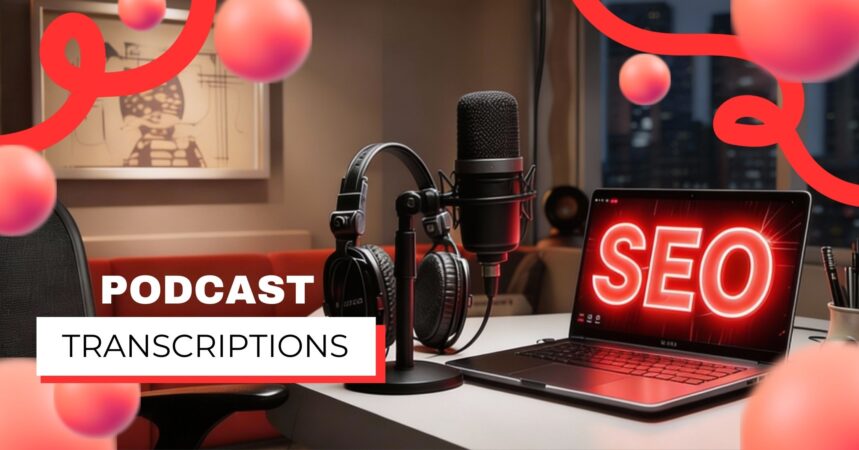
Podcasting has evolved far beyond audio-only storytelling. In 2026, successful podcasts operate as multi-channel content engines, fueling websites, search engines, social platforms, newsletters, and even paid offerings like Podcast Advertising campaigns.
Podcast transcriptions convert spoken audio into written text, unlocking massive benefits across SEO, accessibility, content engagement, discoverability, and monetization.
Whether you’re a solo creator, a branded podcast, or hosting frequent podcast guests, transcription is no longer optional; it’s strategic.
This complete guide will walk you through what podcast transcriptions are, why they matter, how to create them, the best tools in 2026, legal considerations, ROI measurement, and expert-level best practices.
If you’re serious about podcast promotion, long-term growth, and discoverability, this guide is for you.
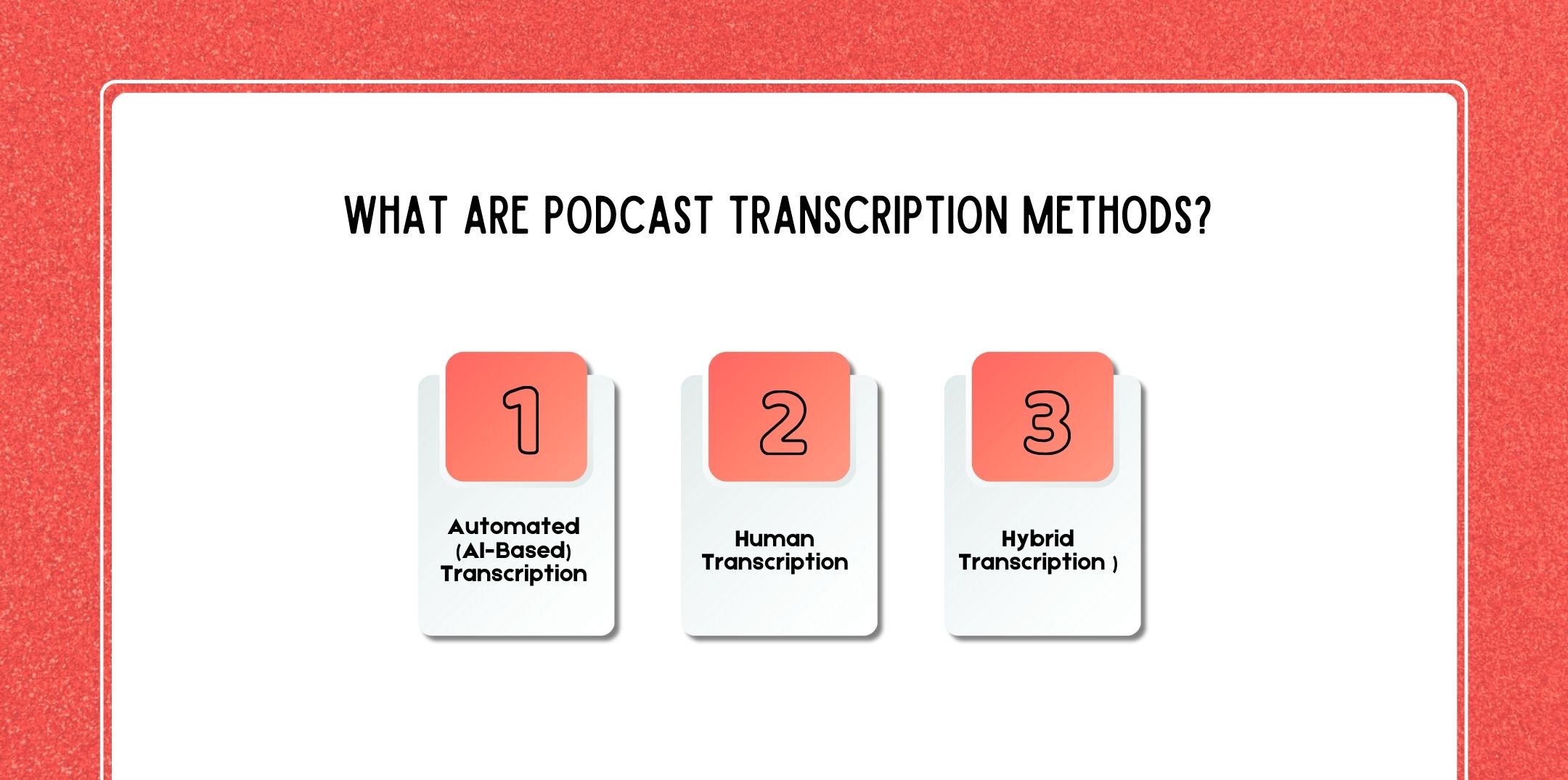
Podcast transcription is the process of converting spoken podcast audio into readable text. In 2026, transcription methods fall into three primary categories:
AI tools use speech recognition and natural language processing to generate transcripts instantly.
These tools are fast, scalable, and cost-effective, making them popular among podcasters managing frequent episodes or multiple podcast names under one brand.
Pros:
Cons:
Human transcriptionists manually transcribe episodes, ensuring higher accuracy, context awareness, and speaker differentiation.
Pros:
Cons:
The most popular approach in 2026. AI creates a draft, and human editors clean it up for SEO, accessibility, and formatting.
Pros:
Podcast transcription impacts every growth pillar of modern podcasting. Let’s break it down.
Search engines can’t “listen” to audio, but they can read text.
Podcast transcriptions allow your episodes to:
A single transcript can rank for hundreds of queries, something audio alone can never do.
Accessibility is no longer a “nice to have.” It’s an ethical, legal, and audience-growth imperative.
Podcast transcriptions:
In many regions, accessible content aligns with WCAG guidelines and evolving digital compliance standards.
A podcast transcript is raw material for endless content:
Instead of starting from scratch, transcripts let you repurpose intelligently, amplifying your podcast promotion strategy.

Transcribing a podcast in 2026 is more streamlined than ever, but quality still depends onthe process.
Here are the steps that you need to follow for a podcast transcription workflow;
Your transcript quality starts at recording.
Use:
Good audio reduces transcription errors dramatically.
Choose AI, human, or hybrid tools depending on your budget and accuracy needs.
Correct:
Structure transcripts using:
Embed transcripts:
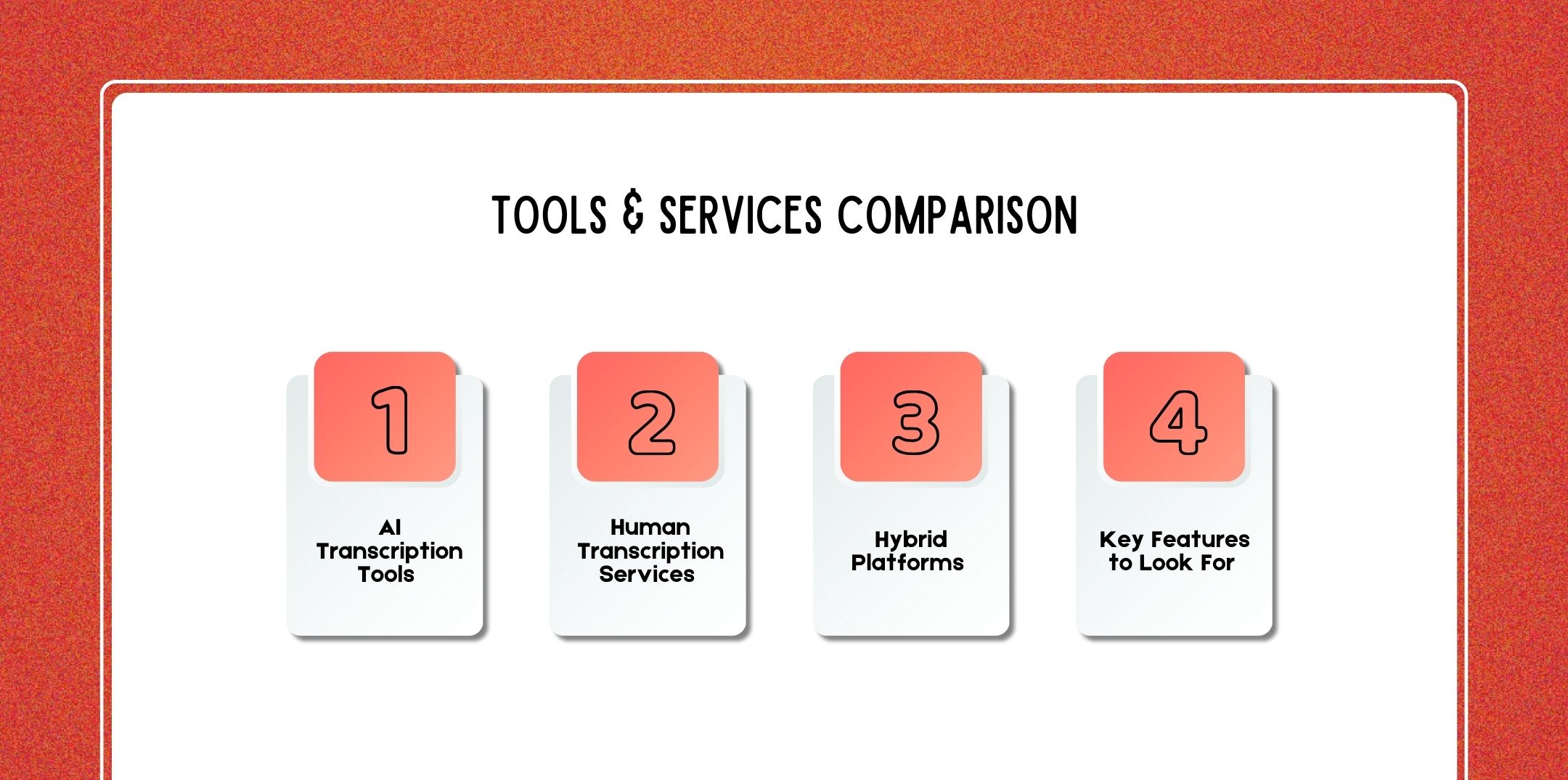
Here are the tools and services for comparison when it comes to podcast transcription tools and services.
When you are creating high-quality transcripts, it requires more than just running your own audio through free software.
With poorly transcribed text filled with different errors that can be confusing or even misleading.
Here are a few best practices to follow;
| Types Of Content | Why Transcription is Important |
| Lectures | Creates searchable transcripts to find key info; enables sharing and reusing knowledge. |
| Speeches | Preserves historical audio in text form for analysis for posterity. |
| Meetings | Produces accessible minutes for attendees; improves productivity by allowing quick review. |
| Interviews | Enables editing to refine quotes; simplifies curation and sharing of key soundbites. |
| Court Hearings | Provide official legal records and ensure accountability and transparency. For specific legal needs, court transcript services are commonly sought by lawyers as an aid for their legal preparation. |
| Conference Calls | Allows participants who missed calls to read the transcript and catch up on discussion. |
| Audiobooks | Makes books more accessible to people with visual impairments or reading disabilities. |
| Social Videos | Creates editable transcripts for repurposing content; increases findability in searches. |
It is very important to measure the ROI of Podcast transcriptions.
Transcripts often outperform standalone blog posts because they are naturally conversational and keyword dense.
Here are a few questions and queries on the topic of podcast transcriptions that others have asked that you might find helpful at the same time.
Podcast transcriptions are written text versions of spoken podcast audio, used for SEO, accessibility, and content repurposing.
AI transcripts average 85–95% accuracy, while human transcription can reach 99%+, especially for complex discussions.
Apple Podcasts doesn’t index full transcripts yet, but you can link transcripts in episode descriptions or host them on your website.
A few common podcast transcript formats include HTML (best for SEO), TXT, PDF, and SRT for captions.
Costs range from free (AI tools) to premium human services, depending on length and accuracy requirements.
Yes. Transcripts dramatically improve keyword coverage, organic rankings, and topical authority.
Absolutely. The transcripts are known to support WCAG guidelines and inclusive content standards.
When you are formatting transcripts for readability, use headings, short paragraphs, speaker labels, timestamps, and bold highlights.
The best transcript tool depends on your needs for AI for speed, human for accuracy, and hybrid for balance.
Ideally, within 24–48 hours of publishing, you should post a transcript to maximize SEO and early discovery benefits.
In 2026, podcast transcriptions are no longer an add-on; they are core infrastructure for sustainable podcast growth.
From SEO and accessibility to Podcast Advertising, podcast promotion, and content repurposing, transcripts turn audio into a long-term digital asset.
If your podcast is serious about growth, credibility, and discoverability, transcription isn’t optional; it’s foundational.

Nabamita Sinha loves to write about lifestyle and pop-culture. In her free time, she loves to watch movies and TV series and experiment with food. Her favorite niche topics are fashion, lifestyle, travel, and gossip content. Her style of writing is creative and quirky.