Instagram Reels Vs TikTok: Which Is Better? The 2026 Platform Playbook
sibashree bhattacharya, 54 minutes ago
Organic video marketing has shifted from basic entertainment to a complex ecosystem run by hyper-optimized retention algorithms.
For content creators, brand builders, and digital marketers, the central debate remains focused on instagram reels vs tiktok which is better for building an audience from scratch.
Toggling between these software platforms is no longer a matter of personal preference. Instead, it changes your viewer demographics, your conversion tracking, and your daily publishing workflow.
While both platforms feature a vertically scrolling video interface designed to capture short attention spans, they are built on fundamentally different content distribution networks.
One serves as a discovery engine built entirely on an interest graph, while the other functions as an extension of a mature social network.
Choosing where to distribute your short-form vertical video assets requires looking at the technical foundations of both Meta and ByteDance.
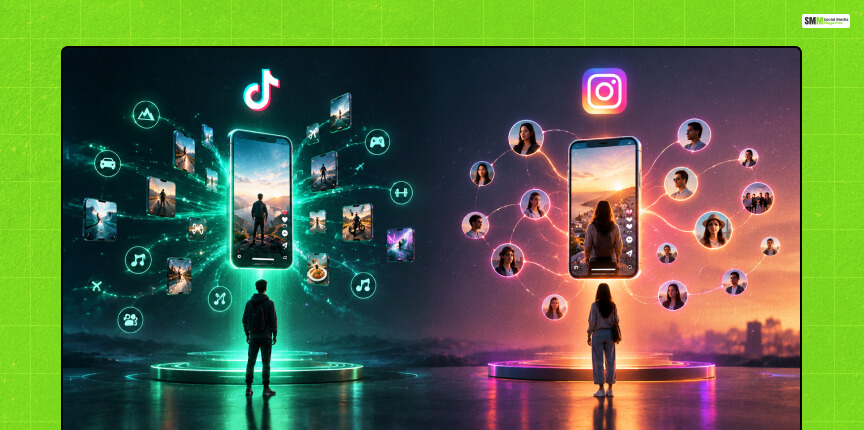
The distribution engine powering your content dictates whether videos trend organically or die in a zero-view vacuum.
Thus, for a full understanding instagram reels vs tiktok which is better, you must analyze how each platform routes a brand-new video to its user base.
TikTok operates strictly on an isolated interest graph. When you upload a video, the platform ignores your current follower count. Then, it drops your media into a testing pool of users who have recently interacted with similar topics.
The video relies completely on performance metrics like watch-time loops, completion rates, and shares.
If the testing pool responds well, the video climbs through tiered distribution levels. This means a brand-new profile with zero followers can achieve a million views overnight. That is if the content hooks the audience.
Instagram Reels operates on a hybrid social graph system.
Meta still factors in your existing profile health, historical account engagement, and relationships with current followers. Furthermore, this is done before pushing your content into the broader cold discovery feed.
While the Instagram Reels tab mimics a pure interest discovery network, your existing social capital on the platform provides the initial foundation.
This architecture makes it easier to retain an audience you have already built. However, it introduces massive distribution friction for newly launched standalone profiles that attempt to achieve immediate viral lift.
Before exploring the technical nuances, look at how both platform setups stack up against your brand strategy, tech stack, and content workflow.
| Feature Dimension | TikTok Video Infrastructure | Instagram Reels Architecture |
|---|---|---|
| Primary Audience Focus | Gen Z dominance with expanding millennial adoption | Millennial and Gen X dominance with high purchasing power |
| Maximum Native Length | Up to sixty minutes for long-form landscape uploads | Up to fifteen minutes for standard creative uploads |
| Search Engine Optimization | Advanced contextual indexing using in-video audio text | Basic keyword metadata tracking with high reliance on hashtags |
| Ad Pixel Infrastructure | High reliance on web events tracked inside the mobile app | Advanced tracking using Meta Pixel and Conversions API |
| E-commerce Capabilities | Direct purchase integrations via native TikTok Shop | Shoppable product tags connected to external e-commerce grids |
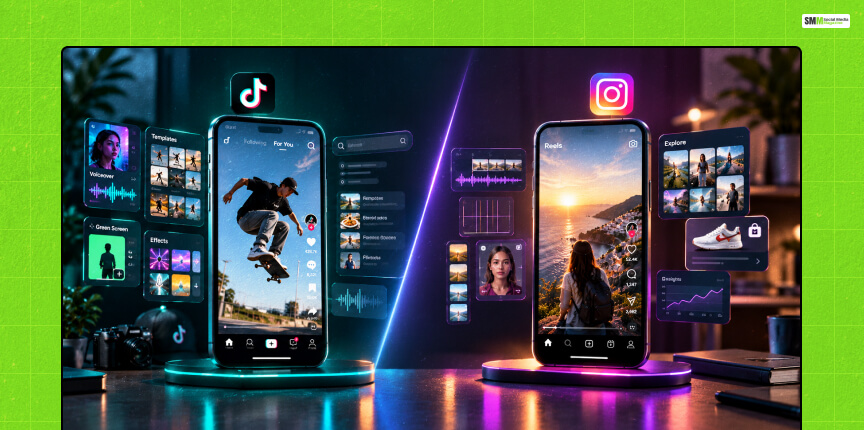
To build a high-performance content engine, you must analyze how specific creative systems perform across both ecosystems.
The choice between these networks shapes your editing habits, asset lifecycle, and asset longevity.
The mechanical editing interface influences your content’s native aesthetic and overall production value.
The speed at which you can cut a video dictates your scaling capacity.
The ByteDance processing platform features a native mobile editing dashboard that functions like professional software.
It features built-in text-to-speech engines, advanced voice filters, and real-time audio lip-syncing capabilities.
Users can access a massive library of user-generated green-screen effects and CapCut templates. Additionally, these let creators replicate viral editing styles with a single tap.
The system functions as a collaborative workbench. Here, culture trends are coded directly into the creation tools.
The Meta editing workflow remains tied to traditional template mirroring.
Instagram has added alignment overlays and precise timeline editing frames. However, the platform relies heavily on users adapting to existing audio tracks.
Instead of creating native sound anomalies, the filter library is built around AR face enhancements and color grading. In addition, it lacks narrative structural video manipulation tools.
Thus, it forces professional editors to use external software suites like Premiere Pro or CapCut before uploading.
Short-form vertical video has evolved into a primary search engine format, altering how search terms are optimized within the platform.
The platform uses an advanced semantic search engine that indexes every word spoken in your video through automatic transcription.
It tracks on-screen text, caption descriptions, and user comment themes to categorize your profile.
Users routinely use the search bar to find product reviews, travel tutorials, and DIY answers.
This gives your older video assets a longer traffic lifecycle through intentional search queries.
Meta relies primarily on visual categorization, static keyword metadata, and traditional hashtag usage to route its Reels.
The discoverability window for a standard Reel is short. Additionally, it often drops off significantly forty-eight hours after posting unless it sustains a high engagement rate.
The platform excels at grouping your media based on broad niche categories rather than answering hyper-specific user search intents.
Moving a casual viewer down a conversion funnel requires a deep ad stack and robust pixel tracking infrastructure.
The platform has committed entirely to native e-commerce via its closed-loop shopping system.
Users can browse products, clip coupons, and complete checkouts through video pins without exiting the video player interface.
While this system drives impulsive purchasing behavior, it can attract a deal-seeking consumer profile.
Furthermore, it requires keeping physical inventory tied directly to your social profile account setup.
Instagram relies on its world-class advertising framework to drive sales.
Instead of a native checkout loop, the platform uses shoppable product tags that link to external platforms like Shopify or WooCommerce.
Combined with the Meta Pixel and Conversions API, this provides a wide variety of tools such as:
As a result, this makes it the preferred choice for premium e-commerce brands.
Choosing your primary video platform depends on your operational targets, human resources, and monetization models.
Deploy your production assets to this platform if you are targeting a Gen Z consumer base. This can also be done if you are building a brand from a zero-follower baseline, or launching a product that fits a viral impulse-buy model.
In addition, It is perfect for creators who want to use raw, unpolished, native mobile storytelling to build a culturally relevant presence.
That is also without relying on existing social circles.
Focus your energy on this platform if you manage an established business, target an audience with high disposable income, or operate a service agency.
It is the optimal choice if you want your short-form media to act as a nurturing system.
This will turn existing followers into high-ticket clients through Stories, direct messages, and long-term brand authority.
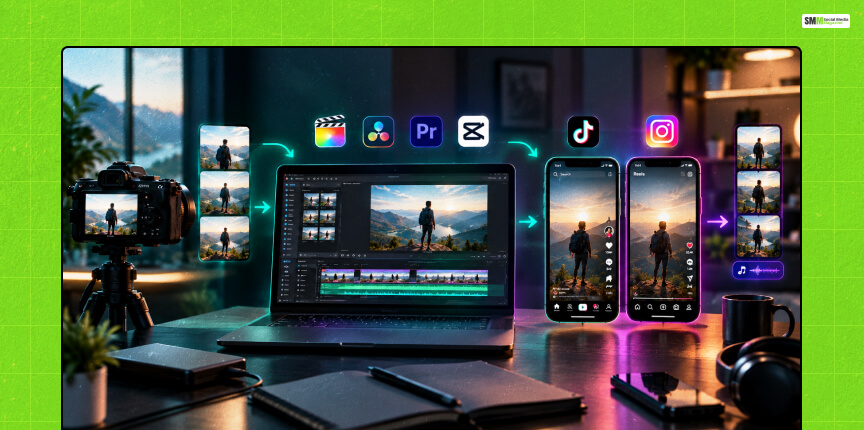
Instead of forcing your brand into a single corner, the best approach is to build a simultaneous production strategy.
You can easily repurpose the same core vertical video asset to capture traffic from both distribution networks without looking like a generic automation script.
To execute this properly, you must record your source footage entirely outside of both apps. Using a high-quality native mobile camera or a mirrorless system will help to maintain a clean source file.
Once recorded, assemble your final timeline cut using standalone desktop or mobile software to keep the video free of platform-specific watermark stamps.
Write your copy descriptions independently, using tailored keyword strategies for TikTok search optimization alongside high-intent topic tags for your Instagram Reels distribution.
Finally, upload the raw file to both networks natively to select platform-specific thumbnails, apply native fonts, and attach appropriate trending audio tracks manually.
The debate over instagram reels vs tiktok which is better reveals that neither platform offers a universal solution for every brand model.
TikTok remains the king of raw organic discovery, viral trend creation, and volume-based digital storefront conversions.
On the other hand, Instagram Reels functions as a powerful tool for visual storytelling, nurturing high-value leads, and maintaining brand safety within an established social framework.
The most effective strategy is to use the creation power of the interest graph to feed the relationship-building strength of your social graph.

Sibashree has been into SEO and eCommerce content writing for more than 9 years. She loves reading books and is a huge fan of those over-the-top period dramas. Her favorite niches are fashion, lifestyle, beauty, traveling, relationships, women's interests, and movies. The strength of her writing lies in thorough research backing and an understanding of readers’ pain points.