5 Benefits Of SEO For Next-Level Business Growth In Europe
Barsha Bhattacharya, 6 days ago
In less than two decades, podcasting has evolved from what once was an esoteric hobby into one of the most powerful forms of media today.
By 2025, over 5 million active podcasts and over 100 million monthly podcast listeners will exist in the world.
Whether you are a creator, entrepreneur, or brand, starting your show can be one of the best ways to reach audiences, display your expertise, and even profit from it.
But one of the very first questions that every would-be host asks is how much it really costs to start a podcast in 2025.
Short answer: It depends on your goals, but the good news is that podcasting can be done on nearly any budget.
In this rundown, we cover the real numbers and what you’ll need to keep costs down from a zero-cost mobile setup all the way to a fully equipped professional studio.
We’ll also provide a free podcast cost calculator and extensive region-based adjustments for the US, UK, India, and EU.
OK, let’s just start with the overview.
| Podcast Level | Startup Cost | Monthly Cost | Ideal For |
| Beginner/Hobbyist | $0-$150 | $0 – $20 | Testing the waters, no big investment |
| Intermediate / Semi Pro | $300 – $800 | $25 – $50 | Creators with regular publishing goals |
| Professional/Business Podcast | $1,000 – $5,000+ | $50 – $250 | Brands, agencies, and monetized shows |
Surprisingly, you can put together a great podcast with less than $500; however, when you’re starting out, recording a studio-quality show is going to cost you in terms of gear, hosting, branding, and editing.
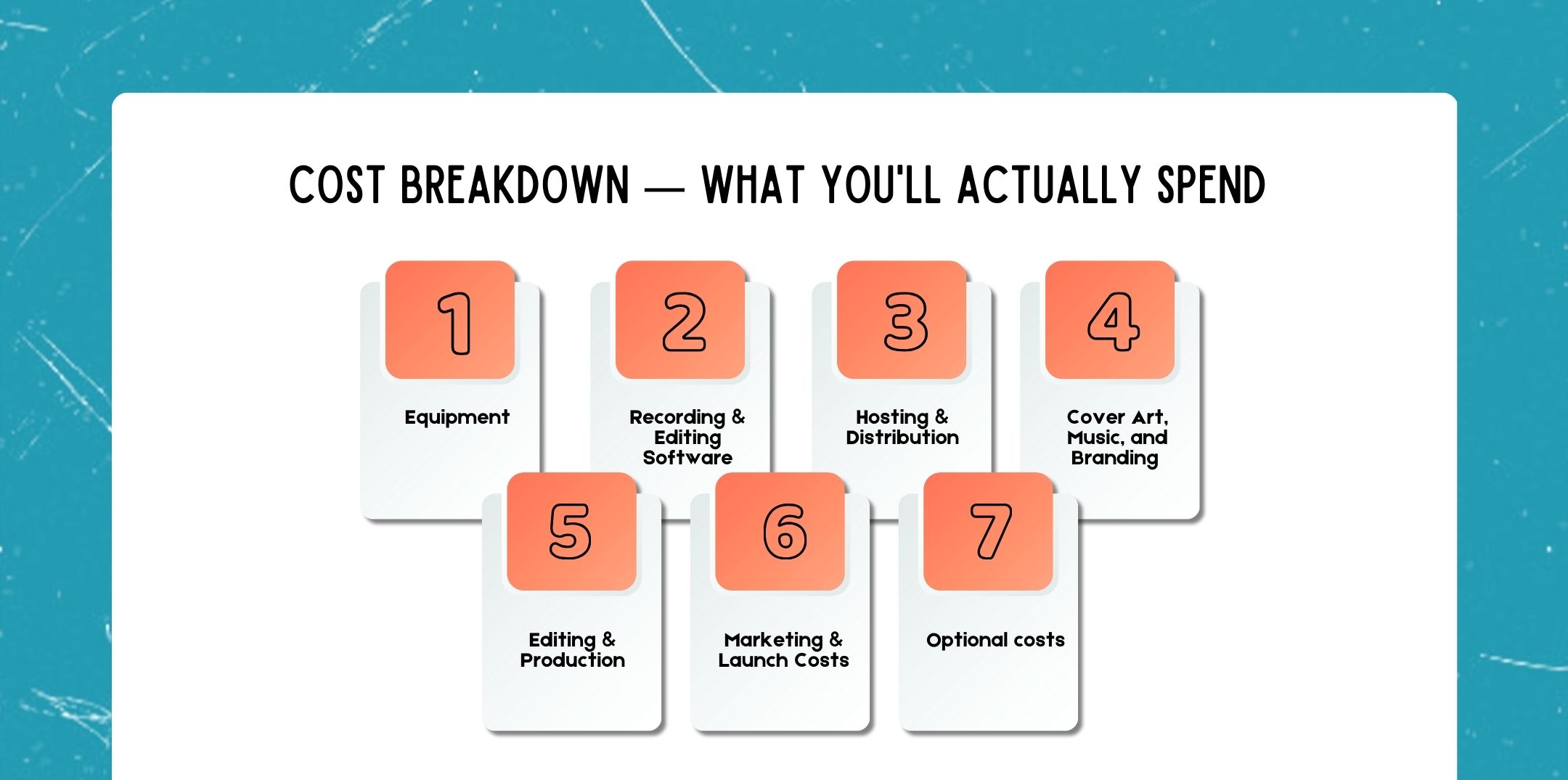
Let’s walk through each category of cost step by step.
Your microphone is the heart of your podcast: the better the mic, the cleaner your audio will sound, and the more easily you can attract and retain listeners.
Even the best podcast script will sound amateurish without quality sound capture.
Budget Levels:
Samson Q2U or Audio-Technica ATR2100x: Excellent plug-and-play USB/XLR mics; really great for home setup.
Rode PodMic, Shure MV7, Elgato Wave 3: Excellent sound control, extremely reliable.
Shure SM7B, Electro-Voice RE20: professional, standard microphones of the industry.
Other must-haves:
Tip: Don’t be stingy with the mic investment-the one investment that impacts audience perception the most.
Estimated Equipment Cost: $100 – $700
To record and edit your episodes, you need a Digital Audio Workstation (DAW).
Free Options:
Paid Options:
AI & Plugins for Clean-up:
Cost of Software (Estimated): $0 – $30/month
You’ll need a hosting platform on which you will publish your podcast, since this can distribute your episodes to Apple Podcasts, Spotify, and other players.
Spotify for Podcasters, Podbean basic plan
Advanced analytics, custom websites, and monetization tools-the norm for most premium hosts.
Average cost: $10 – $30/month
Great podcast cover art is the first impression you give on Spotify or Apple Podcasts.
DIY Options:
Professional Options:
Average Cost: $50 – $400 one-time
You can edit your show yourself or outsource the task to other professionals; in any case, editing can make or break your show.
DIY:
Professional Editors
AI Editing:
Cost of Editing per Month: $0 – $600, depending on frequency.
Of course, it is one thing to launch your podcast and quite another thing altogether to grow it. Marketing helps you to gain regular listeners.
Typical Launch Costs:
Email list tools:
Podcast Promotion Ideas:
Average Cost of Marketing: $200 – $1,000+
You might need to rent space or extra equipment to video podcast or collaborate in person.
This may be enabled, for instance, by computational models.
If one’s budget is particularly tight, it pays to know where each dollar and cent will create the most impact.
| Category | Invest First If |
| Microphone & Audio | You want professional sound from day one. |
| Hosting | You’re ready to distribute on Apple & Spotify |
| Editing software | You like to do all yourself Marketing You already have episodes ready to promote |
| Studio Rental | You’re going for a premium video podcast |
Devote most of the programming to sound quality and continuity with advertising kept at an absolute minimum. Fills every element of an array with the specified value. This is useful in initializing all elements of an array.
These costs will vary considerably according to region: United States: Best access to affordable mics and hosting deals.
The Total Cost of Ownership (TCO) includes all those easily overlooked costs:
Here are a few tried and tested ways to cost cut when starting a podcast in 2025;
Once your podcast has gained enough momentum, invest in better production and editing, and market.
How Do Podcasts Make Money?
Scaling Budget Strategy:
| Feature | Why It Matters | Ideal Rating (1-5) |
| Audio Quality | Defines professionalism | 5 |
| Portability | Great for travel shows | 3 |
| Cost Efficiency | Balances price & value | 5 |
| Ease of Setup | Saves production time | 4 |
| Analytics Access | Supports monetization | 4 |
Compare the top-rated podcast microphone and hosting platforms before purchase using this checklist.
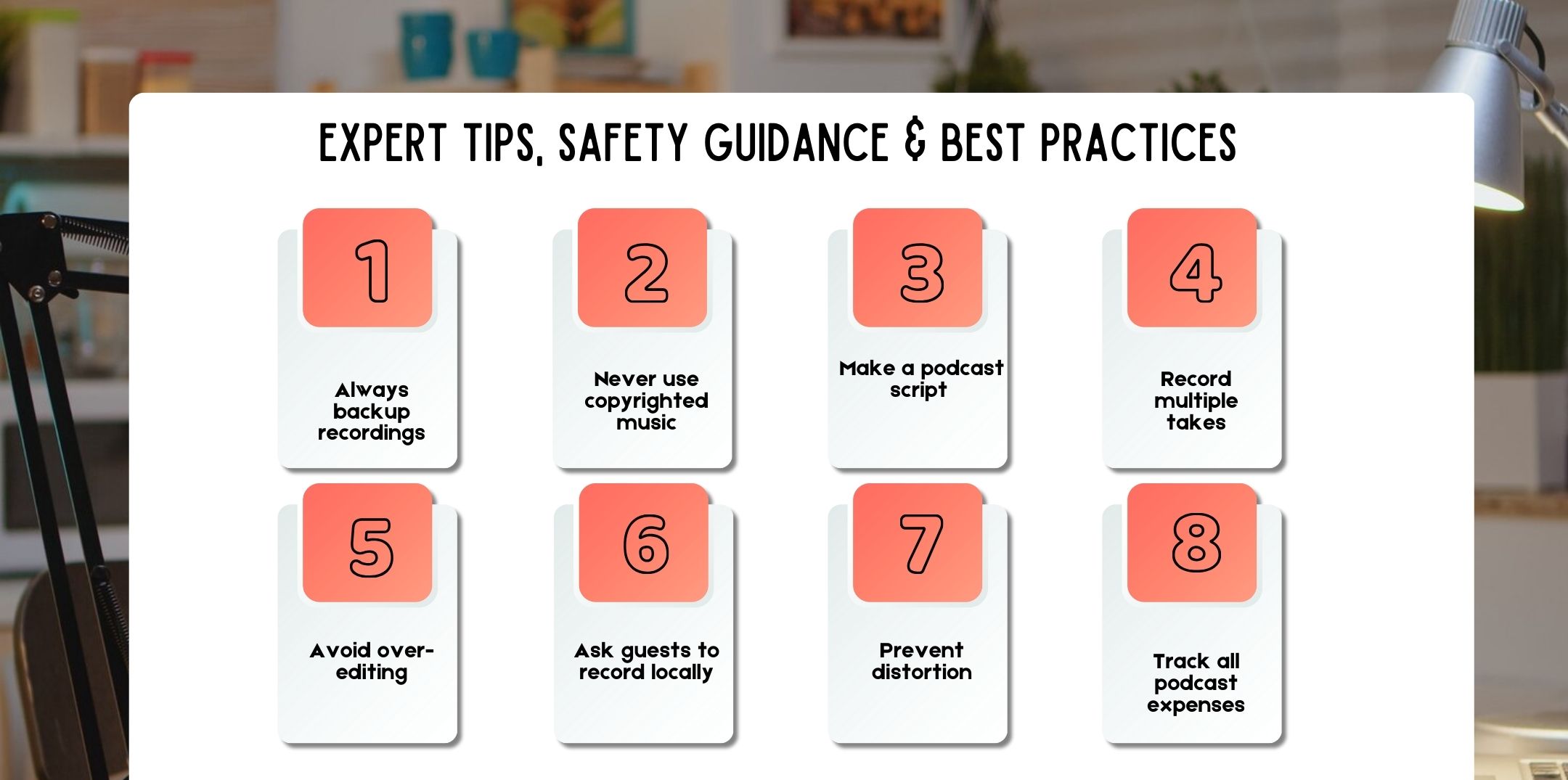
Here are a few tips and safety guides, and best practices that you should know about
Here are a few questions and queries that others have asked on the topic that you might find interesting at the same time.
$0–$50. You can use your phone’s onboard mic, a free app like Anchor, and free hosting.
At least $300–$500 for a good USB mic, good headphones, and paid hosting.
Normally, $10–$30/month for quality hosts like Buzzsprout or Captivate.
No, you can do it yourself with free tools. But pros can save you hours every week.
Yes — software renewals, marketing, ads, and studio rentals.
Usually $50–$150/hour, depending on location and amenities.
6–12 months on average, if you publish on a schedule and promote wisely.
Only for copyrighted music. Use royalty-free or custom-licensed tracks.
The Samson Q2U or Audio-Technica ATR2100x — both under $100 and widely recommended.
Yes, AI can handle noise removal, filler word cuts, and auto-captioning, easing the workload by up to 70%.
Podcasting is one of the most flexible, rewarding creative ventures in 2025. You don’t have to spend thousands to sound professional-just the right mix of strategy, consistency, and smart investments.
Start simple and master your process; grow steadily. A good podcast studio setup, a reliable host, and a clear brand message take you a long way.
Download the Free Podcast Budget Calculator (2025 Edition) to estimate your setup costs, compare mic options, and plan your launch timeline. Because great podcasts aren’t built on money; they’re built on passion, preparation, and a clear voice that connects.

Nabamita Sinha loves to write about lifestyle and pop-culture. In her free time, she loves to watch movies and TV series and experiment with food. Her favorite niche topics are fashion, lifestyle, travel, and gossip content. Her style of writing is creative and quirky.