
How to Get More Followers on TikTok: Proven Strategies for Sustainable Growth
Barsha Bhattacharya, 2 days ago
Digital marketing continues to evolve rapidly, and businesses must constantly adapt to reach audiences effectively.
Among the many advertising platforms available today, Pinterest has emerged as one of the most powerful visual discovery engines for marketers and brands.
In 2026, Pinterest is no longer just a platform for saving creative ideas it is a major driver of product discovery, shopping behavior, and brand engagement.
Millions of users visit Pinterest every day to find inspiration for fashion, home design, travel, recipes, fitness, weddings, and countless other lifestyle topics.
Because of this intent-driven user behavior, Pinterest offers a unique opportunity for businesses to reach people who are actively searching for ideas and products.
For beginners who want to leverage this platform, understanding how Pinterest advertising works is essential.
This comprehensive guide explores everything you need to know about Pinterest Ads in 2026, including how the platform works, the types of ads available, how to set up campaigns, advanced targeting strategies, optimization techniques, and the future of Pinterest marketing.
Pinterest Ads are paid promotional pins that businesses use to promote their products, services, or content to a targeted audience on Pinterest.
These ads appear in multiple locations across the platform, including:
Unlike traditional banner advertisements, Pinterest Ads are designed to blend naturally into the platform’s visual environment. They look very similar to organic pins but include a small “Promoted” label.
Because they appear alongside regular content, Pinterest ads feel less intrusive and often achieve higher engagement rates than standard display advertising.
Users interacting with Pinterest ads can:
This combination of discovery, inspiration, and action makes Pinterest advertising particularly effective for brands focused on visual storytelling and product promotion.
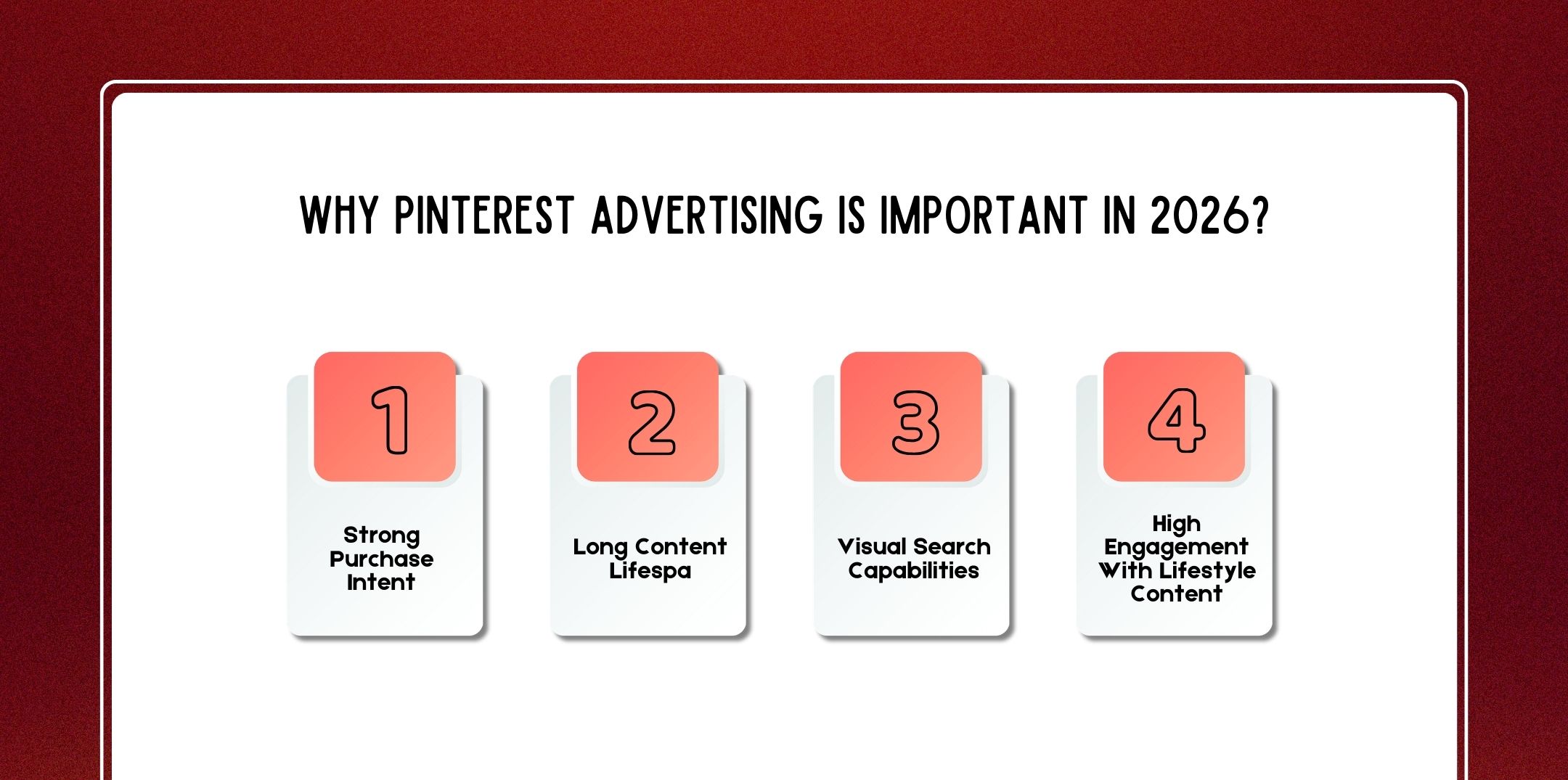
Pinterest advertising continues to grow in popularity because the platform offers several unique advantages compared to other social media channels.
One of the biggest benefits of Pinterest is that users typically visit the platform with a clear intent.
People often use Pinterest to:
This means users are already in a decision-making mindset, making them more likely to engage with relevant ads and make purchases.
Unlike many social media platforms where content disappears quickly, Pinterest pins can remain visible and generate traffic for a long time.
For example:
This long lifespan increases the value of both organic and paid content.
Pinterest operates more like a visual search engine than a traditional social network.
Users can search for content by:
This allows businesses to reach audiences who are actively searching for specific ideas or products.
Pinterest users are highly engaged with lifestyle-related topics such as:
Brands operating in these industries often see strong results from Pinterest advertising campaigns.
Pinterest advertising is based on a campaign management system similar to other digital marketing platforms.
Advertisers create campaigns that include:
Pinterest’s algorithm then distributes the ads to users most likely to engage with them.
The platform evaluates many factors when delivering ads, including:
Because Pinterest collects extensive user behavior data, advertisers can reach highly specific audiences with relevant content.
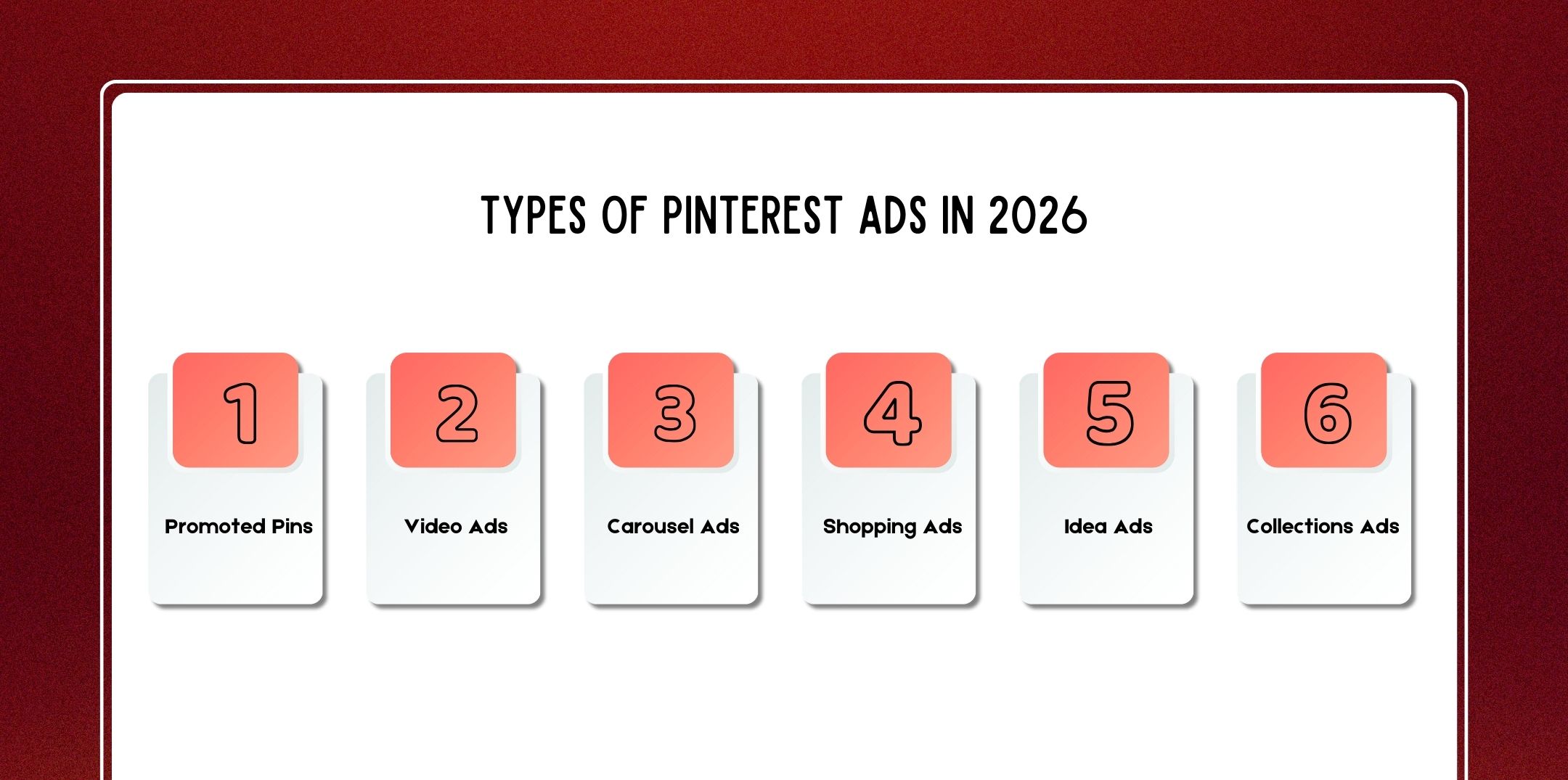
Pinterest offers several advertising formats designed to support different marketing objectives. Understanding these formats helps businesses choose the best strategy.
Promoted Pins are the most common form of Pinterest advertising.
These pins look almost identical to regular pins but receive additional distribution through paid promotion.
Promoted pins can:
They are ideal for beginners because they are simple to create and highly versatile.
Video content continues to dominate digital marketing, and Pinterest supports engaging video advertisements.
Video ads are especially effective for:
Because videos capture attention quickly, they often generate higher engagement rates.
Carousel ads allow advertisers to include multiple images within a single pin. Users can swipe through these images to view additional content.
This format works well for:
Carousel ads allow brands to tell a visual story while promoting multiple items at once.
Shopping ads are specifically designed for e-commerce businesses.
These ads automatically pull product information from an online catalog, displaying:
Users can click the ad and immediately visit the product page, making shopping ads highly effective for driving conversions.
Idea Ads are immersive multi-page formats that combine:
These ads are particularly useful for educational or inspirational content such as:
Idea ads encourage users to spend more time interacting with content.
Collections ads allow brands to showcase multiple related products within a single visual experience.
They usually include:
This format is often used by retailers to promote seasonal collections or curated product sets.
Launching your first Pinterest ad campaign involves several important steps.
To run advertisements, you must use a Pinterest Business Account.
This account provides access to:
If you already have a personal account, you can easily convert it into a business account.
The Pinterest Tag is a piece of code that you add to your website.
This tracking tool allows you to measure important actions such as:
Tracking these actions helps advertisers understand which ads generate results.
Pinterest requires advertisers to select a campaign objective before launching ads.
Common objectives include:
Selecting the correct objective ensures the algorithm optimizes your campaign for the desired outcome.
Audience targeting is one of the most powerful features of Pinterest advertising. You can target users based on multiple criteria.
This includes:
Pinterest users follow various topics such as:
Interest targeting ensures your ads reach users who care about specific subjects.
Keyword targeting allows your ads to appear when users search for particular phrases.
For example:
Using the right keywords helps capture high-intent users.
You can upload customer email lists to create custom audiences.
This allows you to:
Pinterest allows advertisers to show ads to people who previously visited their websites. Retargeting campaigns often produce higher conversion rates because users are already familiar with the brand.
Pinterest offers flexible budget options. Advertisers can choose:
Limits spending per day.
Sets a total campaign spending limit.
Pinterest also offers automated bidding options where the system adjusts bids to maximize results.
Creative design plays a critical role in Pinterest advertising success.
Effective pins typically include:
Your design should instantly communicate value and capture attention.
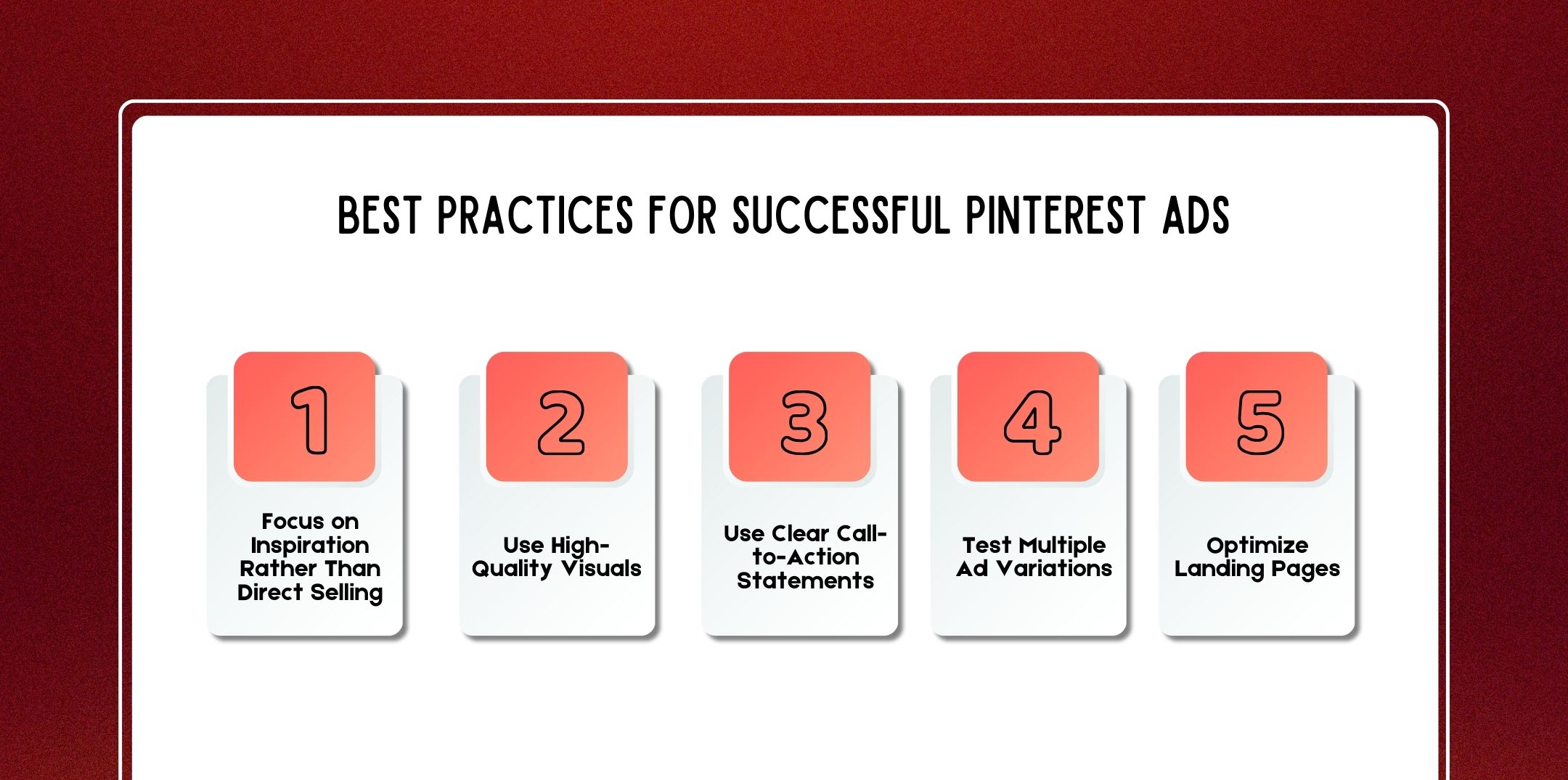
To achieve the best results from Pinterest advertising, marketers should follow several proven strategies.
Pinterest users respond better to inspirational content rather than aggressive advertisements. For example, instead of simply showing a product, demonstrate how it fits into a lifestyle.
Pinterest is a visual platform, so image quality matters greatly.
Use:
Encourage users to take action with phrases like:
Successful advertisers rarely rely on one design. Testing multiple versions allows you to determine which pins generate the best engagement.
You can test:
Your website page should match the promise of the advertisement.
For example:
This consistency improves conversion rates.
Pinterest advertising operates through a bidding system similar to many digital ad platforms.
Costs depend on factors such as:
Common pricing models include:
You pay when someone clicks on your ad.
You pay for every thousand views.
You pay when users interact with your pin.
Pinterest ads are often more affordable than Facebook or Instagram ads, making them attractive for small businesses.
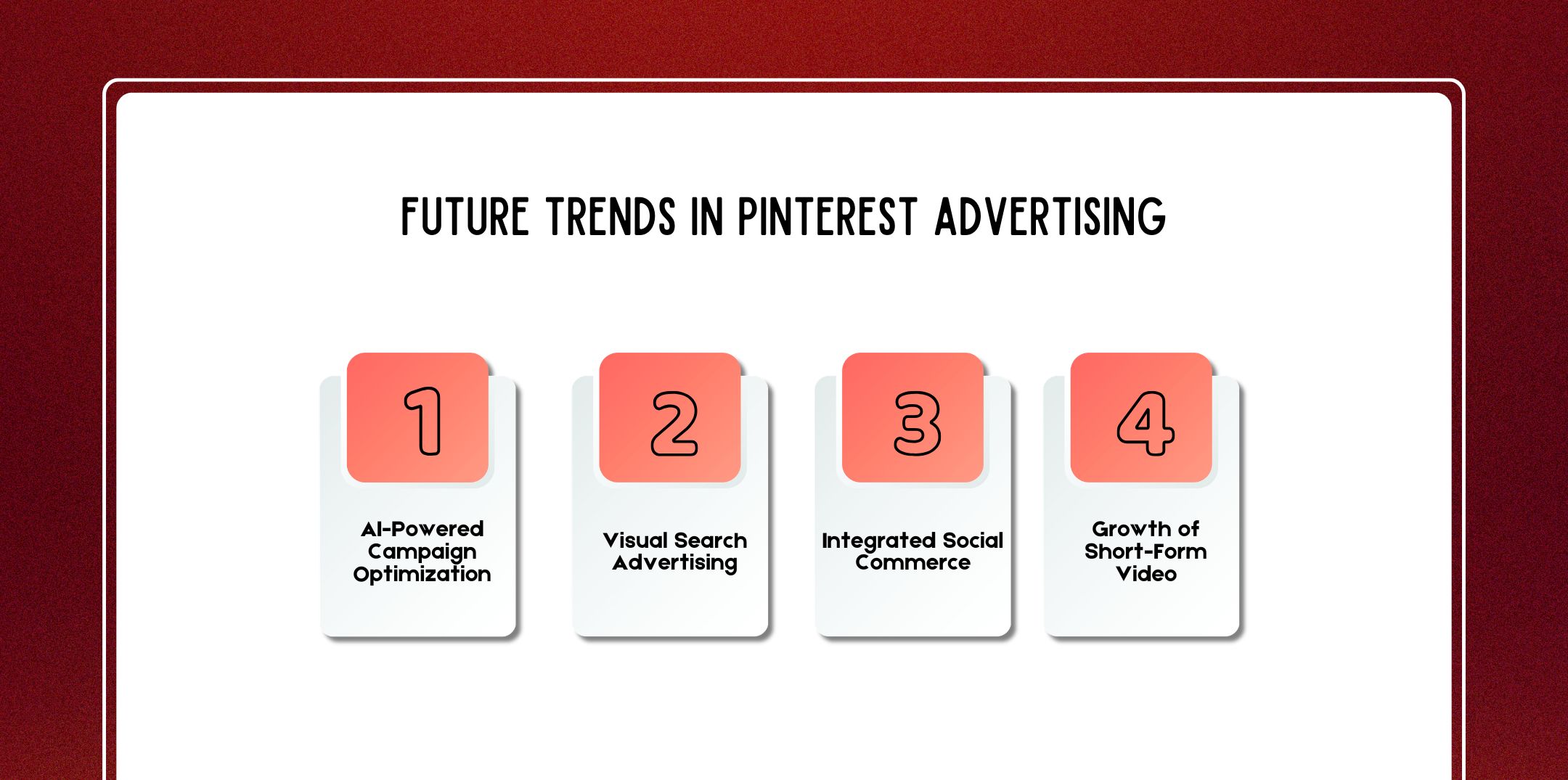
Pinterest advertising continues to evolve rapidly. Several trends are shaping the platform’s future.
Artificial intelligence is improving:
AI tools help advertisers maximize return on investment.
Pinterest’s visual search technology allows users to find products by uploading images.
This opens new opportunities for brands to advertise products similar to items users search for visually.
Pinterest is becoming a stronger social commerce platform, allowing users to purchase products without leaving the app.
This shortens the journey from inspiration to purchase.
Video content is becoming increasingly popular on Pinterest. Brands that use engaging short-form videos often see higher engagement rates.
Pinterest advertising in 2026 offers tremendous opportunities for businesses of all sizes. Because the platform focuses on discovery and inspiration, advertisers can reach audiences at the exact moment they are searching for ideas and products.
For beginners, success with Pinterest ads requires understanding how the platform works, creating visually appealing content, and targeting the right audience.
By combining strong keyword strategies, engaging visuals, and effective campaign management, businesses can generate consistent traffic, leads, and sales.
As Pinterest continues to expand its shopping features and AI-driven tools, advertisers who invest in Pinterest marketing today will be well-positioned to benefit from the platform’s long-term growth and influence in the digital marketing landscape.
Read Also:

Ankita Tripathy loves to write about food and the Hallyu Wave in particular. During her free time, she enjoys looking at the sky or reading books while sipping a cup of hot coffee. Her favourite niches are food, music, lifestyle, travel, and Korean Pop music and drama.

Barsha Bhattacharya, 2 days ago

Barsha Bhattacharya, 2 days ago