
5 Benefits Of SEO For Next-Level Business Growth In Europe
Barsha Bhattacharya, 1 week ago

The internet has become deeply integrated into everyday life. From social media interactions to online shopping, digital tools now shape how people communicate, work, learn, and entertain themselves.
However, every online action leaves a trace. These traces collectively form what experts call a digital footprint.
Whether you are posting photos, browsing websites, commenting on forums, or making purchases online, you are continuously generating data that contributes to your digital footprint.
Moreover, companies, platforms, and even search engines collect and store this information in various ways.
Therefore, understanding what is a digital footprint is and how to manage it has become extremely important for maintaining privacy, security, and reputation in the digital age.
A digital footprint refers to the trail of data that individuals leave behind when they use the internet. Every online activity, whether intentional or automatic, contributes to this trail.
In simple terms, a digital footprint is the collection of information about your online behavior, interactions, and personal data stored across digital platforms.
For example, when you:
Furthermore, digital footprints do not disappear quickly. Instead, many online records remain stored for years or even permanently. Consequently, these records can influence how individuals, companies, or organizations perceive you.
To understand digital footprints more clearly, consider the following scenario. Imagine someone named Rahul browsing the internet.
First, Rahul searches for “best smartphones under $500” using Google Search. Then he reads reviews on technology websites and watches comparison videos on YouTube.
Afterward, Rahul posts a question about smartphones on Reddit. Finally, he purchases a phone from Amazon.
In this simple scenario, Rahul has created multiple digital traces:
Together, these traces form Rahul’s digital footprint.
Therefore, even routine online activities contribute to the digital identity individuals leave behind on the internet.

When you are finding out what is a digital footprint and how many types of digital footprint there are. Generally, it falls into two main categories. Understanding these categories helps people recognize how their data is collected.
An active digital footprint consists of information that users intentionally share online.
Examples include:
For instance, when someone posts a picture on Instagram or updates their profile on LinkedIn, they are actively contributing to their digital footprint.
Because this data is shared voluntarily, users have greater control over it.
However, once published online, it can still spread widely and remain accessible for long periods.
In contrast, a passive digital footprint consists of data collected automatically without the user’s direct awareness.
Examples include:
For example, when someone visits a website, tracking technologies may record information about their device, browsing habits, and geographic location.
Platforms like Google and Meta often use such data to personalize advertisements and content recommendations.
Therefore, passive digital footprints can accumulate even when users are not actively sharing information.
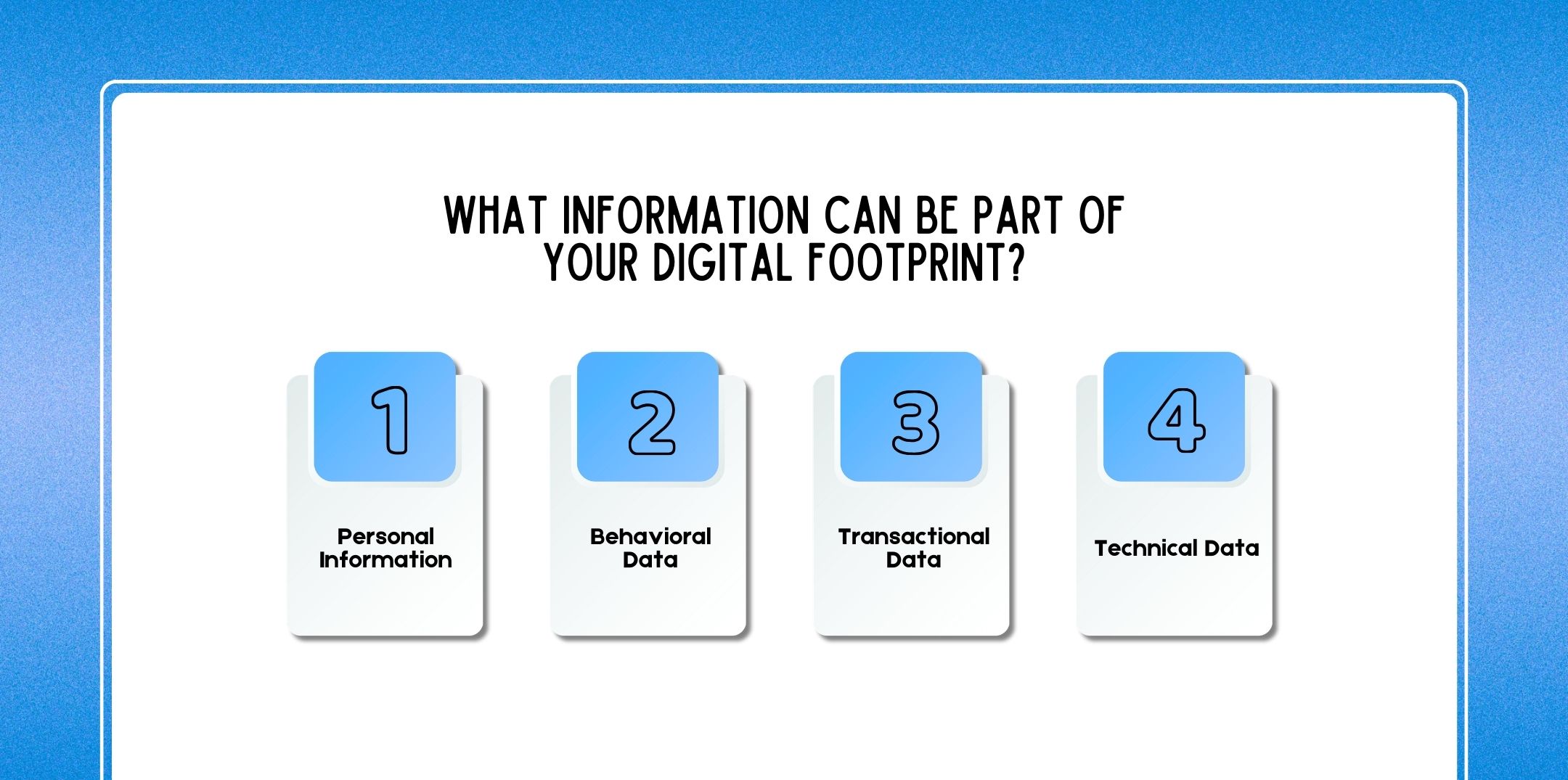
A digital footprint can contain many types of information. These data categories often combine to create a detailed online profile of an individual.
Personal information forms a significant part of a digital footprint.
Examples include:
This information often appears in online profiles, registration forms, or public directories. Consequently, personal information can spread across multiple websites and services.
Behavioral data reflects how individuals interact with the internet.
Examples include:
For example, watching cooking videos on YouTube may lead to recommendations for similar content. Thus, behavioral data helps platforms understand user interests.
Transactional data refers to records of online purchases or financial activities.
Examples include:
When users shop on platforms like Amazon, the system stores information about their purchases and browsing behavior. This data helps companies analyze consumer trends.
Technical data relates to the devices and networks used to access the internet.
Examples include:
Platforms like Google use such information to optimize website performance and security.
Digital footprints affect several important aspects of modern life.
Firstly, digital footprints influence online reputation.
Employers, universities, and organizations often review an individual’s online presence before making decisions.
For instance, recruiters frequently check professional profiles on LinkedIn or search for candidates on Google Search.
Therefore, online behavior can affect career opportunities.
Secondly, digital footprints impact personal privacy.
The more information available online, the easier it becomes for companies or individuals to access personal data.
Consequently, uncontrolled digital footprints may expose sensitive information.
Finally, digital footprints affect cybersecurity.
Cybercriminals often analyze online data to identify potential victims.
For example, publicly shared details on Facebook or Instagram may reveal valuable information that attackers can exploit.
Therefore, managing digital footprints helps reduce security risks.
Not all digital footprints are harmful. In fact, digital footprints can be either positive or negative depending on the type of content shared.
A positive digital footprint includes constructive and professional online content.
Examples include:
For example, maintaining an updated profile on LinkedIn showcasing skills and accomplishments creates a strong professional presence.
Therefore, a positive digital footprint can enhance career opportunities.
Conversely, a negative digital footprint includes harmful or inappropriate content.
Examples include:
Because digital records often persist indefinitely, such content can damage personal or professional reputations.
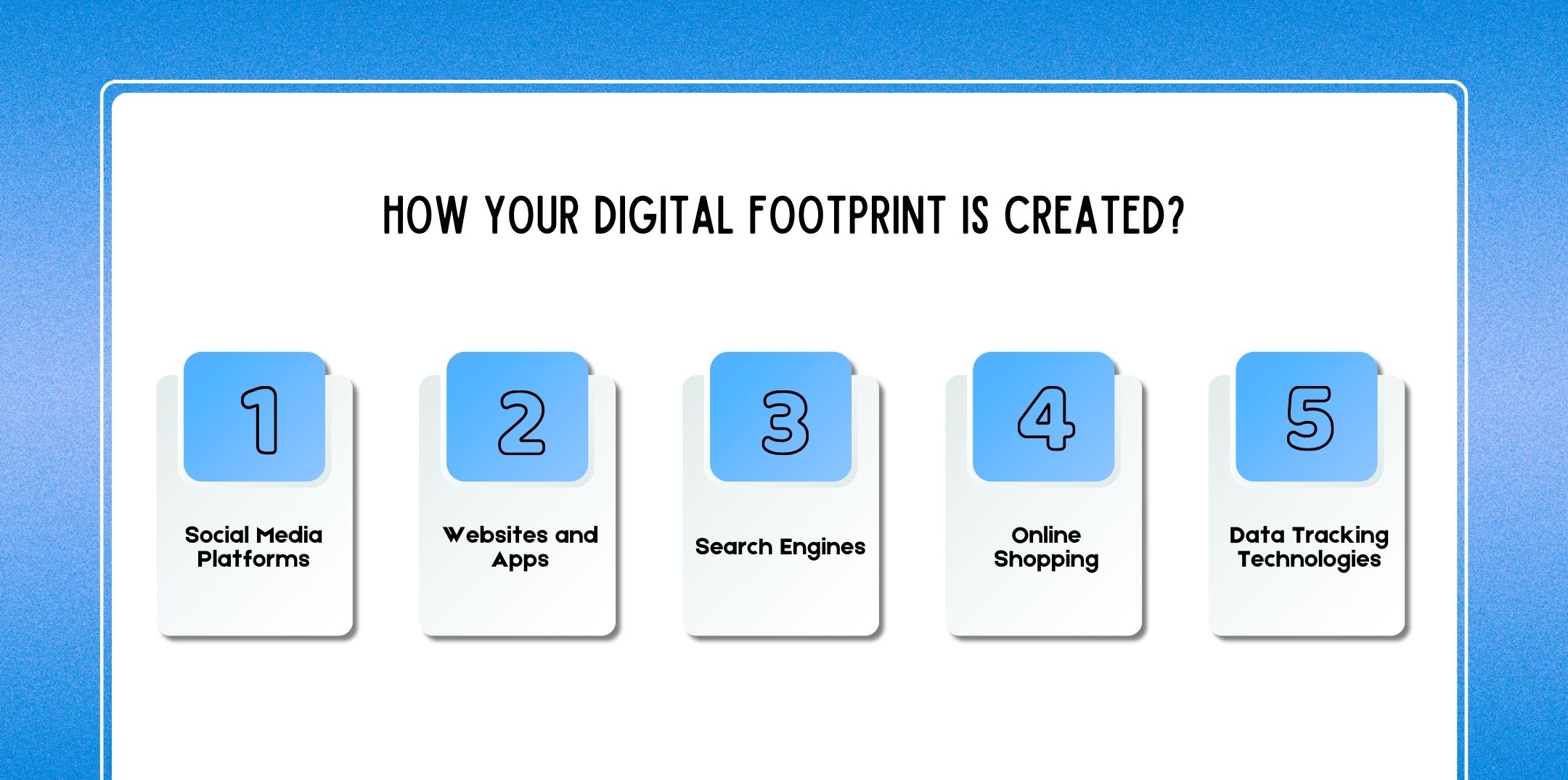
Digital footprints accumulate through various online activities.
Social networks generate massive amounts of user data.
Platforms such as:
Collect information about posts, interactions, and interests.
Many websites and apps collect data when users register or log in.
This data may include:
Consequently, each new platform contributes additional data to a person’s digital footprint.
Search engines such as Google Search record queries and browsing behavior. These records help improve search results but also contribute to digital profiling.
E-commerce platforms like Amazon track product searches, purchases, and preferences. This data allows businesses to personalize recommendations and advertisements.
Tracking technologies such as cookies, analytics scripts, and device identifiers collect behavioral information automatically. Companies like Google use such tools to analyze website traffic and user behavior.
A large digital footprint can create several risks.
Cybercriminals may collect personal information online and use it to impersonate individuals. Stolen identities can lead to financial fraud and legal complications.
Attackers often use publicly available information to craft convincing phishing emails or messages. These messages attempt to trick victims into revealing passwords or financial data.
Large digital footprints may expose individuals to harassment or cyberbullying. Public profiles and posts can attract unwanted attention.
Companies may analyze digital footprints to create detailed consumer profiles. While this helps with targeted advertising, it can also raise privacy concerns.
Perhaps most importantly, extensive digital footprints can significantly reduce personal privacy. Once information spreads online, removing it becomes extremely difficult.
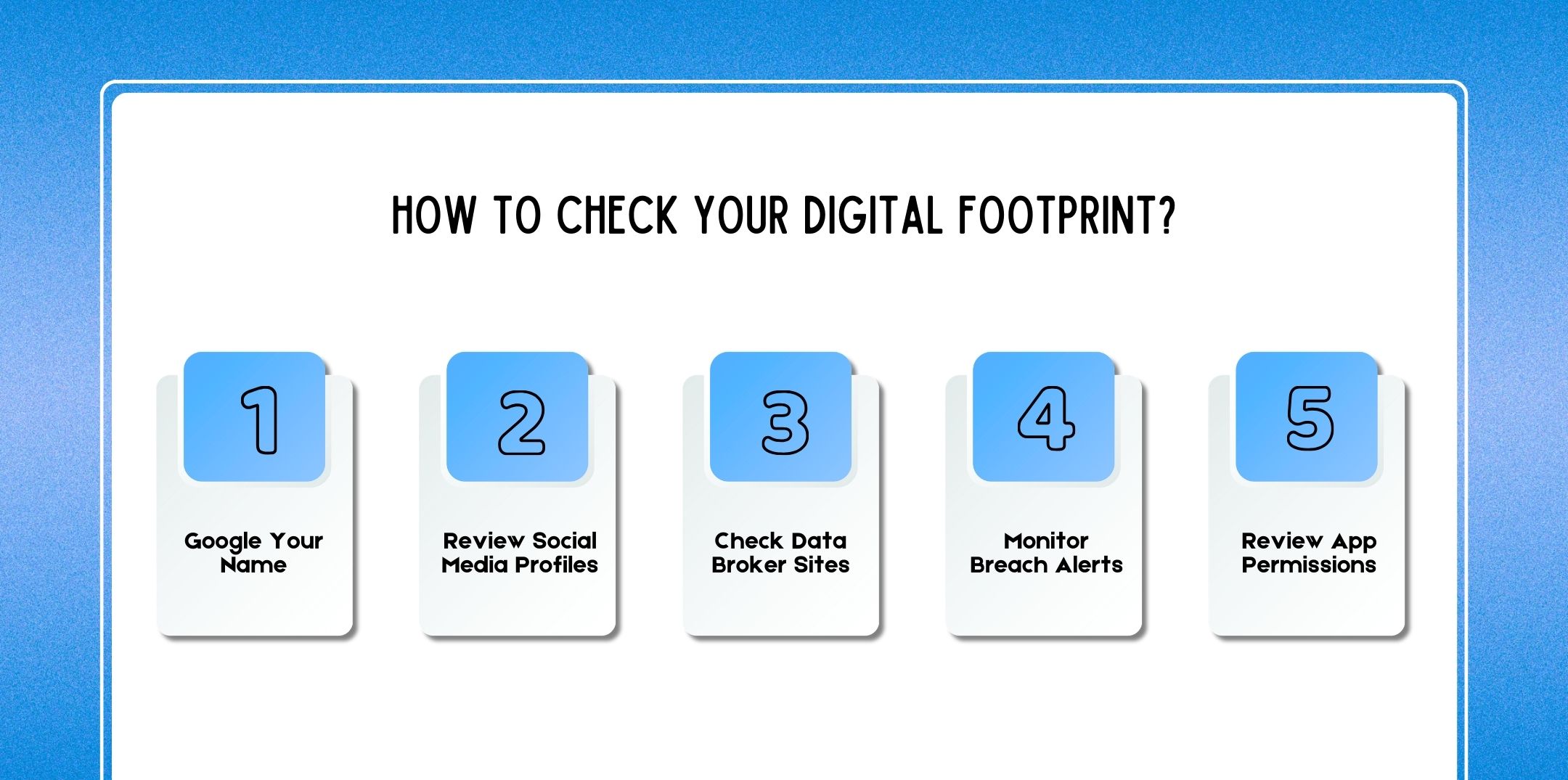
Understanding your digital footprint begins with reviewing the information available online.
Search your name using Google Search.
This simple step often reveals:
Check privacy settings and past posts on platforms like:
Ensure that personal information is not publicly visible.
Data broker websites collect and sell personal information. Reviewing these sites helps identify where your data appears.
Use security tools that notify users about data breaches. Such alerts help detect compromised accounts quickly.
Many apps request access to contacts, location, or storage. Reviewing these permissions reduces unnecessary data sharing.
Managing your digital footprint requires consistent effort.
Old accounts often store unnecessary personal data.
Deleting unused accounts reduces exposure.
Most platforms offer privacy controls.
For example, adjusting privacy settings on Facebook limits who can see your posts.
Contact website administrators to remove outdated or sensitive information.
Privacy-focused browsers reduce tracking.
Examples include browsers designed to block third-party trackers and cookies.
Avoid sharing excessive personal information online. Being selective about what you post significantly reduces digital risks.
To maintain a healthy digital presence, follow this checklist regularly:
Following this checklist helps maintain better control over personal data.
Experts recommend several strategies for protecting digital identities.
Here are a few questions and queries on the topic of what is a digital footprint that others have asked and it might be helpful for you as well.
A digital footprint is the trail of data you leave online when using the internet, including searches, social media activity, and website visits.
Active digital footprints (data you intentionally share) and passive digital footprints (data collected automatically).
Examples include social media posts, online purchases, email communication, search history, and website tracking cookies.
It affects online privacy, personal reputation, and security.
You cannot completely erase it, but you can reduce it by deleting accounts and adjusting privacy settings.
Search your name online, review social media accounts, and use data breach monitoring tools.
Companies use them for advertising, analytics, and personalization.
Yes, many employers review candidates’ online presence during hiring.
A positive digital footprint includes professional content, achievements, and constructive online contributions.
Use strong passwords, limit personal data sharing, enable privacy settings, and regularly review your online accounts.
Knowing what is a digital footprint will likely become even more important in the future.
Emerging technologies such as artificial intelligence and big data analytics allow companies to analyze user behavior more accurately than ever.
At the same time, governments worldwide are introducing stronger data protection regulations.
For example, privacy laws and regulations are forcing companies to provide greater transparency about how they collect and use personal data.
Additionally, digital identity systems may allow individuals to control and manage their online information more effectively.
Therefore, digital literacy and privacy awareness will play a critical role in the future of internet use.

Nabamita Sinha loves to write about lifestyle and pop-culture. In her free time, she loves to watch movies and TV series and experiment with food. Her favorite niche topics are fashion, lifestyle, travel, and gossip content. Her style of writing is creative and quirky.