
5 Benefits Of SEO For Next-Level Business Growth In Europe
Barsha Bhattacharya, 1 week ago

In today’s digital world, almost every action we take online leaves a trace. Whether you browse websites, post on social media, shop online, or simply search for information, you are constantly creating what is known as a digital footprint.
Over time, this footprint becomes a detailed record of your online behavior, preferences, and interactions.
As technology continues to evolve, the importance of understanding your digital footprint has grown significantly. Not only does it affect your online privacy, but it also influences your reputation, security, and even career opportunities.
In fact, employers, marketers, and organizations often analyze digital footprints to learn more about individuals.
Therefore, managing your digital footprint is no longer optional; it is essential. By understanding how it works and how it impacts your life, you can take control of your online presence and protect yourself from potential risks.
In this guide, we will explore why digital footprints matter, how they are created, the risks involved, and practical ways to manage them effectively.
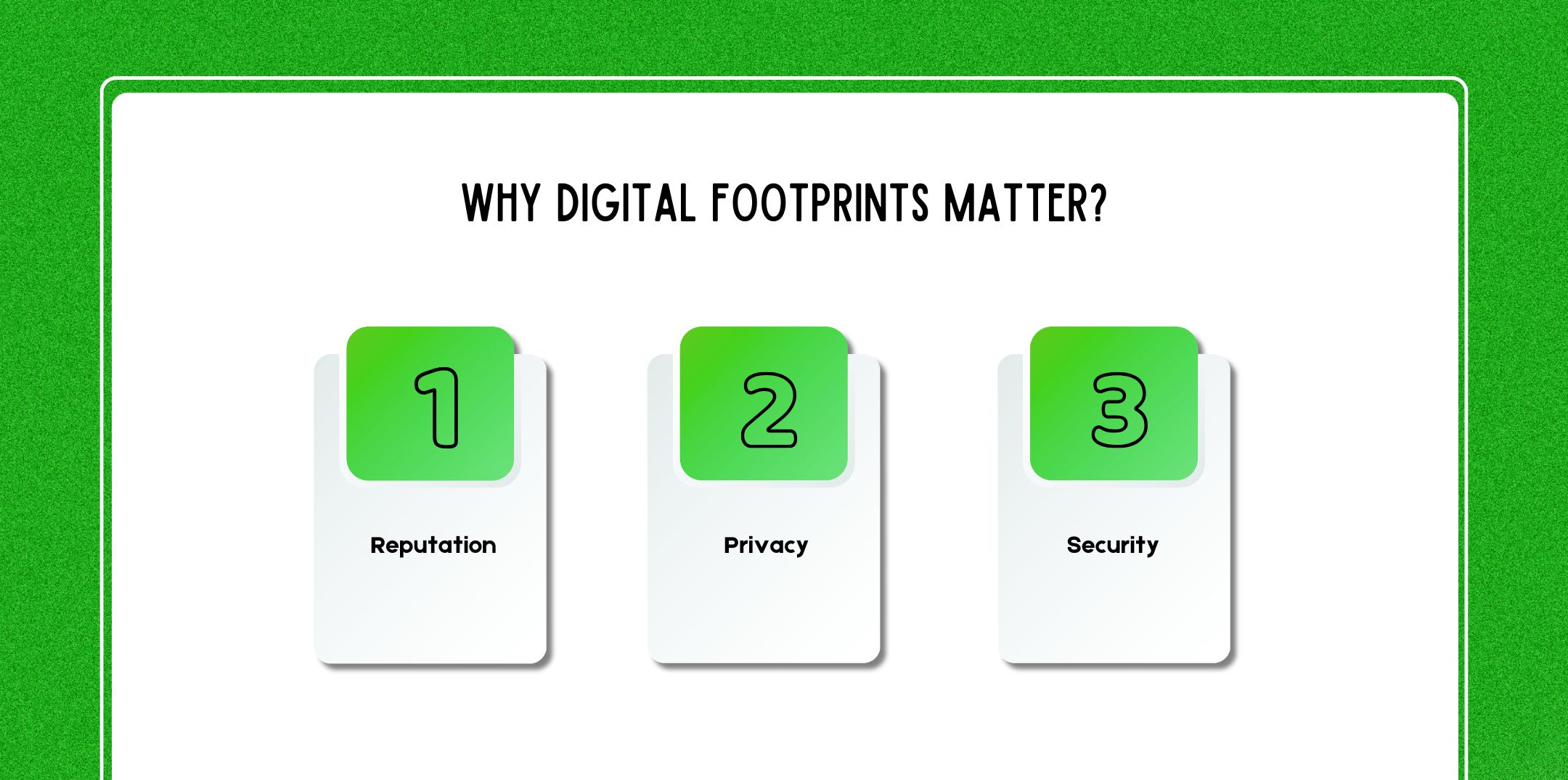
A digital footprint might seem harmless at first. However, it plays a significant role in shaping how you are perceived online and how your personal data is used.
Consequently, understanding its importance can help you make smarter decisions about what you share online. Digital footprints matter for several reasons, including reputation, privacy, and security.
Your digital footprint directly affects your online reputation. Today, many employers, recruiters, and educational institutions search online before making decisions about candidates.
For example, a hiring manager may review your social media profiles, blog posts, or online comments to understand your personality and professionalism.
A positive digital footprint can:
On the other hand, negative content such as offensive posts, inappropriate photos, or controversial opinions can damage your reputation.
Moreover, once something is posted online, it can remain accessible for years even if you delete it later. Therefore, maintaining a responsible and thoughtful online presence is crucial.
Another major reason digital footprints matter is privacy.
Every online interaction generates data that companies, advertisers, and websites collect. This information can include:
As a result, companies use this data to create detailed profiles about users.
While this data collection often helps personalize experiences such as targeted recommendations or advertisements, it can also lead to privacy concerns.
If sensitive information is exposed or misused, it can compromise personal privacy. Therefore, understanding your digital footprint helps you control what information is shared and who can access it.
Digital footprints also play a critical role in cybersecurity.
Cybercriminals often use publicly available information to target individuals. For instance, personal data such as your birthday, location, or workplace can be used to guess passwords or answer security questions.
Additionally, large digital footprints make it easier for hackers to gather information about potential victims.
Consequently, managing your online data helps reduce the risk of cyber threats such as hacking, identity theft, and fraud.
Not all digital footprints are harmful. In fact, they can be either positive or negative, depending on how you interact online.
Understanding the difference between these two types can help you build a beneficial online presence.
A positive digital footprint represents a constructive and professional online presence.
This type of footprint is created when you share valuable, respectful, and meaningful content online.
Examples include:
A positive digital footprint can help you:
For example, professionals who regularly share insights, research, or expertise online often build strong personal brands.
In contrast, a negative digital footprint consists of harmful or inappropriate online activity.
This may include:
Such actions can have long-lasting consequences.
For instance, universities and employers often review candidates’ online activities before making decisions. If they discover negative content, it may affect opportunities.
Furthermore, negative digital footprints can also damage personal relationships and public perception. Therefore, it is important to think carefully before sharing anything online.

Digital footprints are created through various online activities. Even simple actions like browsing websites contribute to your online trail.
Let’s explore the main ways digital footprints are generated.
Social media platforms are one of the biggest contributors to digital footprints.
When you use platforms like Facebook, Instagram, LinkedIn, or Twitter, you generate data through:
Additionally, social media platforms track user behavior to improve algorithms and personalize content. Therefore, every interaction adds to your digital footprint.
Websites and mobile applications also collect data about users.
Whenever you create an account, sign up for newsletters, or interact with a service, you share information such as:
Furthermore, apps often request permissions to access contacts, photos, or device data. As a result, these permissions contribute to the creation of your digital footprint.
Search engines also record your activity. Every time you search for information online, search engines track:
This data helps improve search results and advertising systems. However, it also means that your browsing habits become part of your digital record.
Online shopping platforms collect extensive data about consumer behavior.
For example, they track:
Companies use this information to improve services and recommend products. However, it also expands your digital footprint.
Many websites use tracking technologies to monitor user activity.
These technologies include:
These tools collect data such as browsing patterns, session duration, and device information. Consequently, even passive browsing contributes to your digital footprint.
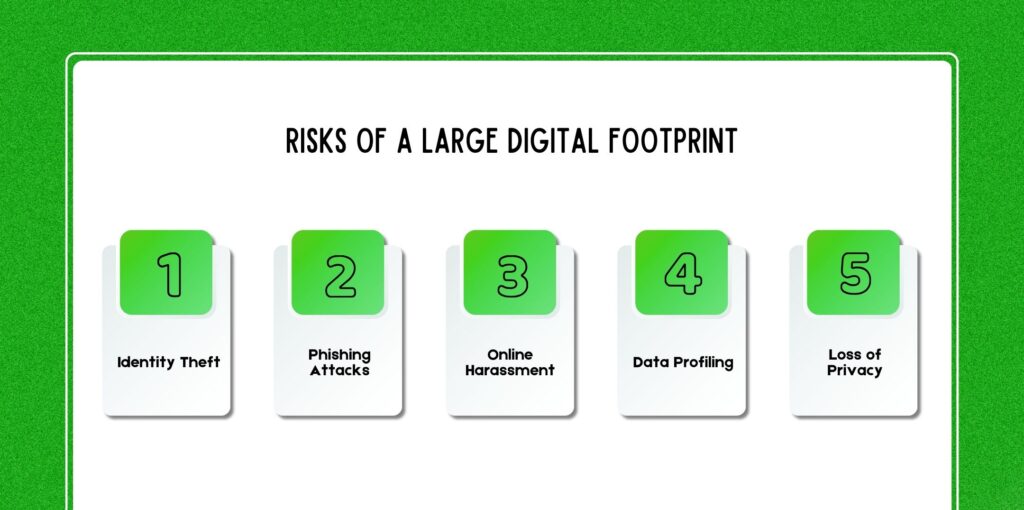
Although digital footprints are unavoidable, a large footprint can expose individuals to various risks. Understanding these risks helps you take proactive steps to protect your online identity.
One of the biggest dangers of an extensive digital footprint is identity theft. Cybercriminals can gather personal data from multiple sources to impersonate individuals.
For example, they may use information like:
Once they obtain this information, they can commit fraud, open accounts, or access sensitive systems.
Phishing attacks are another common threat. Attackers often study digital footprints to craft convincing messages that appear legitimate.
For instance, they may send emails pretending to be from banks, employers, or trusted organizations. If victims click on malicious links or share credentials, hackers gain access to sensitive information.
Large digital footprints can also increase the risk of online harassment. Public information such as photos, posts, and location details may attract unwanted attention.
In extreme cases, individuals may experience cyberbullying or stalking. Therefore, controlling the visibility of personal information is essential.
Companies often analyze digital footprints to build detailed data profiles.
These profiles categorize users based on their:
Although this data helps businesses improve marketing strategies, it can also raise ethical concerns about surveillance and manipulation.
Finally, an extensive digital footprint can lead to a significant loss of privacy.
As more personal data becomes available online, individuals may lose control over how their information is used.
In some cases, sensitive data may even be sold to third-party companies. Therefore, minimizing unnecessary data exposure is crucial.
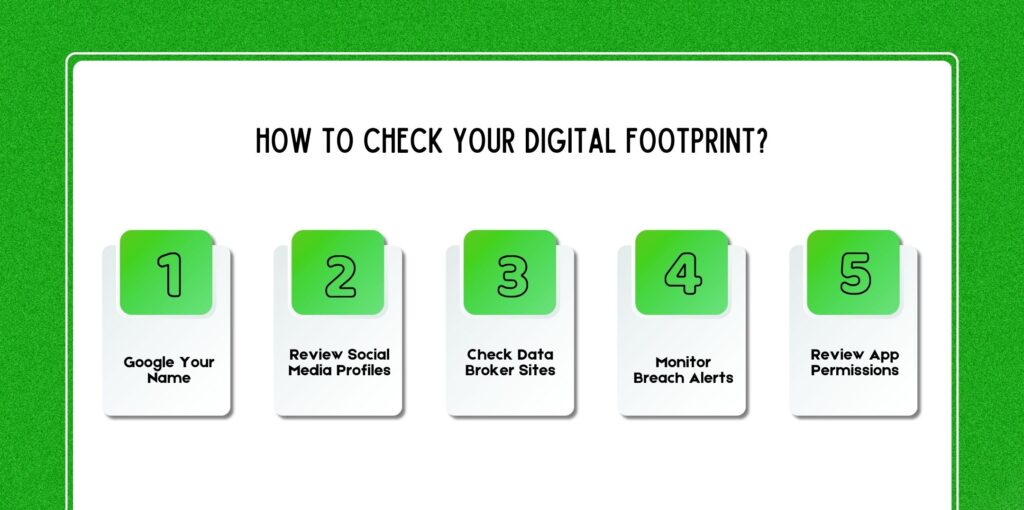
Before managing your digital footprint, you first need to understand what information about you exists online. Fortunately, several simple methods can help you evaluate your online presence.
The easiest way to check your digital footprint is to search for your name online. This allows you to see what others might find about you.
When doing this, check:
If you discover outdated or incorrect information, you may need to request its removal.
Next, review your social media accounts carefully.
Check:
Sometimes older content may no longer reflect your current identity or values. Therefore, deleting or updating such posts can help maintain a positive digital footprint.
Data broker websites collect and sell personal information. Examples include platforms that provide background checks or marketing data.
You can search these sites to see whether your information is listed. If it is, many platforms allow users to request removal.
Data breaches are becoming increasingly common. When companies experience breaches, user information may be exposed online.
Using breach-monitoring services can alert you if your email or credentials appear in leaked databases. This allows you to change passwords and secure accounts quickly.
Many apps request access to personal data that may not be necessary. Therefore, reviewing and limiting these permissions helps reduce data exposure.
Check which apps have access to:
If an app no longer needs access, revoke the permission.

Managing your digital footprint requires consistent effort. However, following a few practical steps can significantly reduce unnecessary data exposure.
Many people create accounts on websites they rarely use. Over time, these inactive accounts may become security risks. Therefore, regularly deleting unused accounts helps reduce your digital footprint.
Most social media platforms offer privacy controls. You can restrict who sees your posts, photos, and personal details. Additionally, limiting public visibility reduces exposure to strangers.
If personal information appears on public websites, you may request its removal. Many websites provide data removal or privacy request forms. Although the process may take time, it helps protect your privacy.
Some browsers prioritize privacy by blocking trackers and limiting data collection. Using these browsers can reduce the amount of information websites gather about you.
Finally, the most effective way to manage your digital footprint is to think before you share.
Ask yourself:
By being mindful of what you post, you can maintain a healthier online presence.
Below is a simple checklist to help monitor and manage your digital footprint effectively.
| Factor | What To Check |
| Privacy settings | Social media visibility |
| Account security | 2FA enabled |
| Data exposure | Personal info online |
| Inactive accounts | Old platforms |
| Search results | Reputation signals |
Regularly reviewing this checklist helps ensure your digital presence remains safe and controlled.
Experts recommend several strategies to maintain a secure and positive digital footprint.
By staying informed, you can significantly reduce online risks.
As technology continues to evolve, digital footprints will become even more significant.
Several emerging trends are shaping the future of online data.
From smart homes to wearable devices, everyday technology contributes to digital footprints. Consequently, managing personal data will become a critical digital skill in the future.
In the modern digital landscape, your online presence plays a crucial role in shaping how others perceive you. Every post, search, and interaction contributes to your digital footprint, creating a permanent record of your online activities.
Therefore, understanding why digital footprints are important is essential for protecting your privacy, maintaining a positive reputation, and staying secure online.
Although it may be impossible to completely eliminate your digital footprint, you can still manage and reduce it by practicing responsible online behavior.
Regularly reviewing accounts, adjusting privacy settings, and limiting unnecessary data sharing can significantly improve your digital safety.
Ultimately, the internet remembers almost everything. Consequently, the best strategy is to build a thoughtful, positive, and secure digital presence that reflects who you truly are.

Nabamita Sinha loves to write about lifestyle and pop-culture. In her free time, she loves to watch movies and TV series and experiment with food. Her favorite niche topics are fashion, lifestyle, travel, and gossip content. Her style of writing is creative and quirky.