Creator Vs Business Account Instagram: The Ultimate 2026 Strategic Blueprint
sibashree bhattacharya, 5 hours ago
Is CapCut getting banned?
The honest answer is, NO.
I understand why there is so much confusion around CapCut.
Firstly, it is not just an application for most creators and editors I work with. It is actually the entire production line.
Secondly, when headlines start hinting that ByteDance’s editor might disappear, all of us feel a real threat to our content calendar.
So, here, I will try to find out an honest answer regarding where things actually stand. It will bring more clarity to how much of it is panic and how much is reality.

CapCut is fully functional in the UK, the USA, Canada, Australia, and most other countries.
However, it does not mean that CapCut was never banned. This history of CapCut having a ban makes things more confusing.
So, here is the actual timeline.
| Date | Event Description | Impact on CapCut and Creators |
|---|---|---|
| April 2024 | The Protecting Americans from Foreign Adversary Controlled Applications Act (PAFACA) becomes law. | ByteDance gets nine months to sell its apps or face a full United States shutdown. |
| January 19, 2025 | The enforcement deadline hits. | CapCut and TikTok officially go dark and are removed from U.S. app stores, disrupting active creators. |
| January 21, 2025 | A new presidential executive order is signed. | Enforcement is delayed, and CapCut returns to U.S. app stores within 48 hours. |
| January 2026 | ByteDance closes a major corporate restructuring deal. | The situation officially resolves under the new US-majority-owned TikTok USDS Joint Venture LLC. |
Why does this question keep resurfacing every few months? A few reasons, and I have watched all of them play out in creator Discords and comment sections firsthand.
Dates like April 5th or June 19th, 2026, circulated widely as supposed shutdown deadlines. Neither happened.
These trace back to negotiation deadlines getting misread as enforcement dates, then repeated until they sounded official.
These are not the same thing, but headline writers (and understandably nervous creators) treat them interchangeably.
India has permanently banned CapCut since June 2020, alongside dozens of other Chinese apps, following border tensions with China.
That ban is still in effect with no reinstatement in sight.
Many show this constantly as evidence that “it could happen here too.”
For the record: EU, UK, and Australia currently have CapCut available but under continued data-protection scrutiny, which is worth watching but isn’t the same as an active ban.
Here’s my honest take after ten years of watching platforms shift under creators’ feet.
The ban headlines have actually distracted from the changes that are hitting people’s wallets and workflows right now.
CapCut’s official Pro pricing moved to $19.99/month or $179.99/year, and plenty of users only discovered the new rate at checkout or renewal.
In late January 2026, a price hike of roughly $100 landed at the same time as a multi-day outage tied to a data center issue affecting both CapCut and TikTok.
Creators were not quiet about it.
One viral post from a VTuber calling out the timing racked up nearly 3 million views.
Also, threads on r/CapCut piled on over 1080p/60fps exports getting locked behind a paywall with, as one user put it, no apology or heads-up.
Free-tier limits have also tightened.
Unpaid users have reported caps on weekly exports before a watermark gets slapped on, which is a meaningful workflow change if you’re running a lean content operation.
Then there’s the fine print.
CapCut’s terms of service include a clause granting the company a broad, perpetual, worldwide, sublicensable license over content uploaded through its cloud features.
That is standard boilerplate for a lot of platforms, but it’s worth actually reading if you’re storing client work or unreleased content in CapCut’s cloud.
It is worth zooming out from the rumor mill for a second, because the numbers put the ban panic in perspective.
CapCut has surpassed 1 billion cumulative downloads worldwide, and industry research pegs 68% of TikTok creators as using it as their primary editor.
In the professional/enthusiast editing market, Adobe Premiere Pro still holds the largest share (estimates range from roughly 35-42% depending on the research firm).
However, CapCut has become the dominant name specifically in mobile and social-first editing, which is a different battlefield entirely.
The revenue side tells its own story about why the pricing changes landed the way they did.
CapCut’s global app revenue hit roughly $218 million in Q3 2025 alone, up from about $166 million the prior quarter, according to Statista figures.
It is a trajectory that lines up with a company shifting hard from “free growth tool” to “monetize the base,” which is exactly what creators on Reddit and Trustpilot have been reacting to.
On the alternatives side, the pattern I keep seeing in industry coverage (TechSmith, VEED, eesel, and others tracking the space) isn’t “everyone is fleeing CapCut.”
It is more nuanced.
Creators are diversifying rather than replacing.
A common line from creator-focused writeups is that people now pair a fast mobile editor for quick turnarounds with a separate tool for anything that needs to look polished or protect ownership of the footage.
That matches what I am seeing with clients too. Nobody is doing a clean break, and they are just no longer trusting one app with everything.
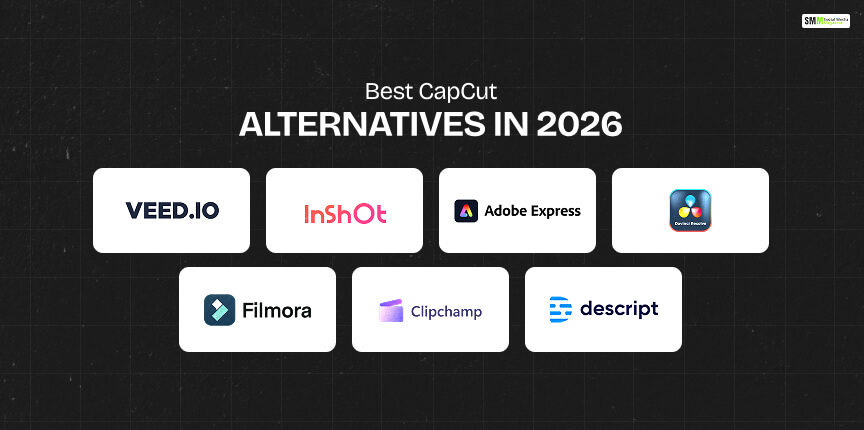
If you are hedging your bets (which, again, I think is just smart practice regardless of ban status), here is how the main contenders stack up.
| Tool | Best For | Platform | Free Tier | Approximate Paid Pricing | Standout Feature |
|---|---|---|---|---|---|
| CapCut | All-in-one mobile short-form editing | Mobile, desktop, web | Yes, capped exports and watermark risk | $19.99 per month or $179.99 per year | Templates, Auto-captions, TikTok-native workflow |
| VEED.io | Closest browser-based CapCut replacement | Web | Yes, Watermarked | $20-30/Month Per Seat | Strong auto-captions, team collaboration |
| InShot | Fast, simple mobile edits | Mobile | Yes, with Ads | $19.99/Year | Lightweight, on-the-go editing, no steep learning curve |
| Adobe Express Video | Branded, template-driven content | Web, Mobile | Yes | Free/Premium Tiers | Deep Adobe ecosystem integration, royalty-free assets |
| DaVinci Resolve | Serious color grading and professional finishing | Desktop | Yes, Very Generous | Free / $295 One-Time (Studio) | Professional-grade color and audio tools No subscription trap |
| Filmora | Mid-tier desktop editing | Desktop | Yes, Watermarked | ~$79.99/Year | Easier learning curve than pro-grade software |
| Clipchamp | Windows users, simple team edits | Web (Microsoft) | Yes | Bundled with Microsoft 365 | No installation, Tight Windows/Microsoft integration |
| Descript | Podcast and transcript-based editing | Desktop, web | Yes, Limited | ~$24/month | Edit video by editing the text transcript |
A few honest notes from someone who’s tested most of these on live client work.
VEED is the tool that feels most like a drop-in CapCut replacement if captions and speed are your priority.
DaVinci Resolve is overkill for a 30-second Reel but genuinely free and worth learning if you are producing longer-form content alongside your shorts.
And if your business follows a template and delivers branded content for a client, Adobe Express is the more defensible choice simply because you are not handing your raw footage to ByteDance’s cloud terms.
I am not going to tell you to panic-migrate off CapCut.
That is not realistic advice, and I don’t think it is warranted right now.
However, I have lived through the January 2025 blackout. My clients lost hours to it. So, here is what I do recommend, ban or no ban.
Export finished and in-progress projects to your device in a universal format like MP4.
Cloud-only storage is a single point of failure, whether the cause is a ban, an outage, or a pricing dispute.
You don’t need to switch, but knowing your way around one alternative (VEED, Adobe Express, InShot, or a browser-based tool like OpusClip) means a disruption costs you hours, not days.
Read renewal notices before you tap “agree.”
Given the pricing changes, this is honestly the more likely way CapCut costs you money in 2026.
So, it is not a government ban you should blame.
Moreover, ignore specific “ban date” posts unless they come from CapCut, TikTok, Apple, Google, or a government source.
Every tentative date so far has been false.
Is CapCut getting banned? Not right now, and the structural reason it was ever in jeopardy was the ownership dispute.
The USDS joint venture has largely settled this dispute.
The access has not changed. It is the cost and terms.
That is the part of this story worth your attention going into the rest of 2026.

Sibashree has been into SEO and eCommerce content writing for more than 9 years. She loves reading books and is a huge fan of those over-the-top period dramas. Her favorite niches are fashion, lifestyle, beauty, traveling, relationships, women's interests, and movies. The strength of her writing lies in thorough research backing and an understanding of readers’ pain points.

sibashree bhattacharya, 5 hours ago

sibashree bhattacharya, 22 hours ago