5 Benefits Of SEO For Next-Level Business Growth In Europe
Barsha Bhattacharya, 6 days ago

With digitalization, Google has become an integral part of our everyday lives. Providing massive sources of information for user queries within a couple of seconds.
Whether you are looking for the nutritional value of coconut oil or planning to take a long trip, Google is the first thing you open up.
But “Is Google always right?”
Honestly speaking, no. Even though Google potentially provides relevant information and responses for your search queries, they are not always accurate.
So, trusting it blindly is not a very good idea. Moreover, Google is just a search engine on the internet. Collecting facts and information from a variety of sources.
Naturally, it doesn’t give a guarantee about the accuracy of the results.
So, verifying the information before using it can save you in countless ways. For this, you need to understand how Google works and what influences its accuracy.
So, in today’s blog, I have covered all the nuances around the accuracy of Google’s responses, exploring:
So, keep reading to know more!
To understand whether to trust Google’s responses or not, having a clear idea about the functioning of its search algorithms is vital.
Unlike the simple search interface, the algorithms are actually quite complex.
Moreover, they are specifically designed to collect information from the search indexes and provide the relevant results.
So, it covers the following processes to create responses:
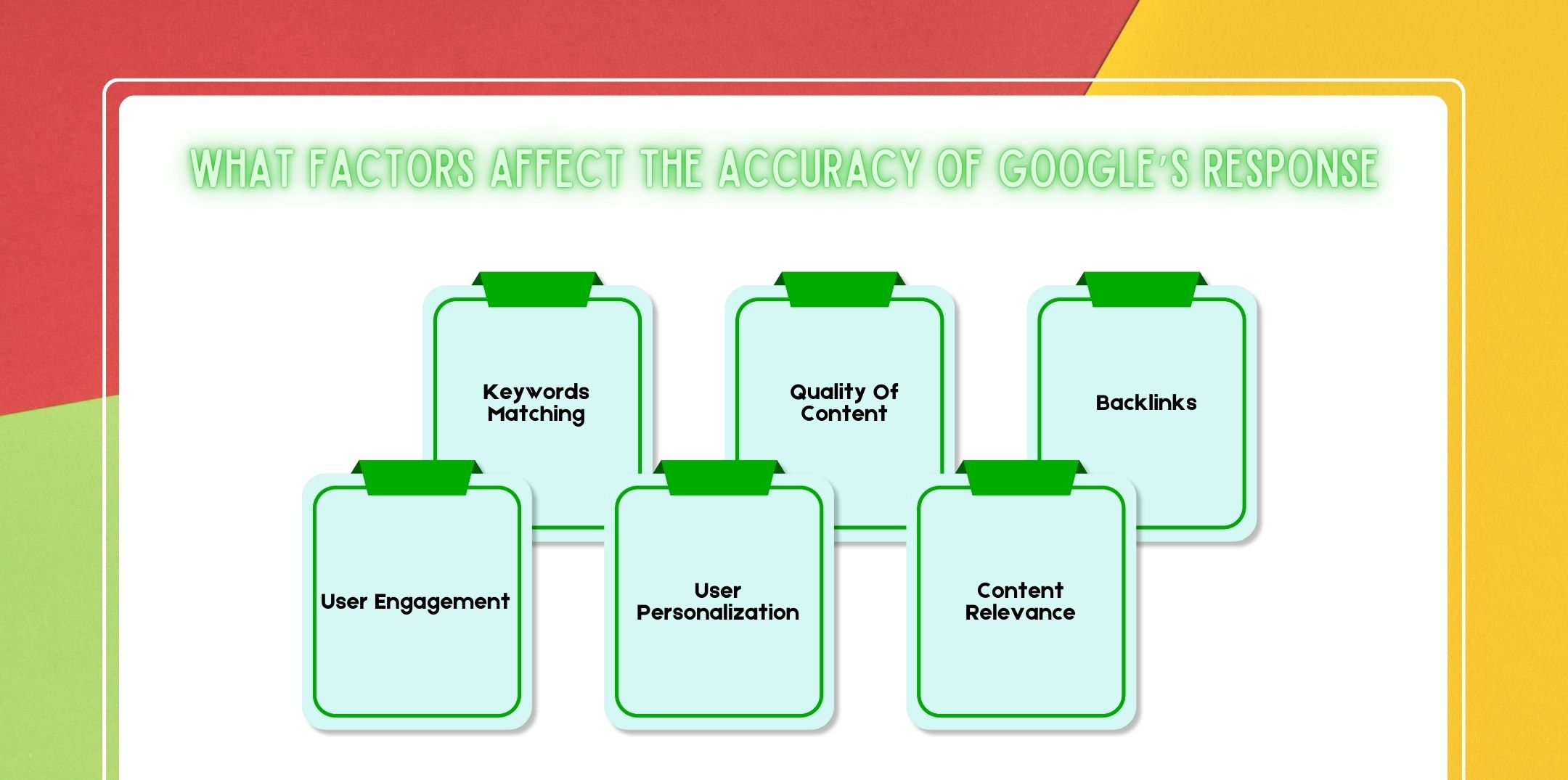
Google’s search responses depend a lot on a variety of factors. So, a slight adjustment in these factors can massively impact the accuracy of the results.
Firstly, Google’s bots match the user’s search keywords with those present in the content. If there is a match, then it collects information from it and provides the user.
Moreover, high-quality and informative content is prioritized by Google. So, when an article includes well-researched and regularly updated information, it ranks higher on the SERPs.
In addition to this, backlinks from reputable and authoritative sources make Google consider the content valuable. So, quality backlinking with reputable sites can signal Google to collect information from it.
Even though it seems negligible, click-through rates and user engagement with the sites help Google determine the relevance of the content. So, you will find interactive sites ranking higher on the SERPs.
Additionally, Google crafts its responses based on the previous searches, user location, and preferences. So, no two users get the same search results from searching for the same keywords.
Finally, Google’s algorithm constantly monitors the relevance of the content by evaluating its information against user search intents. So, when it finds targeted keywords and related terms, it ranks the content higher.
All the factors influencing the accuracy of Google’s responses can be easily manipulated, affecting the public’s reliance on the search engine.
So, some of the reasons behind the inaccuracy of Google’s results include:
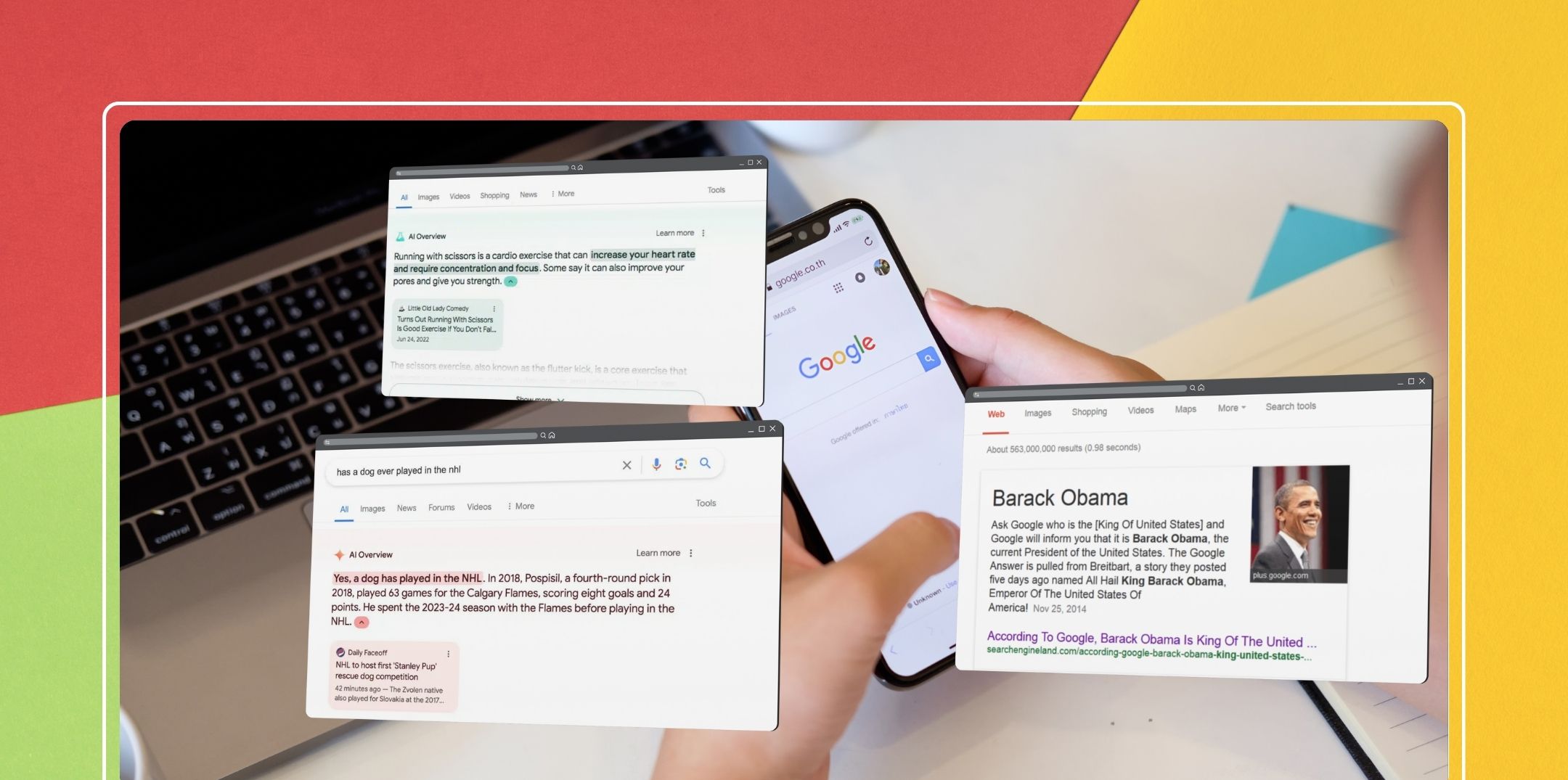
Although Google tries to provide accurate and relevant information for most of the search queries, for certain areas, it fails.
Mainly, for health and map directions, Google cannot provide 100% accurate data.
Given that Google collects information from internet resources, its responses are not completely accurate, especially for health-related queries.
According to the report by Pacific Lutheran University, 33% Americans rely on Google for their diagnosis, and around 56% of them consult real doctors after getting suggestions from Google.
Moreover, Googling health symptoms has become quite common. But, without proper medical training, Google provides misinterpreted diagnoses for the symptoms.
According to Etactics: “A survey of 2,000 Americans found that 43% of them had misdiagnosed themselves after searching their symptoms online. And 74% said that the results made them more worried”.
Similarly, Google Maps is the go-to buddy for searching the shortest routes and planning trips. But, is it really accurate?
Well, similar to the search engine, Maps collects information from a variety of sources.
So, by using the WiFi, GPS, and cell tower signals, it determines your location and generates the best route to reach your destination.
However, it might give inaccurate results based on outdated road directions.
According to SpatialPost: “Google Maps provides accurate directions in most cases, but it’s not perfect. In some cases, Google Maps may provide inaccurate or outdated directions due to changes in road layouts or traffic conditions”.
While Google’s aim is always to surface the most helpful and accurate information, users sometimes find misleading, outdated, or simply wrong search results. Following are some common areas where inaccuracies arise:
Symptoms of search often bring on anxiety because results may exaggerate potential health conditions. Examples of this are headaches or fatigue that may ultimately present the user with results of serious illnesses. While Google seeks partnerships to improve medical accuracy, mistakes still occur.
Some of these snippets, or older articles, carry incorrect dates, misattributed quotes, or oversimplified historical events. When Google produces outdated blogs or non-academic sources, confusion follows.
Breaking news stories often contain rumors, incomplete data, and early assumptions.
During crises, Google may show:
This can mislead large groups of people quickly.
Google’s inaccuracies are not random but brought about by many interactive factors:
Google’s algorithms interpret signals, but they are never fully able to understand:
Machines have limits even with improvements in AI.
Some websites use tricks like the
These manipulative tactics can make low-quality content rank higher temporarily.
Online misinformation spreads faster than corrections. Highly engaging false data may outrank factual content for a certain period.
Google removes rank for what the user taps. If lots of people click on a sensational or incorrect article, Google may think that it’s “helpful.”
Newer content tends to outrank older content, often even when the latter is more accurate. This prioritization leads to surfacing inaccurate “fresh” opinions.
Some topics, particularly scientific and philosophical ones, do not have a universally correct answer. Google may offer interpretations or competing perspectives.
The ranking system is heavily influenced by people. Human behavior shapes what the search engine believes is helpful.
Google personalizes search results based on:
This personalization can create bubble-like results.
If many users click on a certain result, Google assumes it is relevant—whether or not it is accurate.
If users stay on a page longer, Google interprets the content as useful.
Users can report:
This feedback is utilized by Google, but improvements take time.
Google does not create misinformation, but it sometimes unintentionally amplifies it.
False or exaggerated stories can trend rapidly, especially during emotional events.
Users tend to click the content that confirms their beliefs. Further, Google flashes similar content, thereby strengthening their views.
Clickbait content often ranks because it generates high engagement.
Ratings may be manipulated or biased. Users are likely to trust:
Search engines reflect the biases that are in the data found online.
These real-world cases show why Google isn’t always 100 percent right.
Snippets on Google in earlier years sometimes recommended unsafe self-treatment methods or misidentified symptoms. This caused unnecessary panic.
Misinformation-ridden articles sometimes showed up in top results. Their algorithm improperly ranked some biased sites as being credible sources.
In some cases, featured snippets presented:
Google’s inaccuracies can translate into real-world consequences:
Repeated inaccuracies erode trust in search engines.
Wrong medical information may lead to:
Misinformation influences:
Google sometimes faces criticism over:
Businesses dealing with inaccurate online information could suffer greatly.
Never depend on one source. Here’s how to ensure accuracy:
Compare results from several reputable sites.
Experts in the subject area create more reliable resources.
Note that old content may be outdated or incorrect.
Reliable domains include:
Ask the following questions:
Genuine articles source reliable research or sources.
Trusted options include:
If you want to avoid misleading search results, rely on:
Such as:
Universities publish well-researched content.
Established agencies verify facts.
Ideal for scientific or medical topics.
The industry-specific organizations give verified information.
These are usually very detailed and supported with data
Libraries provide access to research that is not easily found online.
Google invests a lot in AI and machine learning. Future enhancements may include:
Improved Natural Language Processing (NLP) Better understanding of:
Google is improving how it measures: They include the following:
More credible sources will dominate the rankings.
Search engines will learn to distinguish between
Faster updates on breaking news and trending topics.
Balancing customized outcomes with multiple perspectives.
In addition to this, Google’s recent AI models: AI Overview and AI Mode, have vastly impacted users’ reliance on Google’s responses.
Given that these models pull snippets from relevant internet content, there is a high chance of providing inaccurate responses.
According to Google’s spokesperson in an interview with Mashable, “The vast majority of AI Overviews are highly factual and we’ve continued to make improvements to both the helpfulness and quality of responses”.
Moreover, these models are designed to scan through the web results, so they are prone to errors. Also, they can misinterpret user queries and provide insufficient or incorrect answers.
Here are a few questions and queries on the topic of “Is Google Always Right” that people have asked, that you might find helpful at the same time.
No, trusting a search engine with internet information is not a great idea. Since most of the information Google provides collects from random internet sources, it’s not safe to trust it 100% for your own safety.
Yes, it is right, that Google is Not always right. You might find it difficult to believe, but it is true that the results generated from Google are not always right. The results that you get from Google can be a vision or perception of a particular content generator.
Google normally scours the Web to predict what will be the most relevant content it can show its users for their 3.5 billion searches on a daily basis. Most times Google’s guesses are accurate, but not always.
Now that you have a comprehensive idea about how Google’s search algorithms function, the answer to the question “Is Google always right?” is clear.
Unlike an irresponsible search engine, Google actually attempts to modify its algorithm from time to time to maintain accuracy.
So, given the rise in AI-generated content, Google’s AI-detectors remove them from the rankings.
Also, Google’s algorithm detects the spams and filters them out from the SERPs. So, users can safely browse the platform.
Now that you know not even Google is always right, avoid trusting everything you found on it. And, verify crucial information before using it for important works.
DON’T MISS THESE:

A self-proclaimed Swiftian, Instagram-holic, and blogger, Subhasree eats, breathes, and sleeps pop culture. When she is not imagining dates with Iron Man on Stark Tower (yes, she has the biggest crush on RDJ, which she won’t admit), she can be seen tweeting about the latest trends. Always the first one to break viral news, Subhasree is addicted to social media, and leaves out no opportunity of blogging about the same. She is our go-to source for the latest algorithm updates and our resident editor.