
8 Tips For Staying Safe And Secure On Twitter
Nabamita Sinha, 3 weeks ago

Podcasting in 2026 is no longer a hobbyist medium; rather, it has evolved into a global industry worth billions of dollars.
In fact, independent creators, brands, educators, and media companies are now competing aggressively for attention in an ecosystem that increasingly rewards consistency, authority, strategic positioning, and smart partnerships.
However, as shows grow beyond passion projects and transition into structured, revenue-generating platforms, many creators eventually begin asking a critical question: Should I join a podcast network?
At first glance, the answer may seem straightforward. However, once you examine revenue structures, ownership implications, scalability potential, and long-term brand equity, the decision becomes far more nuanced.
Whether you’re currently brainstorming new podcast ideas, launching a podcast course, refining your workflow, or scaling an already established show, however, understanding podcast networks can dramatically influence and potentially accelerate your growth trajectory.
Accordingly, this guide will explain everything from how networks operate behind the scenes to how to join one and, perhaps even more importantly, whether it’s the right move for you at all.

At its core, a podcast network is an organization that groups multiple podcast shows under one brand umbrella to provide services, monetization opportunities, and growth support.
However, in 2026, podcast networks are far more sophisticated than simple collectives.
A podcast network is a business entity that represents multiple podcasts, while providing infrastructure, advertising sales, cross-promotion, production resources, and distribution support.
Meanwhile, the core components typically include:
Some networks are owned by media giants like Spotify, while others operate independently.
Podcast networks exist because scale benefits everyone involved.
However, from a business perspective:
Meanwhile, from a listener perspective:
Therefore, listeners who enjoy one show on a network are more likely to explore others, creating built-in discovery loops.
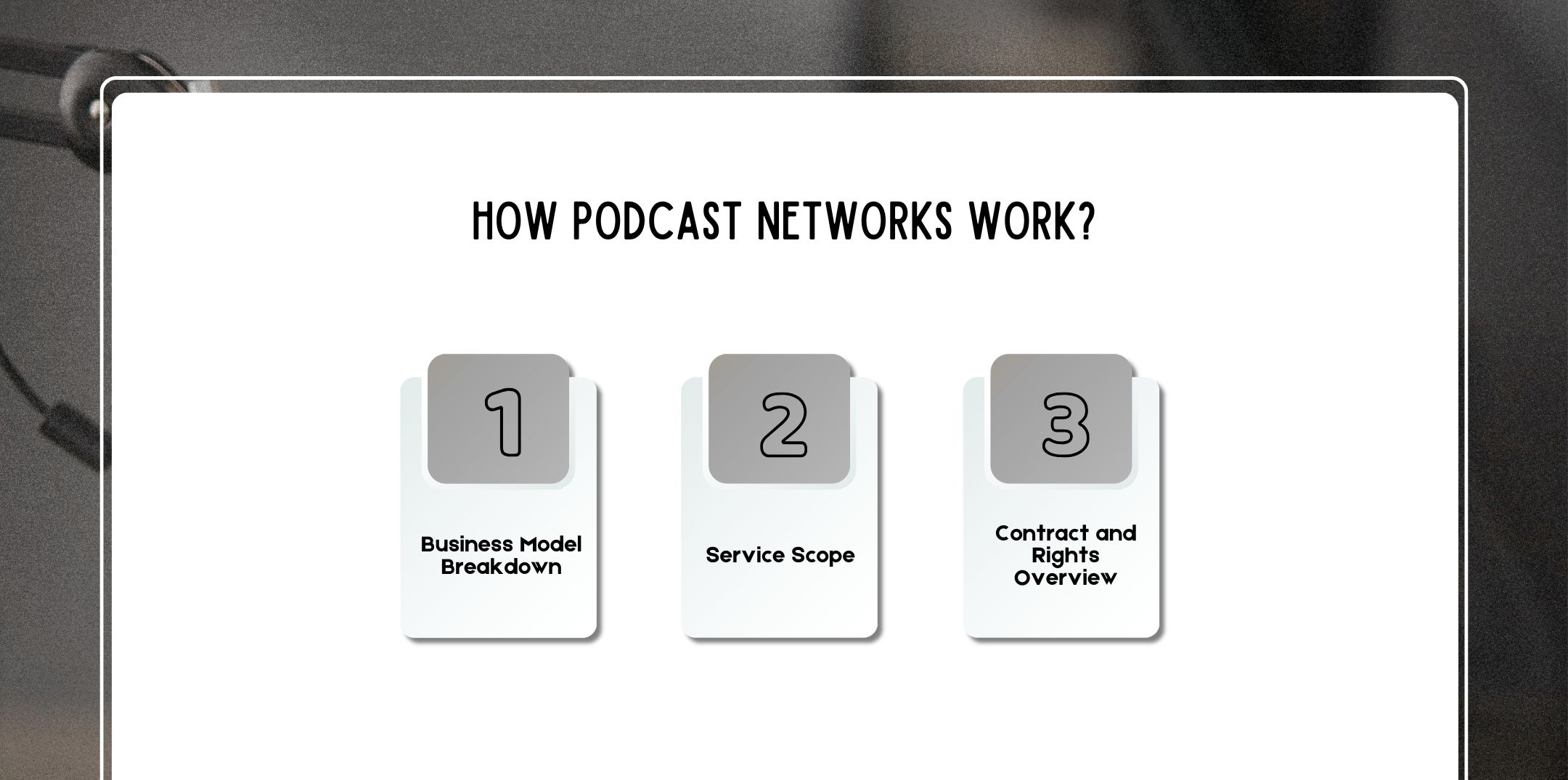
Understanding how networks function internally helps you evaluate whether joining one aligns with your goals.
Although most podcasters see only the branding side, networks operate like media agencies behind the scenes.
Podcast networks primarily generate revenue through:
For example, a network may secure a $100,000 campaign across 10 shows and distribute payments proportionally.
Therefore, large companies like SiriusXM integrate podcast networks into broader audio advertising ecosystems.
Networks vary dramatically in service levels.
On one hand, some offer:
While beginner creators often learn editing basics like how to save an Audacity file as an MP3, networks may assign dedicated editors instead.
Although others even assist with:
Contracts are one of the most important considerations.
Although networks may request:
In 2026, creator ownership is a major negotiation point. However, some networks allow full IP retention; others require partial ownership for larger promotional investments. Therefore, always consult legal counsel before signing.
While joining a podcast network can accelerate growth, it comes with trade-offs. Understanding both sides prevents costly mistakes.
Here are a few benefits of podcast network that you need to know about.
While networks promote shows across their ecosystem. If your show joins a network with five similar podcasts, you immediately gain exposure to their listeners.
However, this is especially powerful for niche shows like a podcast course that teaches structure, monetization, and how long should a podcast be for optimal engagement.
Aggregated download numbers equal stronger negotiating power. Networks often secure CPMs 20–40% higher than independent creators can negotiate.
Shows inspired by digital growth strategies similar to those discussed on Viraltips Online often benefit from bundled campaigns.
Networks may provide:
Secondly, graphic designers
However, this reduces workload and increases professionalism.
Here are a few drawbacks of podcast networks that you should know about as well.
Most networks take 20–50% of ad revenue. That can significantly reduce profit margins for high-performing shows.
While some networks impose:
If creative freedom is essential to you, this matters.
Some networks require:
However, you may need to upgrade equipment or workflows.
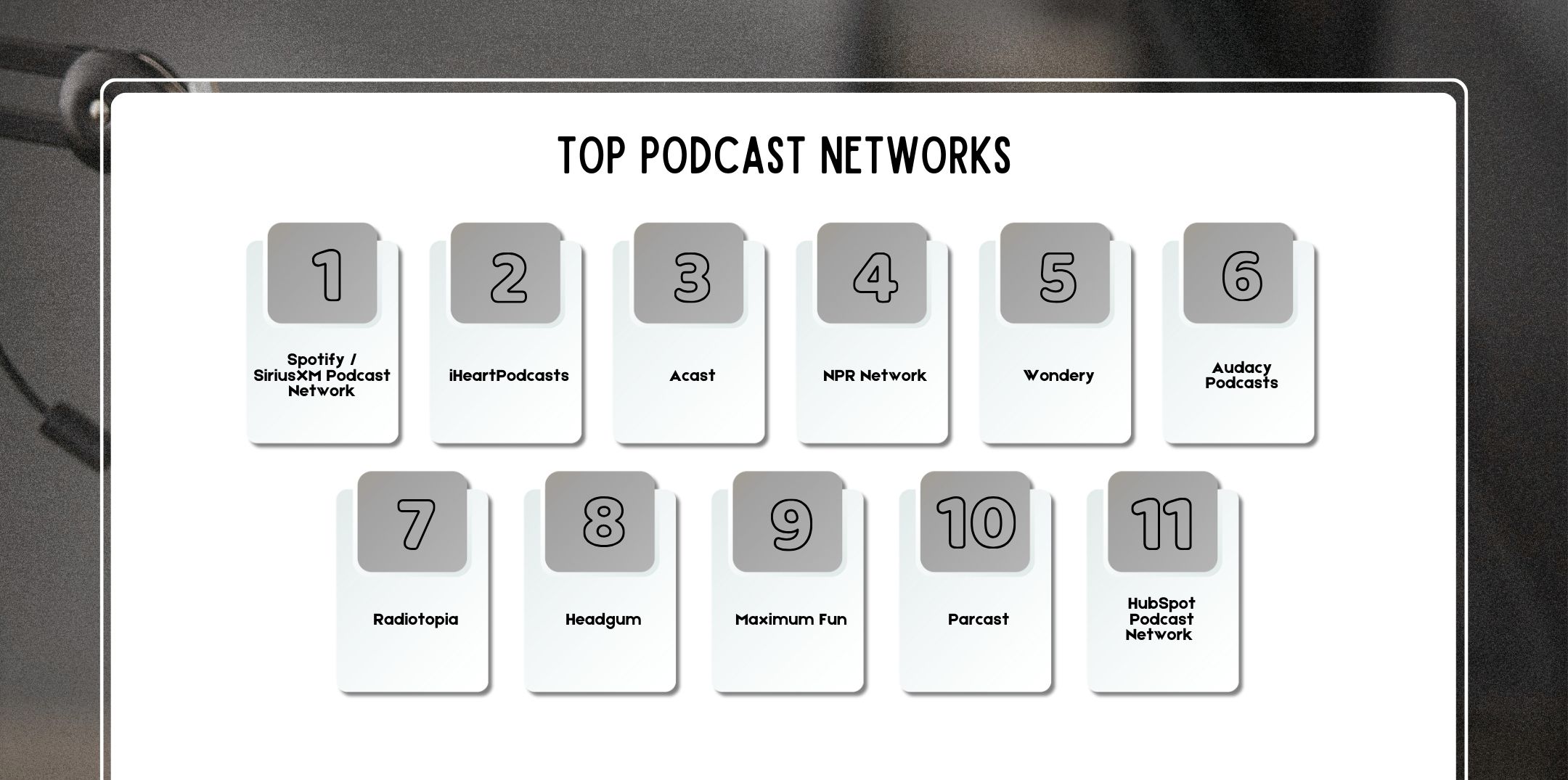
The podcast network landscape in 2026 is more competitive, specialized, and vertically integrated than ever before.
Although some networks are owned by global media conglomerates. Others are independent collectives focused on niche storytelling, comedy, education, or business content.
Choosing the right network requires more than brand recognition. You must evaluate alignment across audience type, monetization model, creative control, and long-term ownership terms.
Below are the leading podcast networks shaping the industry in 2026, along with what they’re best known for and who they’re ideal for.
Spotify and SiriusXM have built one of the largest global podcast ecosystems through acquisitions, exclusive deals, and platform integration.
Strengths:
Best For:
Considerations:
Therefore, Spotify’s ecosystem can significantly amplify reach, but creators must evaluate IP ownership carefully.
As part of iHeartMedia, iHeartPodcasts leverages traditional radio infrastructure alongside digital audio.
Strengths:
Best For:
Considerations:
The combination of legacy media power and podcast scale makes iHeartPodcasts a major player in 2026.
Acast is known for combining hosting, analytics, and monetization under one platform.
Strengths:
Best For:
Considerations:
Acast appeals to creators who want monetization infrastructure but still value operational independence.
NPR’s podcast ecosystem focuses on journalism, storytelling, and educational programming.
Strengths:
Best For:
Considerations:
Joining NPR’s ecosystem is often prestige-driven rather than purely commercial.
Wondery specializes in high-production storytelling, often adapting podcasts into television or film.
Strengths:
Best For:
Considerations:
For creators aiming at cross-media expansion, Wondery is one of the most powerful networks available.
Audacy blends sports, talk, and entertainment content across digital and traditional broadcasting.
Strengths:
Best For:
Considerations:
Radiotopia is an independent, mission-driven network known for creative, story-rich programming.
Strengths:
Best For:
Considerations:
Radiotopia appeals to creators who value creative depth over aggressive monetization.
Headgum focuses heavily on comedy and personality-driven shows.
Strengths:
Best For:
Considerations:
Maximum Fun operates as a member-supported network emphasizing community engagement.
Strengths:
Best For:
Considerations:
Parcast specializes in serialized, research-heavy storytelling (notably in crime and history).
Strengths:
Best For:
HubSpot’s podcast network focuses on business, marketing, sales, and entrepreneurship.
Strengths:
Best For:
Considerations:
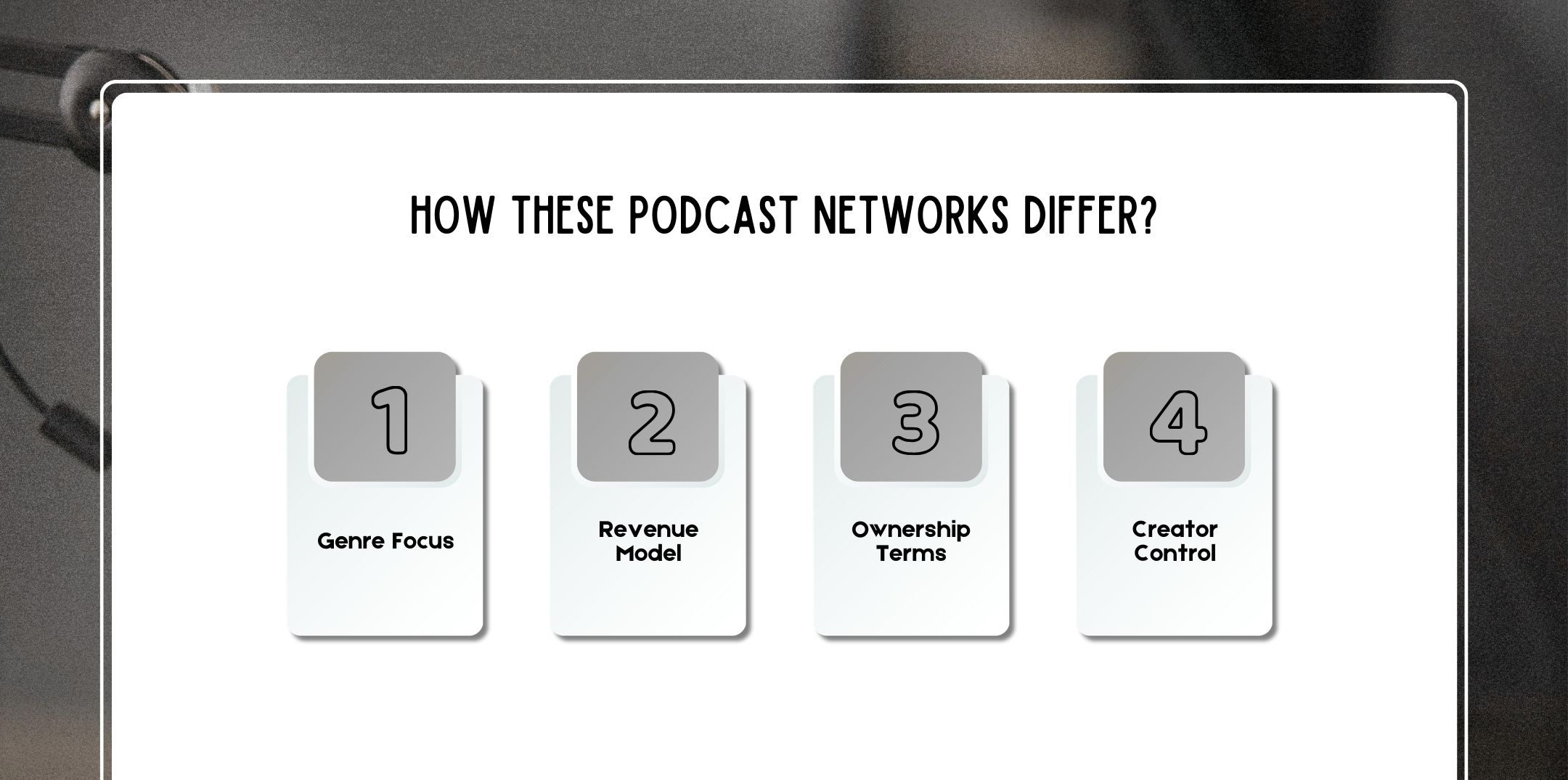
Each network varies across several dimensions:
Some specialize in:
Align your content niche carefully.
Revenue structures may include:
Some networks prioritize scale; others prioritize loyalty.
Contracts vary widely in:
Always review these carefully.
Creative freedom differs significantly.
Some networks:
Your tolerance for structure matters.
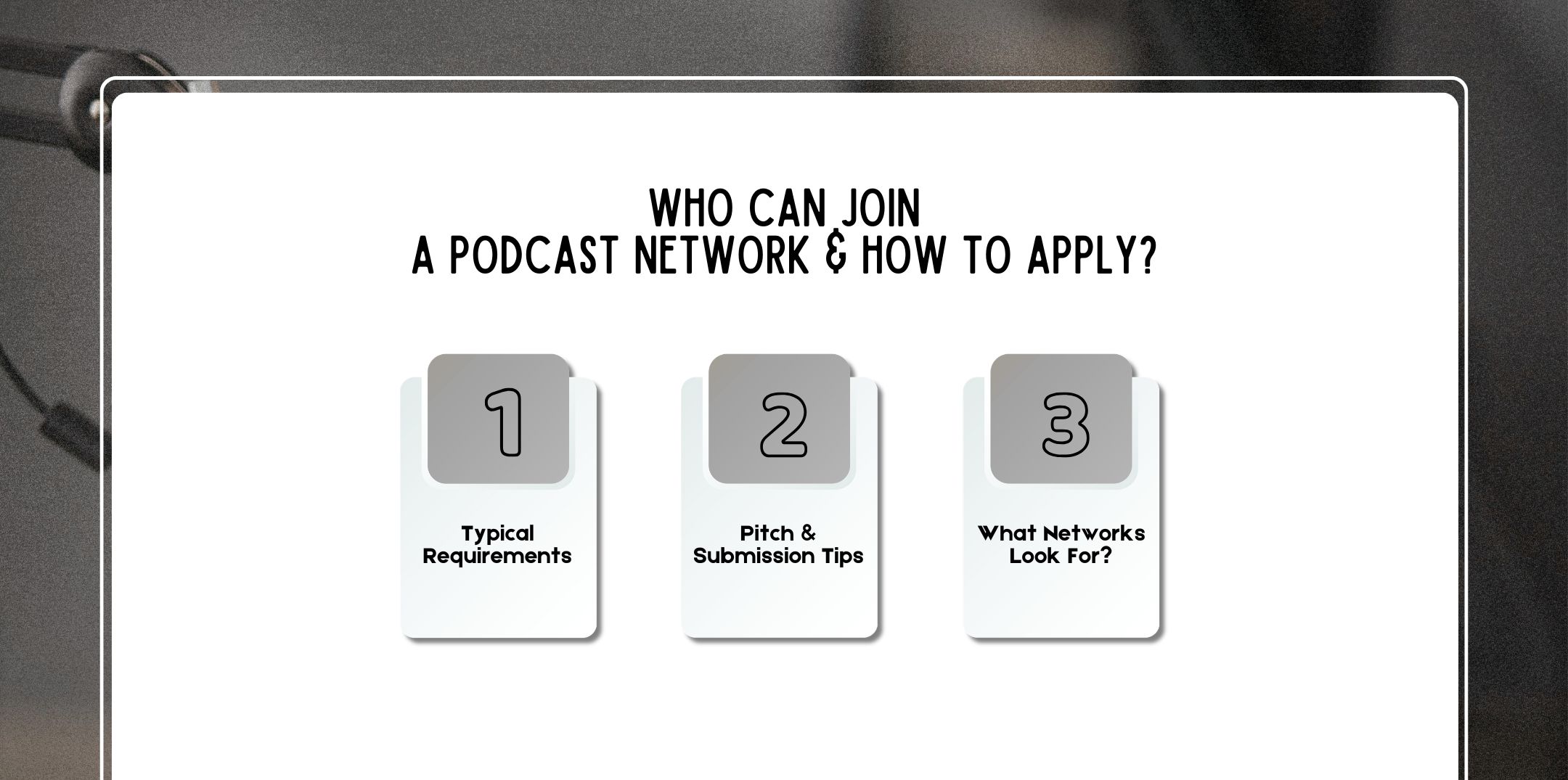
Not every podcast qualifies, and not every podcast should apply.
Common minimums in 2026:
Highly niche shows may qualify with lower numbers.
When applying:
Include audience breakdown, retention data, and case studies.
Networks prioritize:
Shows teaching practical topics like podcast idea generation, workflow breakdowns, or how long should a podcast be often perform well due to evergreen relevance.
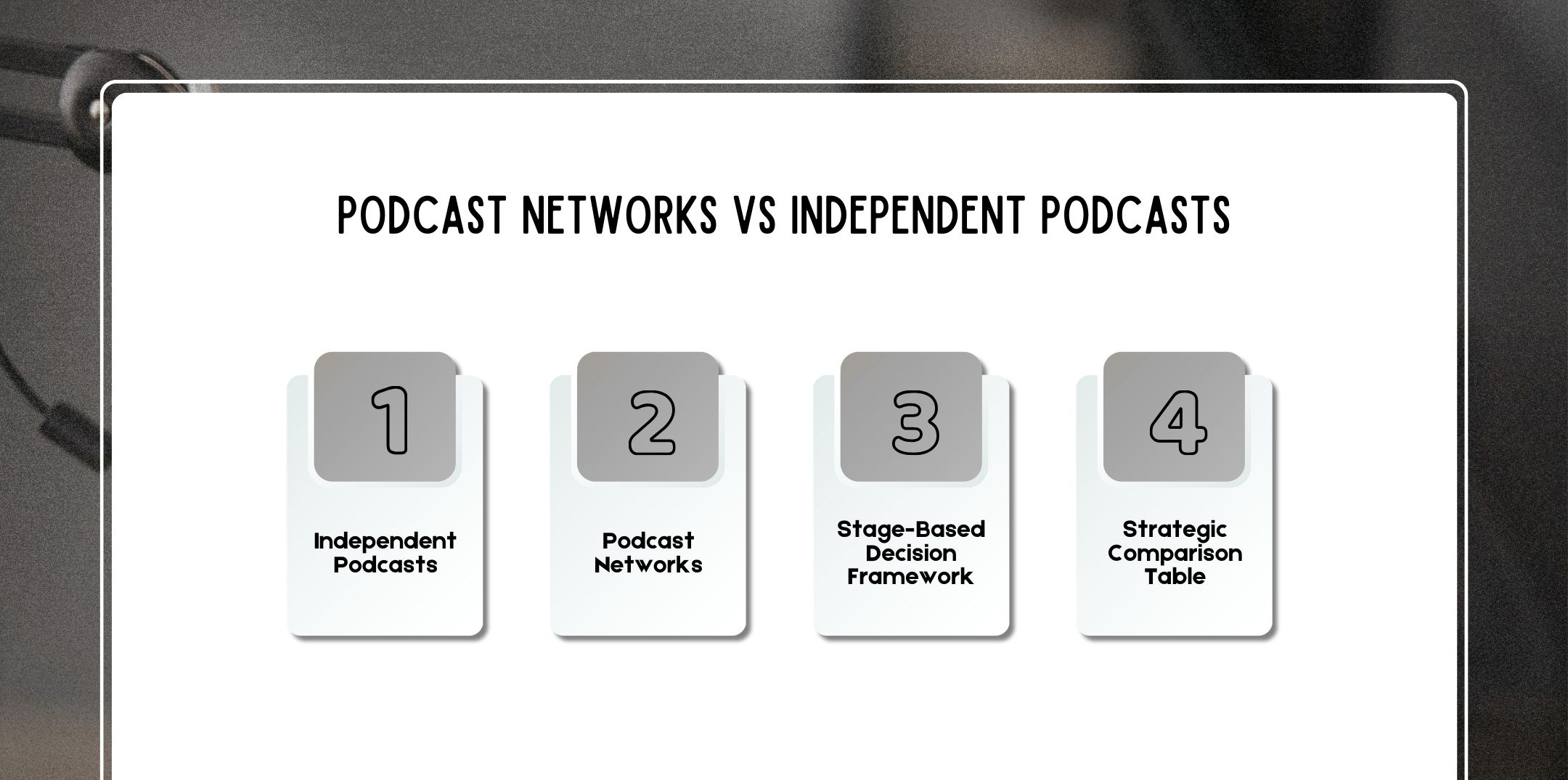
Choosing between joining a podcast network and remaining independent is one of the most important strategic decisions a podcaster will make. It affects your revenue model, creative control, workload, scalability, and long-term brand equity.
There is no universally “correct” path. The right decision depends on your growth stage, monetization goals, personality, niche authority, and risk tolerance.
Let’s break this down in detail.
Independent creators operate without network affiliation. You own, manage, and monetize your show entirely on your own terms.
As an independent podcaster, you retain full intellectual property (IP) rights. That means:
This ownership becomes extremely valuable long-term. If your show evolves into a media brand, educational program, or premium subscription offering (for example, teaching how to create a private podcast), independence ensures you keep all future upside.
Independent podcasters keep:
There is no revenue split unless you hire contractors. This can be especially profitable if:
For example, a podcast course creator with 4,000 engaged listeners may generate more net income independently than inside a network, taking 40%.
However, full revenue control also means full responsibility for sales.
You must:
If you dislike sales and negotiation, this can become overwhelming.
Independence provides total creative autonomy:
You are not restricted by brand guidelines or network expectations. This is especially valuable during early growth when you’re still refining:
Creative experimentation often leads to stronger long-term brand differentiation.
The downside of independence is workload.
You handle:
Even tasks like how to save an Audacity file as mp3 become part of your regular production pipeline.
As you grow, operational complexity increases. Independence gives freedom, but it requires discipline and systems.
Joining a podcast network shifts your role from full operator to content-focused creator within a larger ecosystem.
Networks provide infrastructure and monetization leverage but usually in exchange for a percentage of revenue.
Podcast networks offer systems that reduce friction and increase scale.
Infrastructure may include:
Large organizations like Acast and iHeartPodcasts operate centralized ad sales operations that individual creators cannot easily replicate. This infrastructure saves time and increases professionalism.
One of the strongest reasons creators join networks is revenue growth.
Networks:
For example, a network may secure a 6-month sponsorship package across five business podcasts. As an independent creator, landing that scale of deal would be much harder.
Networks also open doors to advertisers who prefer working with established media groups instead of individual creators.
This is especially valuable if your niche is commercially attractive but you lack sales infrastructure.
With a network:
For creators who want to scale without building a full business backend, this is powerful. If you prefer teaching, interviewing, storytelling, or educating rather than negotiating contracts networks provide leverage.
The most significant cost is revenue sharing.
Networks typically take:
However, that means you earn less per deal unless the network increases total deal volume and rates significantly.
You must evaluate:
Whether the network’s reach and sales capability increase total revenue enough to justify the split?
Some networks impose:
However, major networks like Spotify and Wondery may prioritize advertiser-friendly formats and predictable structures.
Whether your show relies on edgy experimentation or unpredictable formats, network constraints could feel limiting.
The smartest approach is to align your choice with your growth stage.
Best Path: Independent
Why?
Meanwhile, focus on:
However, joining a network too early may restrict growth flexibility.
Best Path: Evaluate both
At this stage:
Moreover, you can:
Therefore, hybrid models are common here.
Best Path: Strategic partnership
However, if your show has:
At the same time, a network partnership can multiply revenue significantly, especially if you want to expand into:
But you also have leverage to negotiate favorable terms.
Instead of asking:
Should I join a network?
Ask:
The choice depends on your growth stage and goals. If autonomy fuels your creativity, independence may be ideal.
Even advanced hosts benefit from understanding basics like Audacity cut track, and how to save an Audacity file as an MP3.
However, if you plan to monetize through premium tiers, explore how to create a private podcast as an additional revenue stream.
Here are a few questions and queries on the topic of podcast networks that others have asked that might be helpful for your needs.
A podcast network is a centralized organization that represents multiple podcasts under one operational and commercial umbrella. However, its primary purpose is to help shows grow, monetize, and operate more efficiently.
Podcast networks generate revenue through multiple business channels. Advertising is the most common, but it’s not the only one.
Most podcast networks take between 20% and 50% of advertising revenue.
Ownership depends entirely on contract terms.
Yes, advertising is typically their primary function.
In most cases, beginners benefit from staying independent at least initially
Pitching a network requires positioning your show as a business asset not just a creative project.
Yes, many networks offer enhanced distribution support.
In conclusion, podcast networks in 2026 are powerful growth accelerators, but they are not magic solutions.
However, for early-stage creators testing podcast ideas or launching a podcast course, independence often provides greater flexibility.
Although for scaling shows with proven traction, networks offer monetization leverage, cross-promotion, and operational efficiency.

Nabamita Sinha loves to write about lifestyle and pop-culture. In her free time, she loves to watch movies and TV series and experiment with food. Her favorite niche topics are fashion, lifestyle, travel, and gossip content. Her style of writing is creative and quirky.