How To Add Multiple Photos To An Instagram Story (And Why Your Brand Should Bother)
sibashree bhattacharya, 1 hour ago
Podcasting has experienced explosive growth over the past decade. Today, millions of creators produce podcasts covering everything from technology and finance to storytelling, true crime, education, and entertainment.
As a result, podcast directories and listening platforms have become essential tools for distributing audio content to global audiences.
One of the most popular podcast listening platforms existed for many years as Stitcher. It enabled millions of users to discover and stream podcasts through their mobile devices, smart speakers, and web platforms.
As a result, most podcasters chose to submit their shows to Stitcher because it provided access to an audience that exclusively listened to podcasts.
The podcast industry currently experiences continuous development as its standards progress. Streaming companies continuously modify their business approaches through service mergers and platform unification.
The transition process from Stitcher to shutdown operations caused multiple podcasters to question current distribution methods and the appropriate platforms for publishing their podcasts.
The Stitcher shutdown, together with modern podcast distribution systems, needs to be understood by creators in 2026.
This comprehensive guide explains:
The guide provides an explanation of current podcast distribution methods, together with instructions for replacing Stitcher through contemporary podcast distribution platforms.
Stitcher operated as an essential component of the podcast industry for multiple years. The platform dedicated itself to spoken-word content, while Apple Podcasts and Spotify allowed users to access both podcasts and music.
Podcast creators preferred to submit their shows to Stitcher because its audience displayed strong engagement and dedicated interest in podcasts.
SiriusXM’s ownership of Stitcher allowed the platform to increase its presence in various audio entertainment channels.
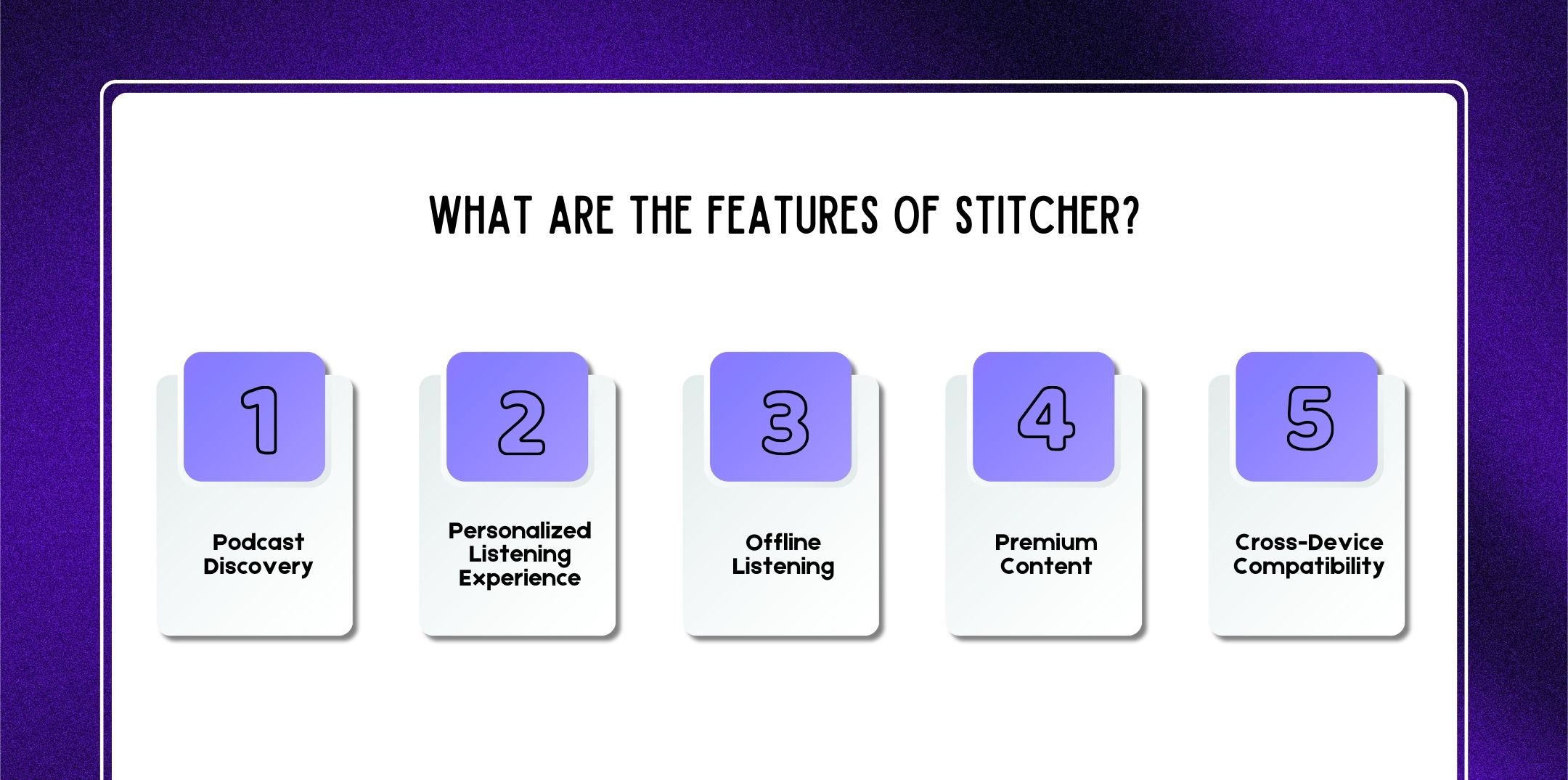
Stitcher offered several features that made it attractive to listeners and podcasters.
First of all, Stitcher provided curated podcast recommendations, making it easier for listeners to discover new shows.
Users could create playlists, subscribe to podcasts, and receive personalized recommendations.
Listeners could download episodes and listen without an internet connection.
Through Stitcher Premium, users could access ad-free podcasts and exclusive shows.
The platform supported smartphones, web browsers, and automotive systems.
Because of these features, Stitcher became one of the most trusted podcast listening apps for years.
The shutdown ended operations for a podcast platform that had existed for many years. SiriusXM planned to develop a more efficient podcast operation by merging all content into its main audio services.
The Stitcher app, which was discontinued, prompted users to find alternative audio platforms.
The shutdown created multiple problems that podcasters needed to solve.
First, many creators had built loyal audiences on Stitcher. The listeners who used the platform needed to discover new podcast applications after it shut down.
Second, creators had to update their podcast directories, links, and marketing materials to remove Stitcher references.
Podcasters needed to distribute their shows across all important directories, which would help them reach more listeners.
The podcasting ecosystem maintains its strength because multiple platforms currently fulfill identical functions.
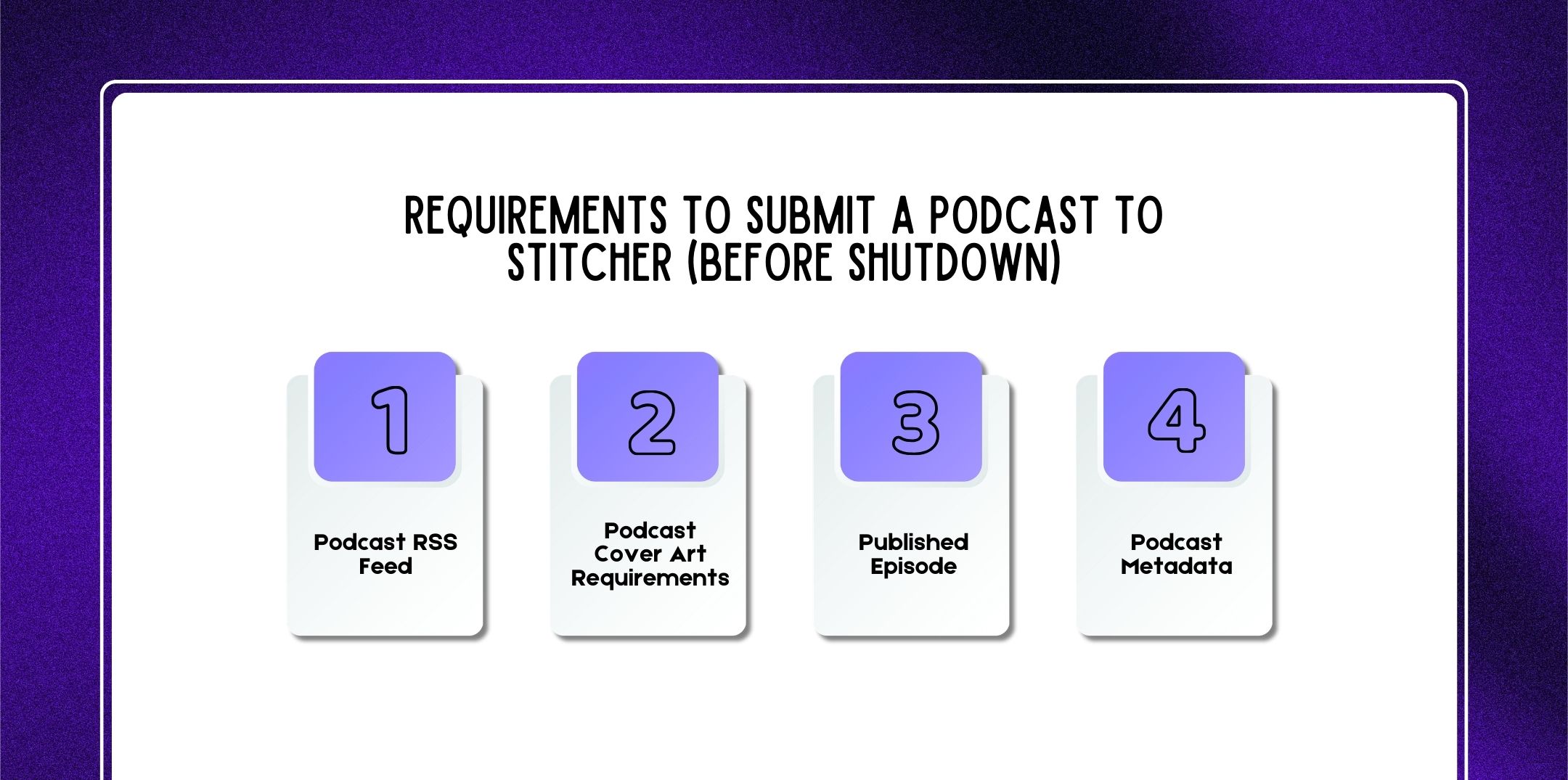
Although Stitcher is no longer active, understanding its submission requirements helps illustrate how podcast distribution works in general. Most modern podcast directories still follow similar standards.
A podcast RSS feed is the backbone of podcast distribution. An RSS feed is a file containing essential podcast data, including:
Podcast hosting platforms automatically generate RSS feeds for creators.
Popular hosting services include:
Without an RSS feed, submitting a podcast to directories was impossible.
Podcast artwork was another important requirement.
Typical specifications included:
High-quality artwork improves discoverability and professionalism.
Most directories require at least one published episode before submission.
However, many experts recommended launching with three episodes to increase listener retention.
Metadata helps podcast platforms categorize content.
Typical metadata fields included:
Well-optimized metadata improved podcast search rankings.
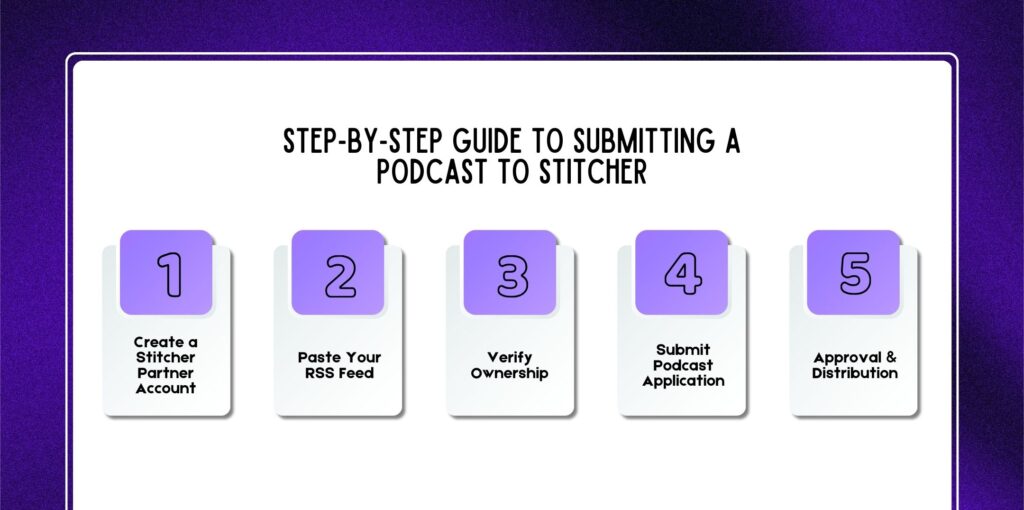
Although Stitcher has shut down, understanding the original process helps illustrate how podcast submissions typically work.
First, creators needed to sign up for the Stitcher Partner Portal. This account allowed podcasters to manage their show listings and verify ownership.
Next, podcasters entered their RSS feed URL into the submission form. The system would automatically scan the feed and retrieve podcast details.
Verification ensured that the person submitting the podcast actually owned it.
Typically, Stitcher sends a verification email to the address listed in the RSS feed. Creators had to confirm the email before proceeding.
After verification, creators submitted their podcast for review.
The platform checked:
Once approved, the podcast became searchable on Stitcher. New episodes automatically appeared through the RSS feed whenever they were published.
Podcast distribution relies heavily on RSS technology.
Rather than uploading episodes to every platform individually, creators publish episodes to a hosting platform.
The hosting platform generates an RSS feed. Podcast directories then read the RSS feed and automatically display the episodes.
This system allows podcasts to appear on multiple platforms simultaneously, including:
Whenever a new episode is published, the RSS feed updates automatically. Consequently, all directories are updated at the same time.
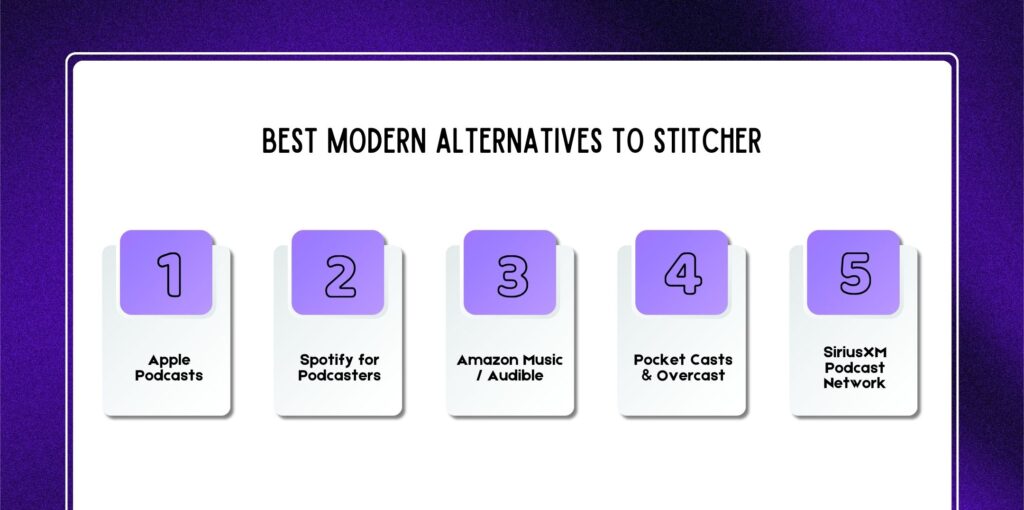
Since Stitcher shut down, podcasters now rely on several other major directories.
Apple Podcasts remains one of the largest podcast directories in the world.
Advantages include:
Because of its influence, most podcasters consider Apple Podcasts essential for distribution.
Spotify has become one of the fastest-growing podcast platforms.
Features include:
Spotify has invested billions in podcasting, making it a major platform for creators.
Amazon Music and Audible also support podcasts.
Benefits include:
Podcast listening apps like:
are also popular among dedicated podcast listeners.
These apps focus heavily on audio quality and advanced playback controls.
After shutting down Stitcher, SiriusXM integrated many podcasts into its broader audio network.
This platform offers:
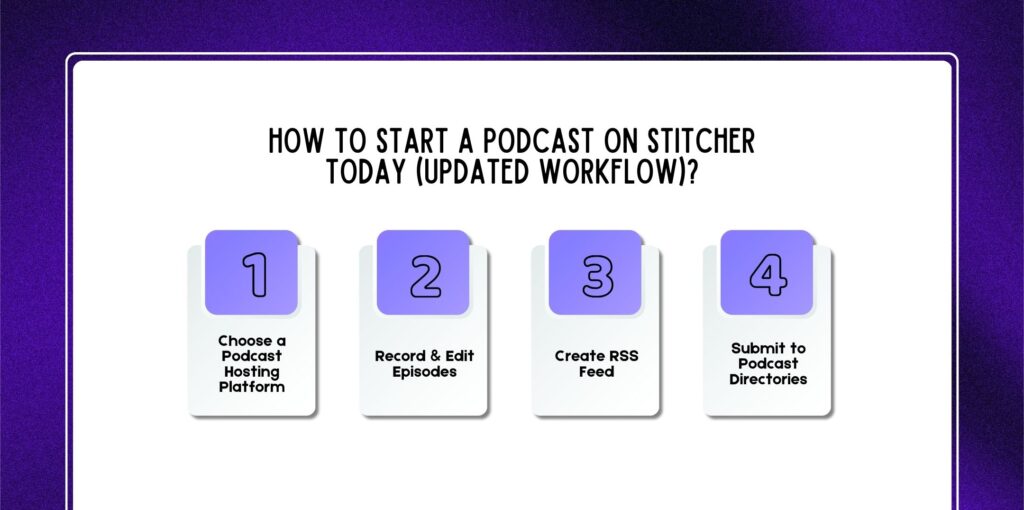
The podcast creation process has evolved, but the core steps remain straightforward.
First, select a hosting platform.
Examples include:
These platforms store your audio files and generate your RSS feed.
Next, record your podcast using a microphone and recording software. Editing software helps remove noise and improve sound quality.
Popular tools include:
After uploading episodes to your host, the platform generates an RSS feed. This feed contains all your podcast information.
Finally, submit the RSS feed to major directories such as:
Your podcast will then become available globally.
Understanding analytics helps creators improve their podcasts.
Important metrics include:
These metrics reveal how audiences interact with your content.
Popular analytics tools include:
These tools help track rankings, downloads, and audience trends.
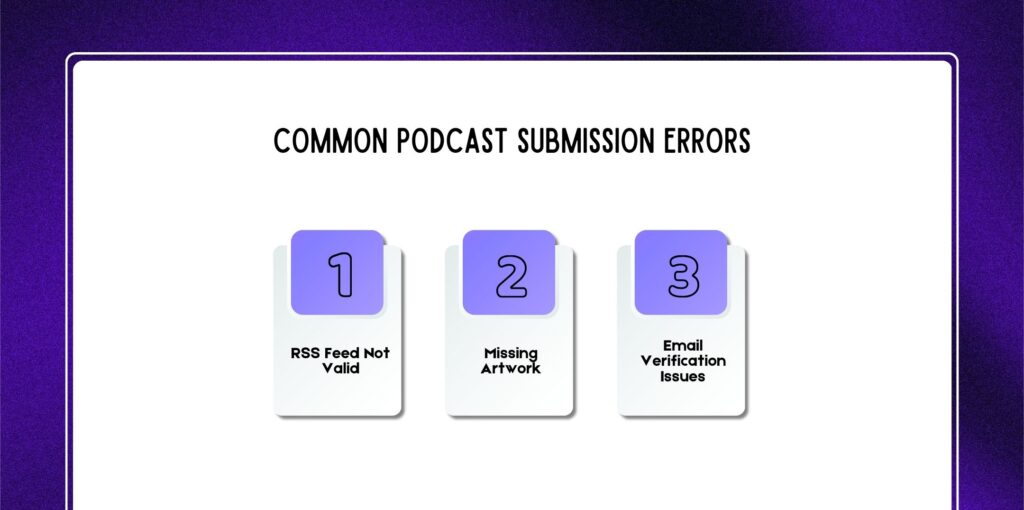
Even experienced podcasters encounter submission issues.
Invalid RSS feeds prevent directories from accessing podcast data.
Solution:
Use RSS validation tools to check formatting errors.
Podcast directories often reject submissions without proper artwork.
Solution:
Upload artwork meeting minimum size requirements.
Some submissions fail because verification emails are not confirmed.
Solution:
Ensure the email in your RSS feed is active and accessible.
Here are a few expert tips for when you are dealing with podcast distribution and knowing how to start a podcast on Stitcher.
Publishing your podcast across many platforms increases visibility.
Use keyword-rich descriptions and titles to improve search discovery.
Consistency builds audience trust and improves algorithm recommendations.
Promoting episodes on platforms like:
Helps attract new listeners.
Before you know how to start a podcast on Stitcher and launch it, ensure you have completed the following steps:
Following this checklist increases the chances of a successful podcast launch.
Here are a few questions and queries on the topic of how to start a podcast on Stitcher that others have asked, and it might be helpful for you as well.
No. Stitcher shut down in 2023 and no longer accepts podcast submissions.
Podcasters now rely on platforms like Spotify, Apple Podcasts, and Amazon Music.
Yes. An RSS feed is essential for distributing podcasts to listening platforms.
Most directories approve podcasts within 24–72 hours.
Popular choices include Buzzsprout, Podbean, and Libsyn.
Starting a podcast can cost anywhere from $0 to several hundred dollars, depending on equipment and hosting.
Yes. Most podcasts appear on several directories simultaneously.
The most common formats are MP3 and AAC.
Most experts recommend launching with three episodes.
Podcasts can generate revenue through:
• Advertising
• Sponsorships
• Listener donations
• Premium subscriptions
• Affiliate marketing
The shutdown of Stitcher marked the conclusion of a significant time period in podcasting history. The podcast ecosystem remains stronger than ever.
Creators can now distribute their shows through major platforms, which include Spotify, Apple Podcasts, and Amazon Music. The platforms enable hundreds of millions of listeners to access their content throughout the globe.
Creators can expand their audiences after the Stitcher shutdown by mastering podcast RSS distribution, selecting trustworthy hosting services, and submitting their content to various directories.
Digital content creators can utilize podcasting as their most effective digital media platform to distribute their content to audiences worldwide through proper distribution methods.

Nabamita Sinha loves to write about lifestyle and pop-culture. In her free time, she loves to watch movies and TV series and experiment with food. Her favorite niche topics are fashion, lifestyle, travel, and gossip content. Her style of writing is creative and quirky.