Thirdly, video podcasts compete with traditional YouTube
Fourthly, audio quality expectations are higher than ever
Finally, monetization models have matured
However, despite better technology and easier distribution, most podcasts still fail within the first 10 episodes.
Why? Because of weak positioning and unsustainable podcast ideas.
The truth is this:
Firstly, audio quality matters (you must aim for the Best Sounding Podcast Audio).
Secondly, editing tools matter (knowing Audacity Compressor, Audacity normalize audio, Audacity cut track, how to move audio in Audacity, and how to save Audacity file as MP3 helps).
If many shows exist but few are high quality, you may have an opportunity.
Step 2: Audience Surveys: Ask Before You Build
Direct feedback is one of the most powerful validation tools.
Instead of assuming what your audience wants ask them.
1. Use Instagram Polls
Post questions like:
Finally, would you listen to a podcast about X?
Secondly, which topic interests you more?
Thirdly, short 20-minute episodes or 45-minute deep dives?
Finally, solo episodes or interviews?
Track engagement rate not just votes.
High engagement signals interest.
2. LinkedIn Posts (For Professional Niches)
Create thought-provoking posts such as:
I’m planning a podcast about startup growth strategies. Would you prefer tactical breakdowns or founder interviews?
Observe:
Comments
Shares
Direct messages
Engaged discussion = validation.
· Email Lists
If you already have an email list, send a simple survey.
Ask:
Finally, what topics do you struggle with?
Secondly, would you listen to this show?
Thirdly, what frustrates you about current podcasts in this niche?
Finally, how long should a podcast be for you to stay engaged?
Email feedback is powerful because subscribers are already invested in you.
· What You’re Measuring?
Topic demand
Format preference
Episode length expectations
Listener pain points
You’re not just validating an idea you’re shaping your positioning.
Step 3: Social Media Feedback: Test Before Recording
Before you invest time recording, test episode titles publicly.
1. Post Potential Episode Titles
Example:
Thinking about recording an episode on:
Audacity Compressor vs Normalize Audio – Which Should You Use?
Would you listen
Track:
Saves
Shares
Comments
Poll responses
If people engage heavily with a title, that’s a green signal.
2. Use Reddit and Facebook Groups
Join niche communities and observe:
Firstly, what questions get repeated?
Secondly, what frustrations show up weekly?
Finally, what topics spark debate?
If your podcast addresses recurring frustrations, you’re aligned with real demand.
3. Analyze Comment Sections
Look at:
YouTube videos in your niche
Podcast reviews
Blog comment sections
People often say:
I wish someone explained…
Why doesn’t anyone talk about…
I’m confused about…
These are hidden content goldmines.
Step 4: Record Pilot Episodes (But Don’t Launch Yet)
Even after keyword and audience validation, test execution quality. Record 2–3 pilot episodes privately. Do not publish immediately.
Ask Honest Questions:
1. Was It Engaging?
Did you ramble?
Did you provide structured value?
Would you listen to it yourself?
2. Was the Pacing Right?
Were there long pauses?
Did sections drag?
Did the introduction hook listeners?
Many beginners underestimate pacing.
3. Editing matters.
Use tools like:
Audacity cut track to remove mistakes cleanly
How to move audio in Audacity to align segments
Audacity compressor to control vocal peaks
Audacity normalizes audio to balance volume
These steps dramatically improve clarity.
4. Was the Audio Clear?
Poor audio destroys credibility.
Check for:
Background noise
Volume inconsistency
Echo
Harsh plosives
Aim for the Best Sounding Podcast Audio possible within your budget.
Export correctly:
Edit in WAV
Understand how to save Audacity file as MP3 properly
Use 128–192 kbps bitrate
Add metadata
Professional sound increases perceived authority instantly.
Step 5: Collect Private Reviews Before Public Launch
Share pilot episodes with:
5–10 trusted listeners
Industry peers
Target audience members
Ask structured questions:
Firstly, would you subscribe? Why or why not?
Secondly, which part felt strongest?
Thirdly, where did you lose interest?
Fourthly, was the episode length appropriate?
Finally, was the format clear?
Encourage brutal honesty. Early criticism prevents public failure.
Step 6: Validate Monetization Potential
Even if your goal isn’t immediate profit, sustainability matters.
Ask:
Firstly, are brands advertising in this niche?
Secondly, are there affiliate products available?
Thirdly, are listeners willing to pay for premium content?
Finally, do similar podcasts have sponsors?
If monetization pathways exist, your idea has longevity potential.
Step 7: The 5-Point Validation Checklist
Before launching, confirm:
Firstly, people are searching for this topic.
Secondly, your audience shows interest publicly.
Thirdly, engagement exists on social media.
Fourthly, pilot episodes receive positive feedback.
Finally, monetization pathways are viable.
If you can check at least 4 out of 5, you’re positioned well.
Expert Tips & Best Practices for Podcast Success in 2026
Launching a podcast is easy. Sustaining and scaling it is the real challenge.
The difference between hobby podcasts and industry leaders lies in planning discipline, content structure, promotional systems, ethical responsibility, and monetization clarity.
Below is a detailed breakdown of expert-level strategies to ensure your podcast grows with authority and longevity.
1. Topic Planning Cadence: Build Before You Broadcast
One of the biggest mistakes new podcasters make is planning one episode at a time. This reactive approach leads to inconsistency and creative burnout.
Instead, adopt a strategic planning cadence.
Plan 15–20 Episodes Ahead
Why this matters:
Firstly, prevents idea exhaustion
Secondly, ensures thematic consistency
Thirdly, allows batch recording
Fourthly, helps with SEO clustering
Finally, builds narrative arcs if needed
When you plan ahead, you can structure content progressively:
1 Episode: Foundations
5 Episode: Tactical insights
10 Episode: Advanced strategy
15 Episode: Case studies
This layered approach keeps listeners engaged long-term.
Create a 3-Month Content Calendar
A 90-day roadmap provides clarity.
Your calendar should include:
Episode titles
Guest names (if applicable)
Publishing dates
Promotional themes
Key talking points
This also helps align marketing across platforms social media, email, and YouTube clips can all reference upcoming episodes.
In 2026, recording a podcast is only 30% of the job. Promotion is 70%. However, your show should exist everywhere your audience consumes content.
Audiograms on Instagram
Short 30–60 second clips:
Emotional moments
Controversial takes
Key insights
Add subtitles.
Use bold captions.
Post consistently.
LinkedIn Thought-Leadership Snippets
For professional niches:
Turn episode insights into carousels.
Post short value-driven summaries.
Tag guests.
LinkedIn organic reach remains strong for niche authority positioning.
YouTube Shorts
YouTube Shorts help:
Firstly, reach non-podcast audiences
Secondly, improve discoverability
Finally, repurpose existing content
Clip high-energy or insightful segments.
Twitter Threads
Break episodes into:
Firstly, step-by-step frameworks
Secondly, opinion threads
Finally, industry predictions
Threads drive engagement and authority.
Email Newsletter Highlights
Your email list is your owned audience.
Include:
Episode summary
Key quotes
Timestamps
Bonus resources
Never rely only on algorithms.
4. Ethical Considerations: Protect Your Reputation
Even if ethics in podcasting is not optional, however, it protects your reputation.
Fact-Check Everything
Especially if covering:
Health advice
Financial strategies
Legal topics
True crime
Misinformation damages credibility.
Avoid Defamation
Do not publish:
Unverified allegations
Personal attacks
Speculative accusations
Stick to documented sources.
Credit Sources
If referencing:
Research
Articles
Statistics
Audio clips
Always acknowledge original creators.
Avoid Copyright Infringement
Use:
Licensed music
Royalty-free libraries
Properly attributed sound effects
Podcast legal issues can escalate quickly.
5. Monetization Models: Turning Value Into Revenue
Monetization should align with your niche and audience.
Sponsorship
Best for:
Established download numbers
Defined audience demographics
Sponsors look for:
Engagement
Niche targeting
Brand alignment
Affiliate Marketing
Recommend tools you genuinely use.
Examples:
Podcast hosting platforms
Editing software
Equipment
Online courses
Authenticity drives conversions.
Premium Subscriptions
Offer:
Ad-free episodes
Bonus content
Early access
Behind-the-scenes insights
Meanwhile, platforms like Apple Subscriptions and Patreon support this model.
Courses
However, if your podcast teaches skills, build:
Masterclasses
Digital workshops
Structured programs
Podcast → Authority → Course Sales.
Paid Communities
Private communities build recurring revenue.
Examples:
Mastermind groups
Networking circles
Industry forums
Live Events
Online or in-person:
Meetups
Workshops
Conferences
Live engagement deepens loyalty.
6. Tools & Platforms: Production Efficiency Matters
High-quality audio equals credibility.
Hosting Platforms
As can be seen, reliable hosting ensures distribution to Spotify, Apple Podcasts, Google Podcasts, etc.
Recommended:
Hubhopper – Popular in India
Buzzsprout – Beginner-friendly
Podbean – Flexible monetization options
Editing Software
Audacity
Free and powerful.
However, learn to use:
Audacity compressor – Controls dynamic range
How to move audio in Audacity – Align tracks precisely
Audacity normalize audio – Balances volume levels
Audacity cut track – Removes mistakes cleanly
Always edit in WAV format first for highest quality. Therefore, it is important to understand:
How to save Audacity file as MP3 properly:
Export at 128–192 kbps
Use constant bitrate
Add metadata tags
Hindenburg Pro
While designed for journalists and storytellers. Although excellent for narrative podcasts and structured production.
Descript
AI-powered editing. Great for transcript-based workflows. Meanwhile, check Descript reviews before committing to ensure it fits your style.
Alitu
Automates leveling and cleanup. However, read a detailed Alitu Review to see if automation fits your needs. Although professional production enhances listener retention dramatically.
Podcast Topic Planner Template Meanwhile, use this structured template before recording: Podcast Name: Target Listener: (Demographics, profession, interests) Primary Pain Point: Core Promise: (What transformation do you deliver?) Format: (Solo, Interview, Hybrid) Episode Length: Publishing Frequency: Monetization Plan: Promotion Channels: Season Outline: Backup Topics:
When Deciding Length: How Long Should A Podcast Be?
Meanwhile, there is no universal rule, only strategic alignment.
General Guidelines:
20–45 minutes works well for most niches.
Solo educational shows: 15–30 minutes.
Interview shows: 30–60 minutes.
Narrative storytelling: 45–90 minutes.
However, the real answer:
Therefore, a podcast should be as long as it remains structured, valuable, and engaging. Although long episodes without clarity reduce retention. Meanwhile, short episodes without depth reduce authority.
As a result, focus on:
Firstly, tight editing
Secondly, clear transitions
Thirdly, defined segments
Finally, a strong closing summary
However, value determines length, not arbitrary standards.
What Are The Best Podcast Ideas For Beginners?
However, if you’re new to podcasting in 2026, the key is choose a format and topic that reduce complexity while maximizing consistency. Meanwhile, here are the most beginner-friendly podcast ideas and why they work:
· Interview-Based Format
Interview podcasts are ideal for beginners because:
Firstly, your guest carries part of the conversation.
Secondly, you don’t need to generate all the expertise yourself.
Finally, each guest brings a new audience to your show.
You can focus on:
Industry professionals in your niche
Local entrepreneurs
Creators and influencers
Authors and startup founders
The structure is predictable, which simplifies planning and editing.
· Niche Hobby Topics
By all means, hobby-based podcasts perform exceptionally well because audiences are highly passionate and engaged.
For Examples:
Home coffee brewing techniques
Retro gaming consoles
Urban gardening in small apartments
Fantasy book deep dives
DSLR photography basics
Niche hobby listeners are loyal and often underserved.
· Local Community Stories
Local storytelling is massively underutilized.
While ideas include:
Firstly, interviews with local business owners
Secondly, city’s history episodes
Thirdly, community success stories
Finally, local event coverage
Therefore, hyper-local podcasts can dominate quickly because competition is low.
· Personal Growth Journeys
However, documenting your own journey builds authenticity.
Examples:
Building a side hustle from scratch
Learning a new skill publicly
Health transformation diaries
“30 Days of Discipline” challenge
Therefore, audiences connect deeply with transparency.
How Do I Brainstorm Long-Term Topics That Don’t Run Dry?
Many podcasters quit because they exhaust ideas after 10–15 episodes. Meanwhile, the solution is? Structure your topic universe strategically.
However, break every broad topic into layered categories:
1. Beginner
Foundational explanations
“What is…” episodes
Myths and basics
Common mistakes
2. Intermediate
Tactical strategies
Tools and frameworks
Case studies
Workflow breakdowns
3. Advanced
Deep industry insights
Contrarian perspectives
Emerging trends
Expert roundtables
4. Case Studies
All things considered, real examples never run dry.
Analyze:
Success stories
Failures
Lessons learned
Before-and-after breakdowns
5. Listener Q&A
Encourage audience submissions:
Voice notes
Email questions
Instagram polls
Reddit threads
Meanwhile, when you build topic buckets, one idea naturally leads to another. However, that’s how you scale beyond 100 episodes without burnout.
How Do I Assess Whether an Idea Will Attract Listeners?
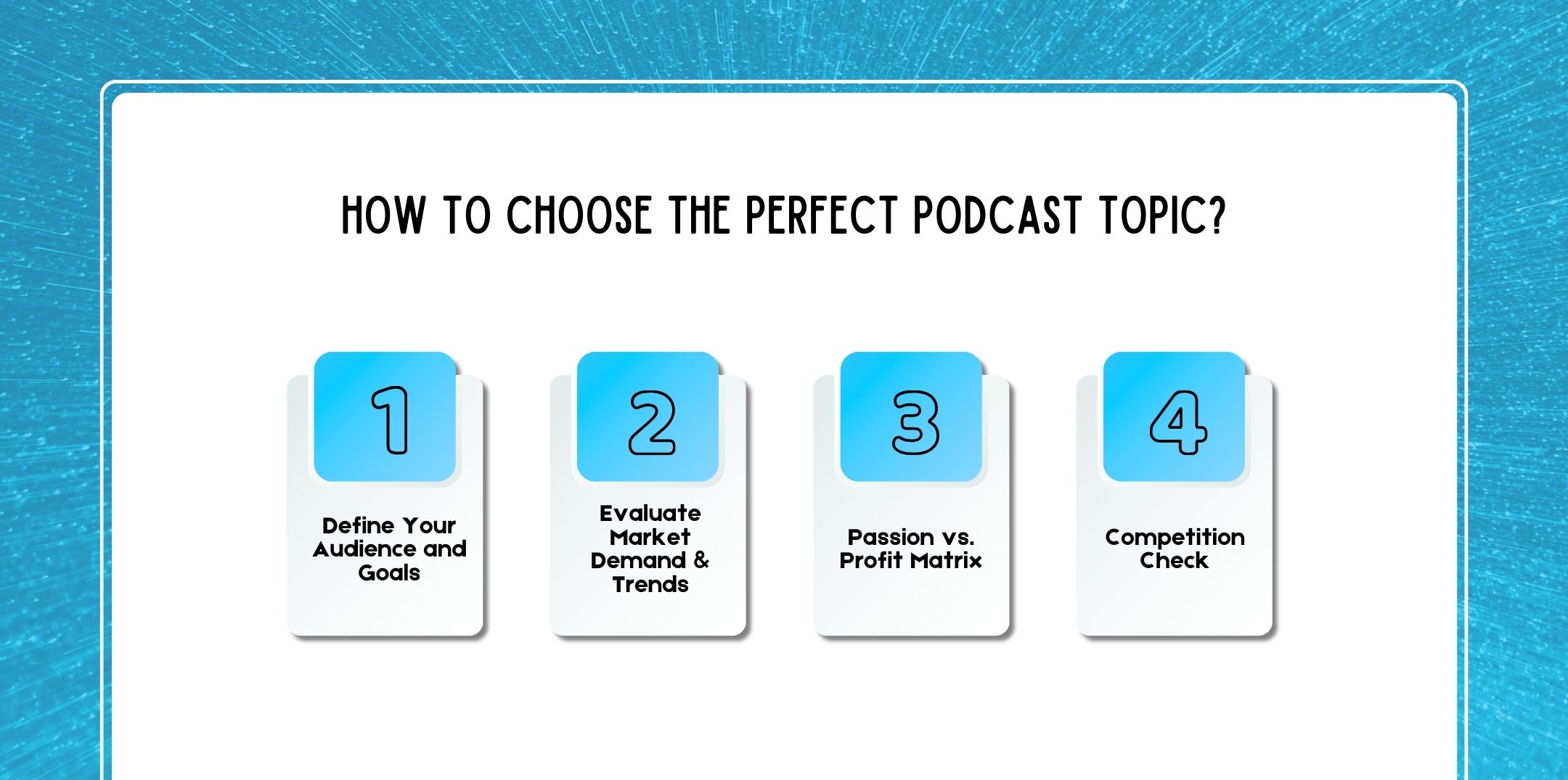
Use a four-point validation framework:
1. Search Demand
Google Trends
Keyword tools
Spotify search suggestions
Therefore, if people are searching, there’s interest.
2. Social Engagement
Meanwhile, check:
Reddit threads
Twitter discussions
YouTube comments
Facebook groups
High engagement = emotional investment.
3. Competition Analysis
Evaluate:
Number of similar podcasts
Episode consistency
Production quality
Reviews
Therefore, competition is not bad, however, weak competition is an opportunity.
4. Monetization Viability
However, ask:
Firstly, are there products/services tied to this niche?
Secondly, are brands advertising here?
Finally, are listeners willing to pay?
If money flows into the ecosystem, sustainability improves.
How Do I Pitch Quests For Interview Formats?
Consequently, successful guest outreach follows a clear formula.
Step 1: Personalize
Reference:
Their recent work
A specific podcast they appeared on
A blog or book they published
Step 2: Show Preparation
Demonstrate:
You understand their expertise
You have specific talking points
You’re not mass-emailing
Step 3: Explain Audience Value
Mention:
Firstly, your audience demographics
Secondly, download numbers (if available)
Finally, social reach
However, if you’re new, the highlight:
Clear niche focus
Marketing plan
Content quality
Step 4: Keep It Concise
Your email should be:
150–250 words
Clear topic angle
Easy scheduling link
Professional, simple, respectful.
What Legal Or Ethical Checks Should I Do Before Publishing?
As can be seen, podcasting carries responsibility.
1. Copyright Clearance
Use licensed music.
Avoid unauthorized clips.
Secure sound effects legally.
2. Defamation Awareness
Verify claims.
Avoid unproven allegations.
Stick to documented facts.
Especially critical in true crime and investigative formats.
3. Guest Consent
Written agreement preferred.
Clarify usage rights.
Inform about the editing process.
4. Music Licensing
Use royalty-free platforms.
Purchase proper licenses.
Understand attribution requirements.
5. Privacy Laws
Protect personal data.
Avoid sharing private contact information.
Be careful with minors and sensitive stories.
Ethical podcasting builds long-term trust.
FAQs
Here are a few questions that others have asked on the topic of podcast ideas that others have asked that might be helpful for you at the same time.
1. Should I focus on niche topics or broad appeal?
Start niche. Expand later. But why? Broad podcasts struggle because the competition is massive, messaging becomes unclear, and audience loyalty is weak.
2. Is it better to have a series theme or standalone episodes?
However, each model has strengths. While the series-based structure has its pros are, it builds anticipation, increases retention, and encourages binge listening. And with standalone episodes, the pros are, easier to produce, flexible content, and new listeners can jump in anytime.
3. How many episodes should a new podcast plan ahead?
Why planning matters? 1. prevents early burnout, 2. ensures thematic consistency, 3. allows better SEO targeting, and 4. helps with batch recording
4. Can I change my podcast topic later?
Yes, but reposition strategically. However, avoid abrupt pivots. Instead: 1. transition gradually, 2. explain the shift to your audience, 3. align the new direction with your core theme.
5. What tools help find trending podcast topics?
Here are reliable research tools: 1. Google Trends, 2. Spotify Charts, 3. Apple Podcasts Rankings, 4. Reddit, 5. YouTube Search.
Your Podcast Is A Brand, Not Just A Show
Podcasting in 2026 is no longer about simply “starting a show.” Meanwhile, the barrier to entry is low. The competition is high. The audience is smarter.
However, what separates successful podcasts from forgotten ones isn’t just a clever concept it’s clarity of positioning, depth of niche authority, and the discipline to execute consistently over time.
Therefore, let’s focus on what truly matters. Podcasting today is about:
Positioning – Owning a clear space in your listener’s mind.
Consistency – Showing up predictably with value-driven content.
Niche Authority – Becoming the go-to voice in a specific domain.
Community Building – Turning listeners into participants and advocates.
Professional Production – Delivering the Best Sounding Podcast Audio possible, even from a home setup.
Nabamita Sinha loves to write about lifestyle and pop-culture. In her free time, she loves to watch movies and TV series and experiment with food. Her favorite niche topics are fashion, lifestyle, travel, and gossip content. Her style of writing is creative and quirky.