How To Make A Collage On Instagram Story? [Complete Guide]
Barsha Bhattacharya, 23 hours ago
The podcasting industry is experiencing rapid growth as a popular content format. The process of recording a podcast has become simpler than ever.
But audio editing work and audio publishing tasks still pose significant obstacles for newcomers to the field.
If creators face difficulties when they need to speak but want their work to sound professional without dedicating time to learn audio engineering skills.
Meanwhile, Alitu aims to solve this specific problem.
Above all, this guide helps you determine whether Alitu works for your needs, whether you are starting your first podcast or trying to streamline your current production process.
The platform Alitu offers a complete solution that allows non-technical podcasters to handle all aspects of their podcasting needs, which include editing and production, and publishing.
All in all, Alitu streamlines podcast production through its automated system, which handles all challenging tasks while conventional audio editing software requires users to operate its timeline and waveform, and advanced settings.
However, The user needs to learn all these Audacity skills:
Alitu presents all these tasks in its straightforward process, which leads users through each step.
Alitu provides its essential functions to accomplish three main objectives.
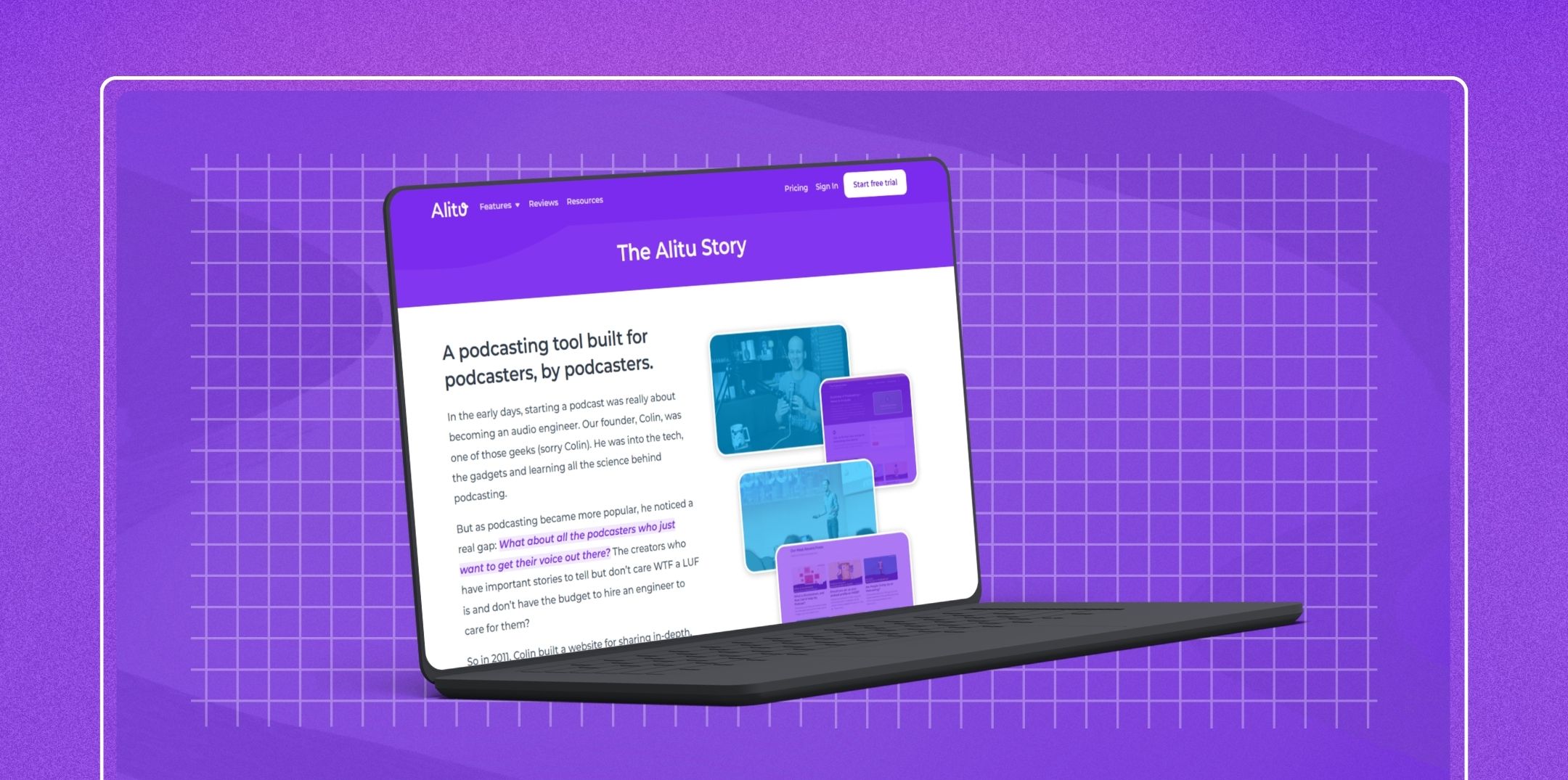
Alitu was created by Daniel J. Lewis, a respected podcaster and educator best known for The Audacity to Podcast.
For years, Daniel taught podcasters how to use Audacity, one of the most popular free audio editors in the world.
Meanwhile, over time, a clear pattern emerged.
Most podcasters:
While Audacity is powerful, it requires users to understand:
However, Daniel realized that most podcasters didn’t need more power; they needed fewer decisions. Alitu was built to remove friction, simplify production, and help creators focus on storytelling instead of software.
Alitu follows a linear, beginner-friendly workflow:
Unlike DAWs, there is no intimidating timeline, no endless menus, and no need to tweak dozens of settings.
Meanwhile, the platform emphasizes automation + guidance, ensuring audio meets podcast standards without manual intervention.
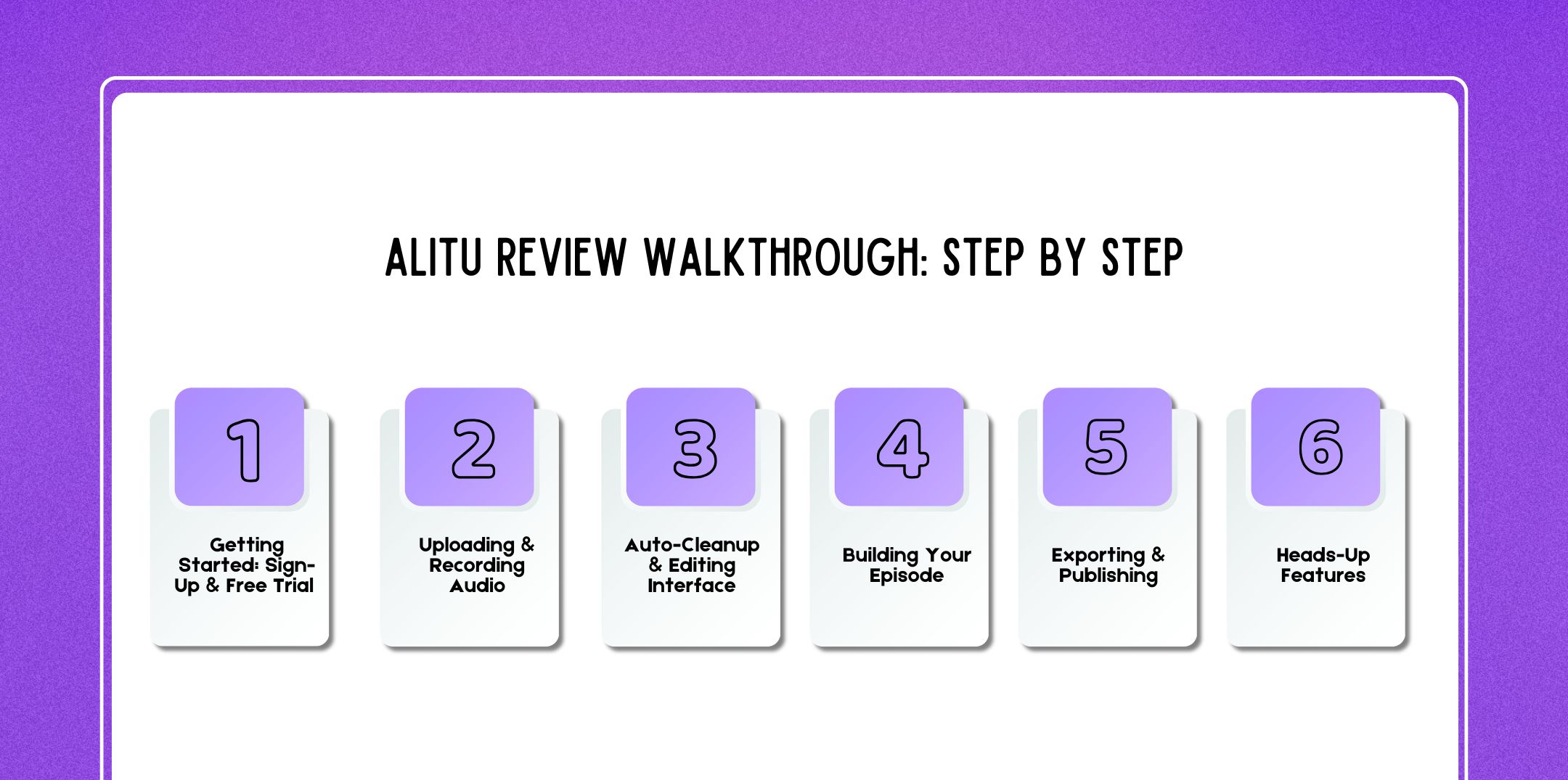
Now that you wanna try out Alitu, here are the steps to follow.
Alitu offers a free trial, allowing users to test the platform before committing financially. While signing up is straightforward and requires no downloads or installations.
Once logged in, new users are guided through:
Meanwhile, this onboarding experience alone sets Alitu apart from traditional editors.
Alitu provides multiple ways to get audio into the platform:
While not a replacement for full remote recording platforms, it handles most common podcast workflows smoothly.
This is where Alitu delivers its biggest value.
With one click, Alitu automatically:
In Audacity, these steps would require:
Alitu removes guesswork by applying preconfigured podcast presets tested across thousands of episodes.
However, the editing interface uses a block-based system, not waveforms, which:
Once audio is cleaned, you can assemble episodes using reusable blocks:
At the same time, this modular approach saves time and ensures consistency across episodes, something that’s far more tedious in Audacity or DAWs.
Exporting in Alitu is intentionally simple.
You can:
For users who often search How to Save an Audacity File as MP3, this step alone can justify Alitu’s cost.
Alitu actively alerts users if:
While these safeguards prevent common beginner mistakes.
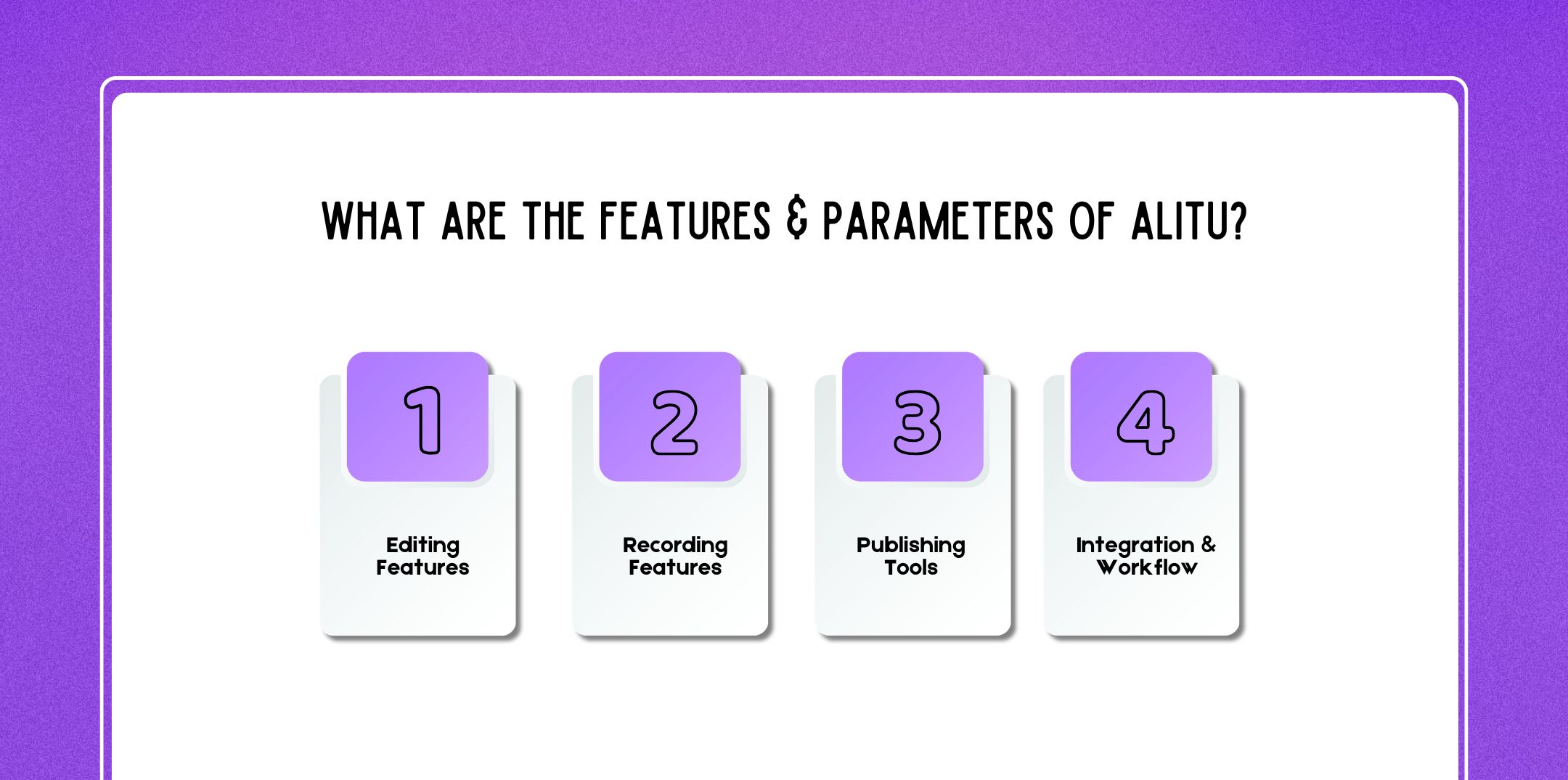
Here are a few features and parameters of Alitu that you need to know about.
While advanced sound design is limited, the platform excels at clean, professional dialogue audio.
Alitu is designed to replace multiple tools, reducing friction between recording, editing, and publishing. While integrations are limited compared to enterprise platforms, their simplicity is intentional.
To build a proper Alitu review, you need to evaluate the pros and cons of Alitu as well.
Professional podcast editing services offer:
However, they come at a premium.
Meanwhile, Alitu fills the gap between:
For creators who want control + automation without high costs, Alitu is a strong middle-ground solution.
Descript uses text-based editing, allowing users to edit audio by editing words.
Choose Alitu if:
Choose Descript if:
Podcastle focuses heavily on:
Alitu focuses on:
However, they serve different needs.
DAWs require understanding:
Alitu removes that learning curve.
As a matter of fact, Alitu offers:
Pricing includes editing tools and hosting, which increases overall value.

Here are a few best practices and expert tips when you are using Alitu.
By all means, there’s no universal length, but:
Alitu supports all formats without restrictions.
Here are a few questions and queries on the topic of Alitu review that others have asked, and you might find them helpful at the same time.
Alitu provides a complete solution for podcast editing, production, and publishing, which enables users to create podcasts without facing technical difficulties.
By all means, the platform serves its best purpose for beginner podcasters, individual podcasters, coaches, educators, and entrepreneurs.
Meanwhile, content creators who want to create professional-quality podcasts without learning audio engineering.
However, Alitu serves users who find traditional audio editing software like Audacity or Adobe Audition too complicated because they want to avoid learning how to perform noise reduction, compression, and normalization, and correct file exports.
Alitu serves as an excellent solution for users who need a solution that delivers fast performance and consistent output, and simple operation without requiring them to handle advanced functions.
Alitu uses a subscription-based pricing model, which provides customers with both monthly and annual subscription options, while customers who choose annual subscriptions receive lower pricing.
A free trial is available, allowing users to explore the platform, test the auto-cleanup features, and build full podcast episodes before committing. However, the pricing includes not just editing and production tools, but also podcast hosting.
Which makes Alitu more cost-effective compared to using separate services for editing, hosting, and publishing. For podcasters who want predictable costs and fewer tools to manage, Alitu offers strong value.
Yes, Alitu includes built-in podcast hosting as part of its subscription. The platform enables users to upload their episodes and handle show information while creating an RSS feed.
At first, the system enables podcasters to distribute their episodes to major podcast directories, which include Apple Podcasts, Spotify, and Google Podcasts, without requiring them to use an external hosting service.
The Alitu eliminates all confusing elements for novices while it makes the process of launching a podcast show easier to understand.
Yes, Alitu provides users with browser-based recording capabilities which enable them to record audio directly within the platform without needing to download third-party software.
While, this tool provides excellent support for individuals who create podcasts by themselves and for voice-over artists and those who need to produce short podcast episodes.
The recording feature delivers reliable performance for clean single-track recordings although it lacks the advanced capabilities of specialized remote recording systems.
The system works well with Alitu’s automatic content cleaning process and its editing system to produce efficient results.
Alitu can edit remote guest recordings, but with some limitations. Users can upload audio files from guests who use Zoom Riverside and other recording tools because Alitu will automatically clean and optimize the uploaded files.
Alitu does not provide users with the ability to record multiple audio tracks remotely in real time. As has been noted, the system requires its best performance when users record their audio tracks and then send them to the system for editing.
Certainly, the system provides an effective solution for podcasters who prefer simple editing methods instead of live recording capabilities.
No, Alitu does not support traditional multitrack timeline editing like Audacity, Reaper, or Adobe Audition. Instead, it uses a block-based editing system.
As a result, this design choice is intentional. By avoiding complex timelines, Alitu reduces the risk of editing mistakes and keeps the workflow simple.
While this limits advanced sound design and complex layering, it works exceptionally well for standard podcast formats such as interviews, solo shows, and educational content.
Alitu primarily exports episodes in MP3 format, which is optimized for podcast distribution and compatible with all major podcast platforms.
The MP3 files are exported using podcast-friendly loudness standards, eliminating the need to manually adjust settings or research how to save an Audacity file as MP3. But this ensures consistent playback quality across devices and streaming platforms.
Yes, Alitu is widely considered one of the best podcasting tools for beginners. However, its guided workflow, automatic audio cleanup, and minimal technical requirements make it accessible even to users with no prior editing experience.
Meanwhile, beginners benefit from not having to learn concepts like compressors, noise profiles, fade-ins, fade-outs, or normalization.
Alitu handles these processes behind the scenes, allowing creators to focus on content creation rather than technical execution.
Alitu’s auto cleanup feature applies a combination of noise reduction, compression, and loudness normalization using predefined presets specifically tuned for spoken-word podcasts.
Instead of requiring users to manually adjust tools like Audacity compressor or Audacity normalize audio, Alitu analyzes the audio and applies optimal settings automatically.
However, this ensures voices sound clear, balanced, and consistent across episodes while minimizing background noise and volume fluctuations.
Some of the best alternatives to Alitu include Descript, Podcastle, Audacity, and professional podcast editing and production companies.
• Descript is ideal for creators who prefer text-based editing and transcript-driven workflows.
• Podcastle focuses more on remote interviews and AI-powered tools.
• Audacity is a free, powerful editor suitable for users willing to learn manual editing techniques.
• Professional podcast editing companies offer hands-off production at a higher cost.
The best choice depends on your budget, technical comfort level, and production goals.
In conclusion, if you’re tired of:
Then Alitu is absolutely worth considering.
It won’t replace professional audio engineers but it doesn’t need to. Alitu exists to make podcasting accessible, fast, and stress-free, and in that role, it succeeds brilliantly.

Nabamita Sinha loves to write about lifestyle and pop-culture. In her free time, she loves to watch movies and TV series and experiment with food. Her favorite niche topics are fashion, lifestyle, travel, and gossip content. Her style of writing is creative and quirky.