How To Add Multiple Photos To An Instagram Story (And Why Your Brand Should Bother)
sibashree bhattacharya, 2 hours ago
Podcasting in 2026 is no longer just a creative outlet; it has evolved into a highly competitive digital media ecosystem.
Meanwhile, with millions of active shows available globally on Apple Podcasts, standing out requires far more than compelling conversations and polished audio.
Instead, it requires strategy. And, quite importantly, one of the most underestimated strategic tools available to podcasters today is category selection.
Although many creators invest heavily in branding, equipment, guest outreach, and promotion. However, despite those efforts, they often treat categories as a minor checkbox during setup. In reality, Apple Podcasts categories directly influence:
Therefore, if you want sustainable growth in 2026, understanding categories is not optional it is essential.
In this comprehensive guide, we will explore:
Moreover, we will connect categories to broader growth levers such as podcast marketing, podcast show notes optimization, podcast transcriptions, Podcast Advertising, and even your outreach strategy for how to get booked on podcasts.
Apple Podcasts categories are structured classification labels that define the thematic identity of your show within the Apple Podcasts ecosystem. In other words, they determine where your show “lives” on the platform.
More specifically, categories serve three core purposes:
For example:
Consequently, your category selection defines your competitive landscape. If you choose wisely, you improve your ranking potential.
Conversely, if you choose poorly, you risk competing in overcrowded spaces where visibility becomes extremely difficult.
Thus, categories are not cosmetic; they are structural.
However, understanding the mechanics behind category placement is critical. Although it may seem simple on the surface, there are several algorithmic layers involved.
Apple Podcasts allows you to select:
This distinction is crucial.
Your primary category:
Therefore, your primary category must reflect your show’s central value proposition.
On the other hand, secondary categories:
For instance, a startup podcast might choose:
As a result, the show can surface in multiple browsing pathways while still competing primarily in Entrepreneurship charts. However, strategically, this creates layered discoverability.

Categories are visible on your show page and influence how your podcast appears in:
Additionally, when users explore specific subcategories, your show competes only within that niche cluster.
Because of this, narrower subcategories often provide significantly better ranking opportunities compared to broad umbrella categories.
Now, let’s discuss what many creators overlook: categories influence algorithmic context.
Meanwhile, Apple Podcasts considers signals such as:
However, those signals are evaluated within your selected category.
Therefore:
In other words, category selection directly impacts your probability of ranking.
Furthermore, when combined with keyword-optimized podcast show notes and full podcast transcriptions, your category strengthens your overall discoverability ecosystem.
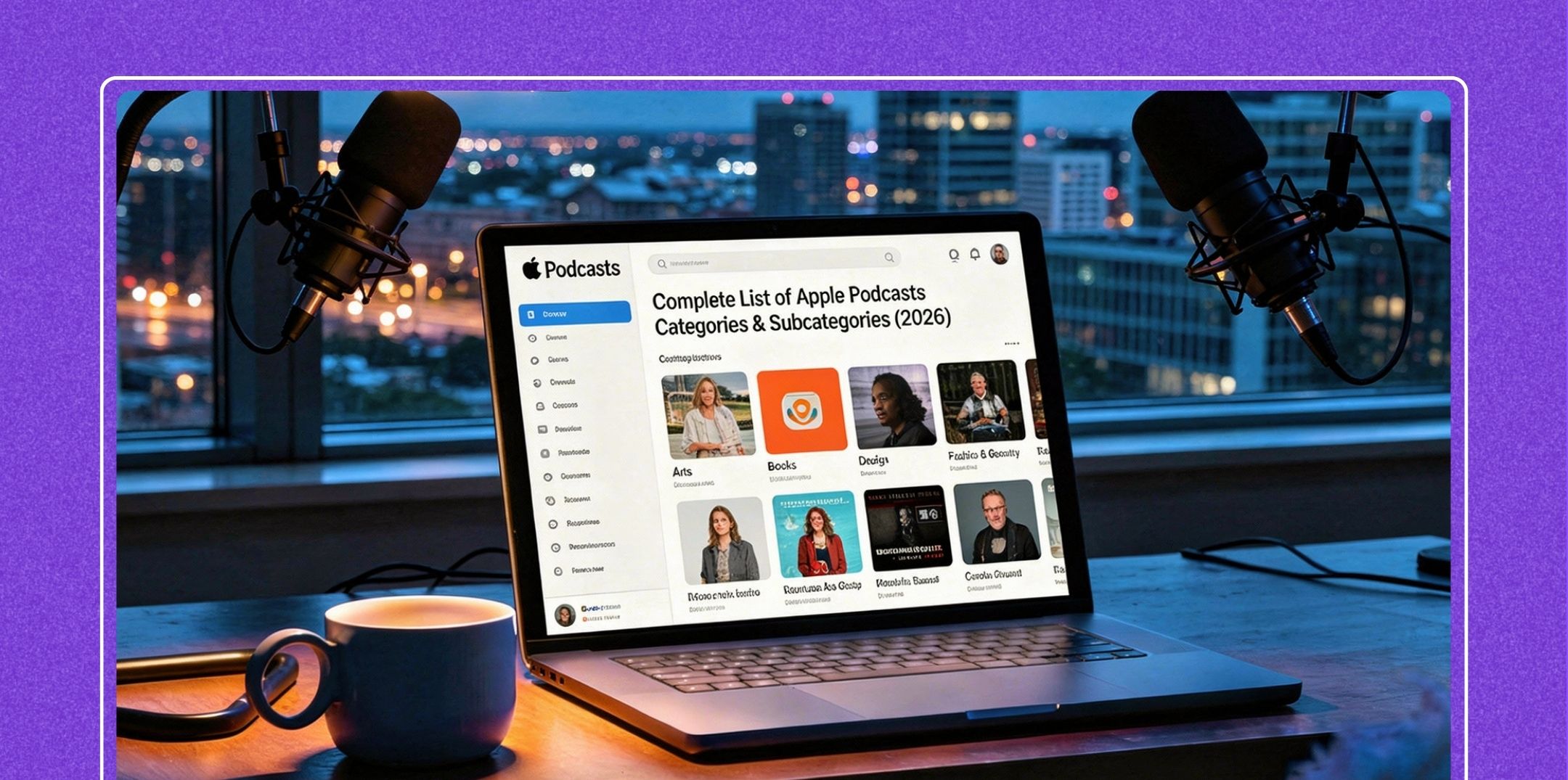
As of 2026, Apple Podcasts maintains a structured hierarchy available inside Apple Podcasts Connect.
However, below is the full breakdown:
However, because structures may evolve, it is always advisable to verify current options inside Apple Podcasts Connect before making updates.
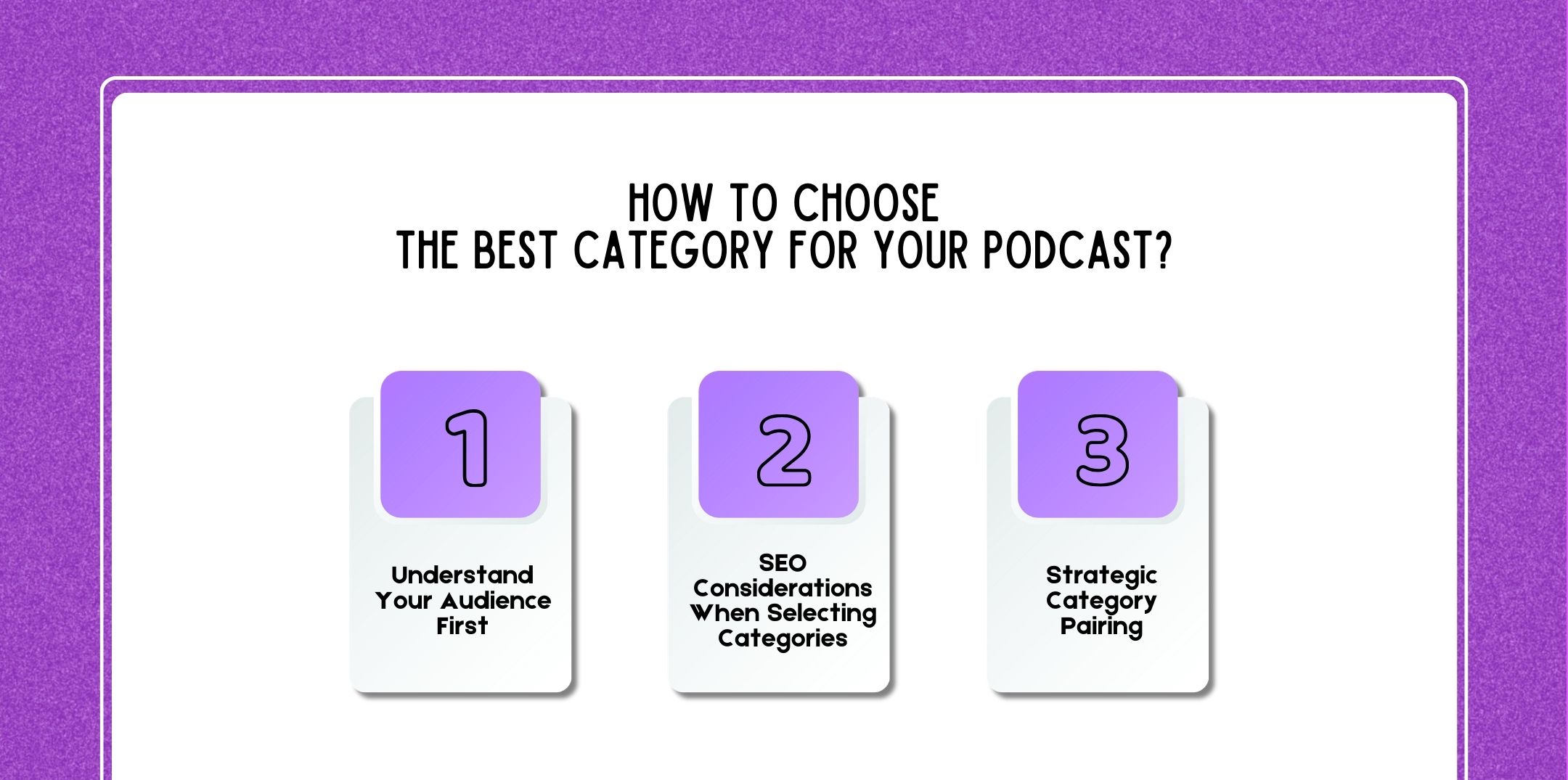
Choosing a category should be deliberate rather than instinctive.
First and foremost, clarity about your audience is essential.
Therefore, ask yourself:
For example, if your show focuses on career growth for young professionals, Business → Careers may outperform Education → Self-Improvement.
Therefore, audience alignment must come before vanity positioning.
Although categories are not traditional keyword fields, they influence contextual SEO within Apple’s ecosystem.
To maximize visibility:
Consequently, when your category, keywords, and content themes align, Apple’s algorithm gains stronger contextual clarity.
Advanced podcasters often use strategic pairing to balance:
Meanwhile, for example:
This positioning works well for a digital marketing training podcast. Thus, pairing allows you to expand reach while maintaining focus.
Also Check: Apple Podcasts Analytics: How To Find & Use These Podcast Statistics?
Since you are trying to add up categories to Apple Podcasts, you need to know how to do that.
To configure categories:
Updates typically reflect within 24–48 hours. Moreover, avoid frequent changes, as ranking momentum may reset.
If managing your own feed, use proper iTunes tags:
<itunes:category text=”Business”>
<itunes:category text=”Entrepreneurship”/>
</itunes:category>
Ensure:
If discrepancies exist, Apple Podcasts Connect settings override RSS values.
While it is quite important to know how Apple Podcasts categories work, however, here are a few best practices that you can incorporate, and at the same time, a few pitfalls to avoid.
Therefore, consistency builds algorithmic trust over time.
For instance, categories influence sponsorship targeting.
For example:
Therefore, Podcast Advertising opportunities often align with category placement.
Additionally, category clarity strengthens your authority when pitching yourself to other hosts—especially if your goal is learning how to get booked on podcasts within your niche.
Here are a few questions and queries on the topic of Apple podcast categories that others have asked, and you might find helpful at the same time.
They organize podcasts, determine chart placement, and improve discoverability within browsing and search pathways.
You may select 1 Primary Category and up to 2 Secondary Categories.
Yes. However, rankings may reset when you move categories.
Yes. While indirect, they influence contextual discoverability, especially when combined with optimized show notes and transcriptions.
Primary determines ranking charts. Secondary increases discoverability but does not override primary competition.
Log in → Select show → Show Settings → Choose categories → Save.
Historically competitive categories include:
• Society & Culture
• True Crime
• Comedy
• Business
• Health & Fitness
However, popularity varies by region.
Subcategories reduce competition pools, thereby increasing ranking probability within niche segments.
Choose the closest alternative, update RSS tags, and maintain keyword alignment in descriptions.
Core structures remain consistent globally. However, rankings and competition levels differ by country.
In conclusion, Apple Podcasts categories are far more than simple labels. Rather, they are structural positioning tools that influence discoverability, ranking potential, audience alignment, and monetization.
When combined strategically with:
…categories become part of a larger growth engine.
Ultimately, the podcasters who win in 2026 are not just creative, they are strategic.
However, choose carefully, optimize consistently, monitor intelligently, and, above all, align your category with your audience.
Although the alignment is where sustainable growth begins. However, the categories influence sponsorship targeting.
However, for example:
Therefore, Podcast Advertising opportunities often align with category placement.
Additionally, category clarity strengthens your authority when pitching yourself to other hosts, especially if your goal is learning how to get booked on podcasts within your niche.

Nabamita Sinha loves to write about lifestyle and pop-culture. In her free time, she loves to watch movies and TV series and experiment with food. Her favorite niche topics are fashion, lifestyle, travel, and gossip content. Her style of writing is creative and quirky.