How Social Media And SEO Work Together To Build Nationwide Brand Reach
Barsha Bhattacharya, 2 weeks ago
The face of podcasting has changed over the last couple of years, from a hobby that most creators began with to a full-scale content industry where audio quality, consistency, and production speed are the more significant determinants of success.
With AI-powered audio creation tools, the pressure has been taken off creators who are already multitasking between scripting, recording, editing, uploading, and marketing.
Welcome to Adobe Podcast: AI, one of the most talked-about audio enhancement platforms in 2026.
Whether you are building your first podcast studio setup, preparing your next podcast intro, or searching for tools that will enable seamless editing without compromising on quality, Adobe Podcast’s AI suite is set to deliver broadcast-level audio automatically.
This detailed review explores everything you need to know in 2026.
Before diving in, let’s address the big question. Should podcasters use AI? Absolutely, when used correctly. AI improves podcasting by:
Podcasts run on audio clarity. Even the most compelling podcast questions or storytelling won’t land if your audio is muddy, noisy, or inconsistent. AI tools bridge that gap.
So yes, AI in podcasting isn’t just useful; it’s becoming essential.
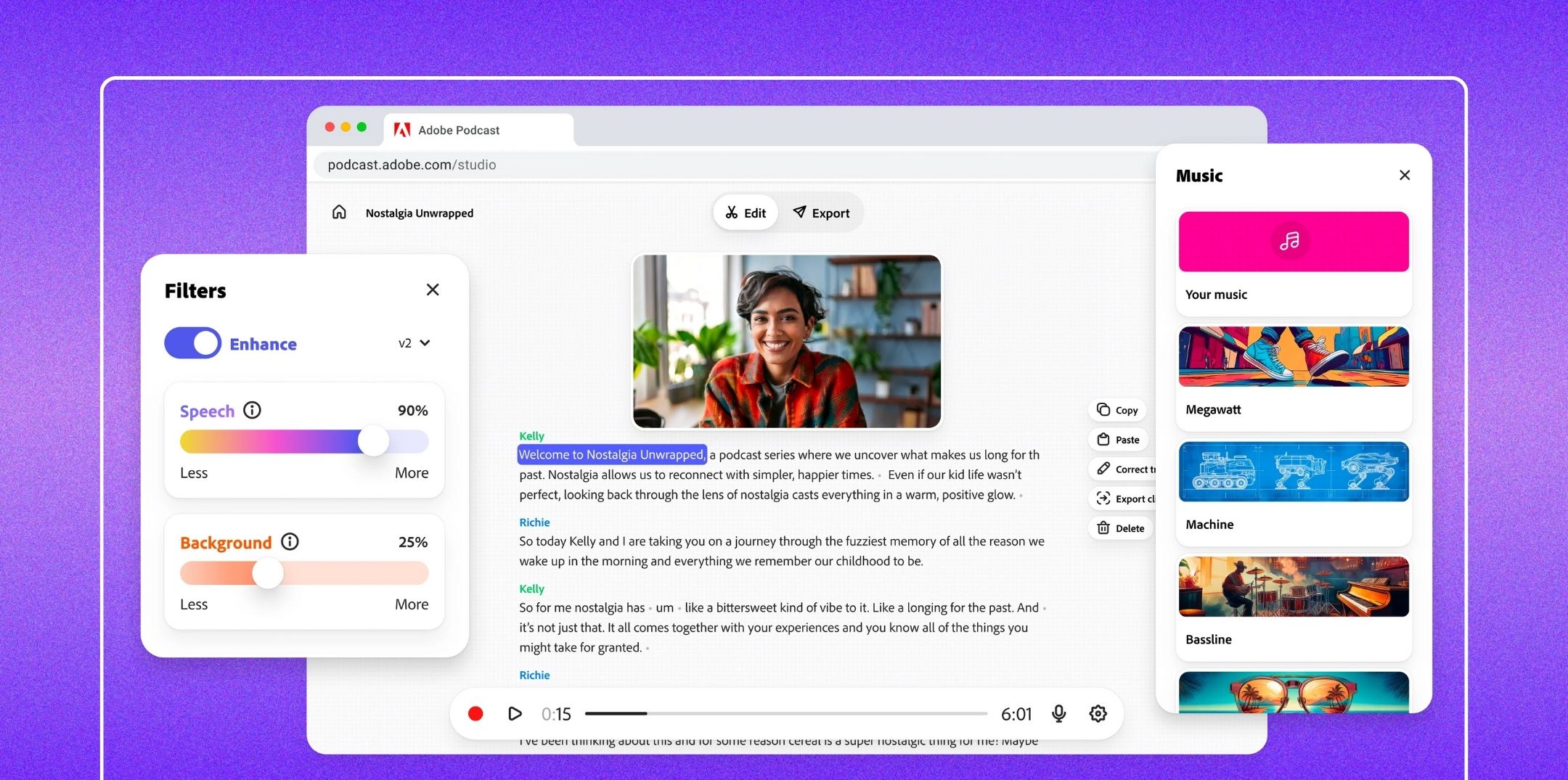
Adobe Podcast: AI is a suite of cloud-based audio tools specifically built for podcasters, educators, YouTubers, voiceover artists, and content creators. It simplifies the process by automating high-quality audio production with AI-driven enhancements.
The platform comprises three main AI tools:
Each tool handles different aspects of podcast production-from improving audio clarity to making sure your microphone setup is correct before recording.
Adobe Podcast integrates with Creative Cloud and Adobe Express, making it the go-to choice for creators already within Adobe’s ecosystem.
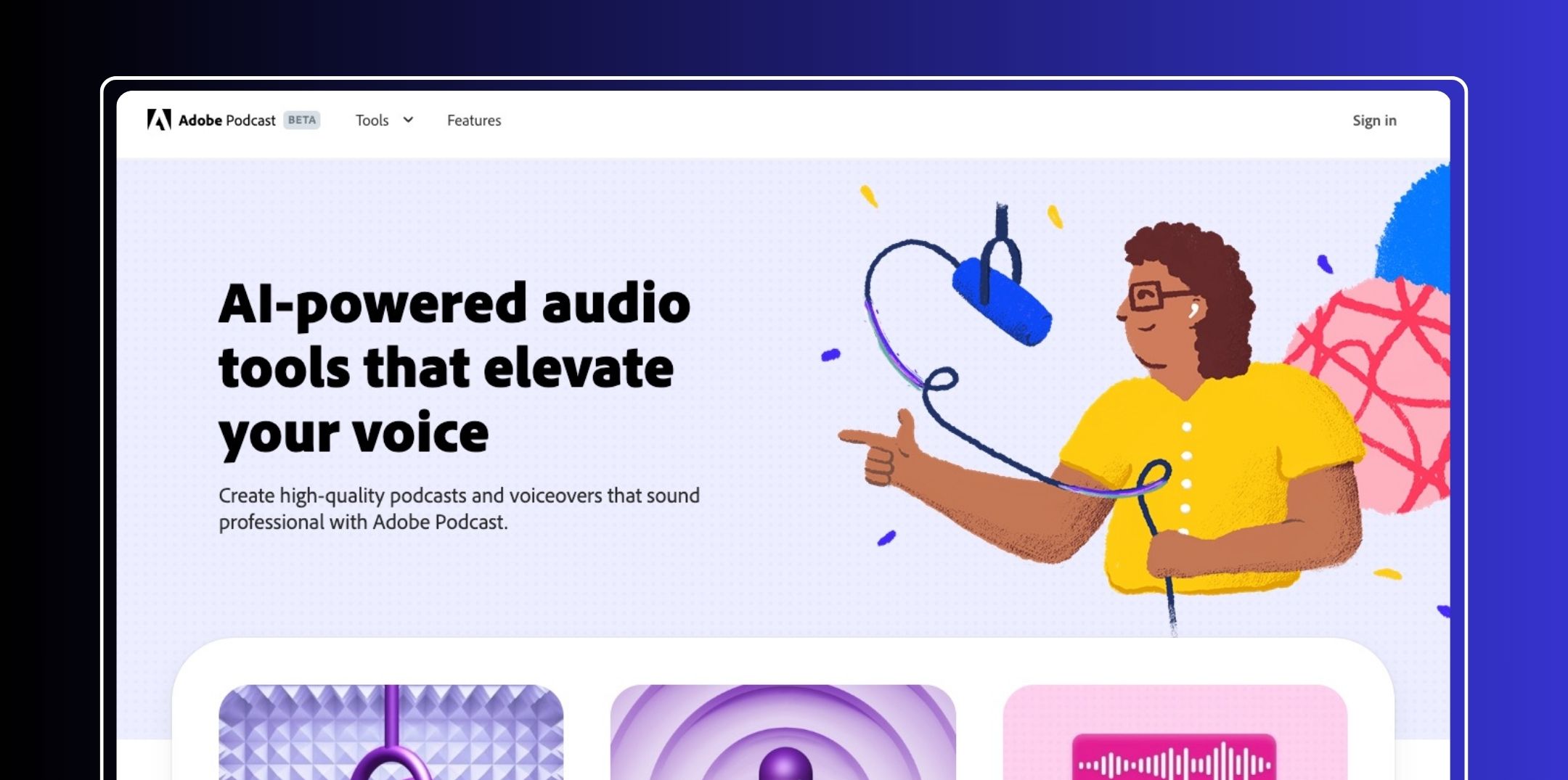
A detailed review of each tool, including how they work and what to expect, follows.
Enhanced Speech is the most used AI feature within Adobe Podcast. It will turn regular recordings into clean, studio-like audio, even with poor-quality microphones.
What it does:
It uses AI to analyze each millisecond of audio for distortions and rebuild the waveform in a smoother manner.
Processing is cloud-based and fast, even for long episodes.
Mic Check is for podcasters who want to avoid problems before they record. It analyzes your setup and provides real-time recommendations.
Mic Check evaluates;
This is particularly useful for novices when trying to learn good microphone technique.
Studio is Adobe’s next-generation AI workspace to record, edit, and mix podcasts directly in the browser.
It provides:
Assuming you get invited, here is how to use Adobe Podcast: Studio
Studio is Adobe’s attempt at competing with tools like Descript, offering a seamless browser-based alternative to Adobe Audition.
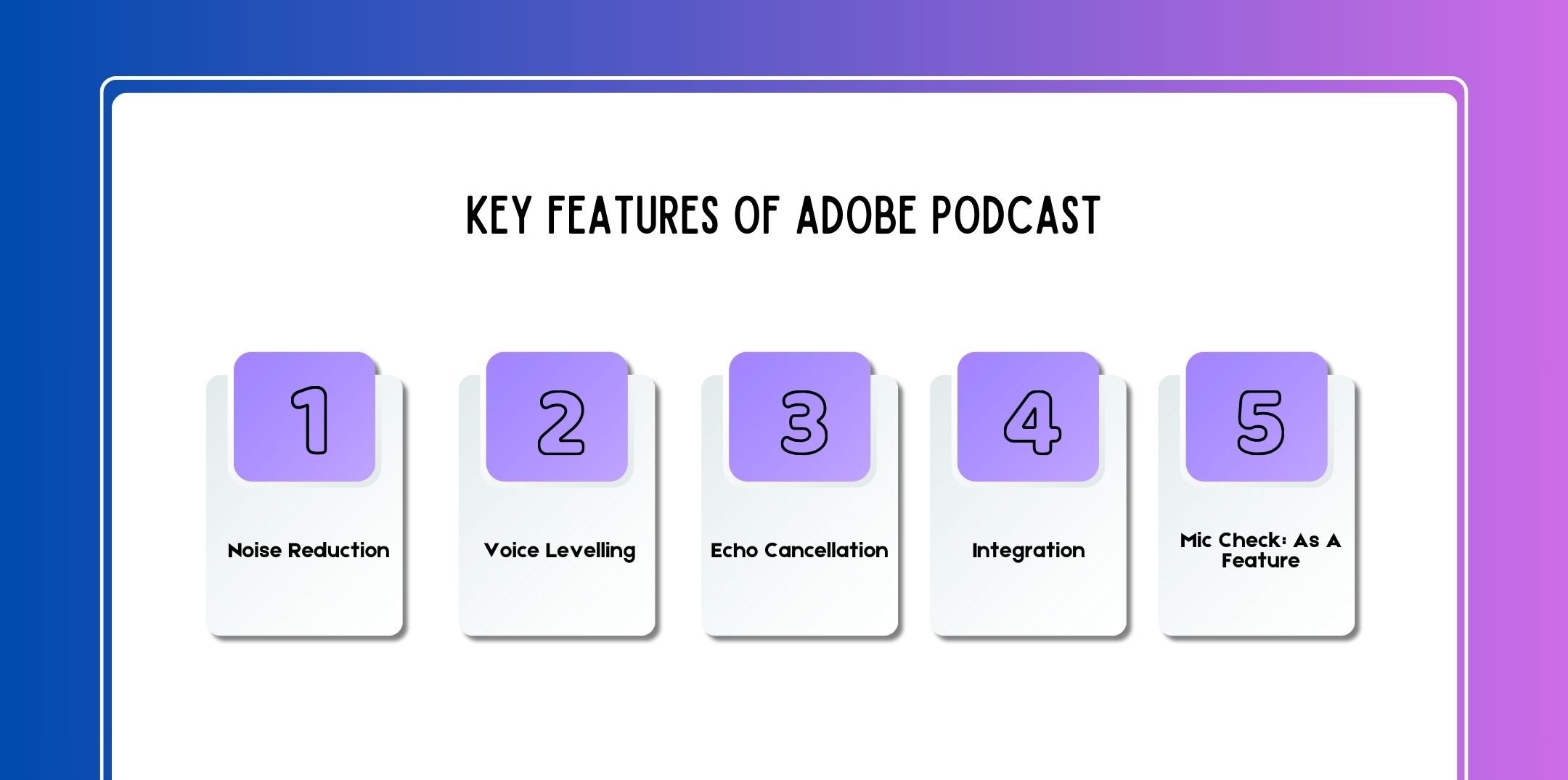
Adobe Podcast AI tools feature several industry-standard features of critical importance in professional audio.
AI removes hiss, hum, fans, traffic noise, and electrical interference while maintaining vocal clarity.
Automatically balances loud and soft vocals to create a consistent listening experience. This is so critical for episode flow and listener comfort.
Perfect for creators recording in apartments, offices, or untreated rooms. AI detects the reflections and reduces them.
Works seamlessly with:
Exporting between tools is frictionless.
Although it’s a standalone tool, it’s also deeply integrated as a pre-recording assistant inside Studio.
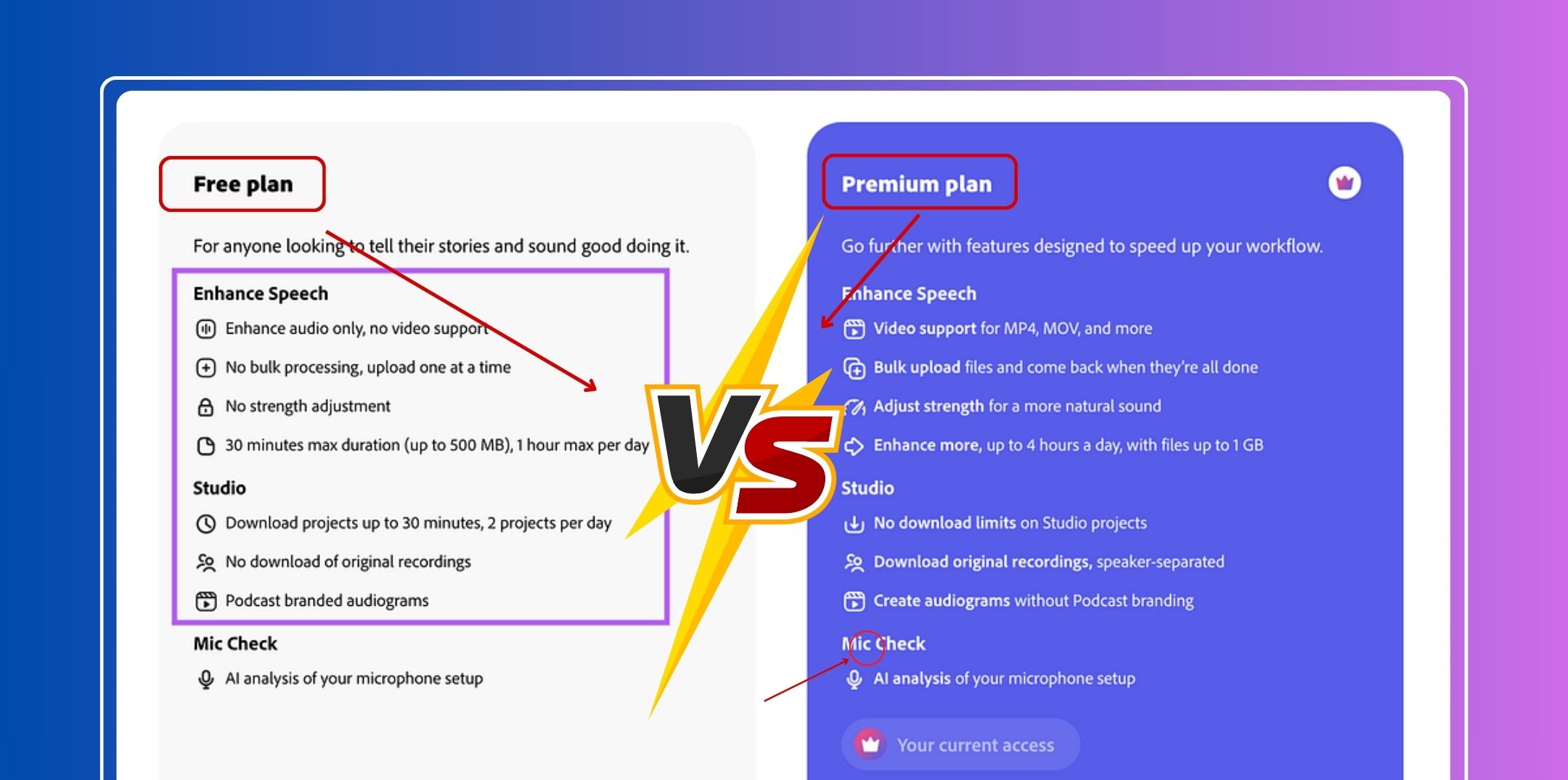
Free and paid versions are offered by Adobe.
It is worth it for a podcaster who creates shows on a weekly basis.
Adobe Podcast is perfect for:
If recordings have frequent background noise, sound echo, or other inconsistencies in quality, Adobe Podcast AI tools can vastly improve that with minimal effort.
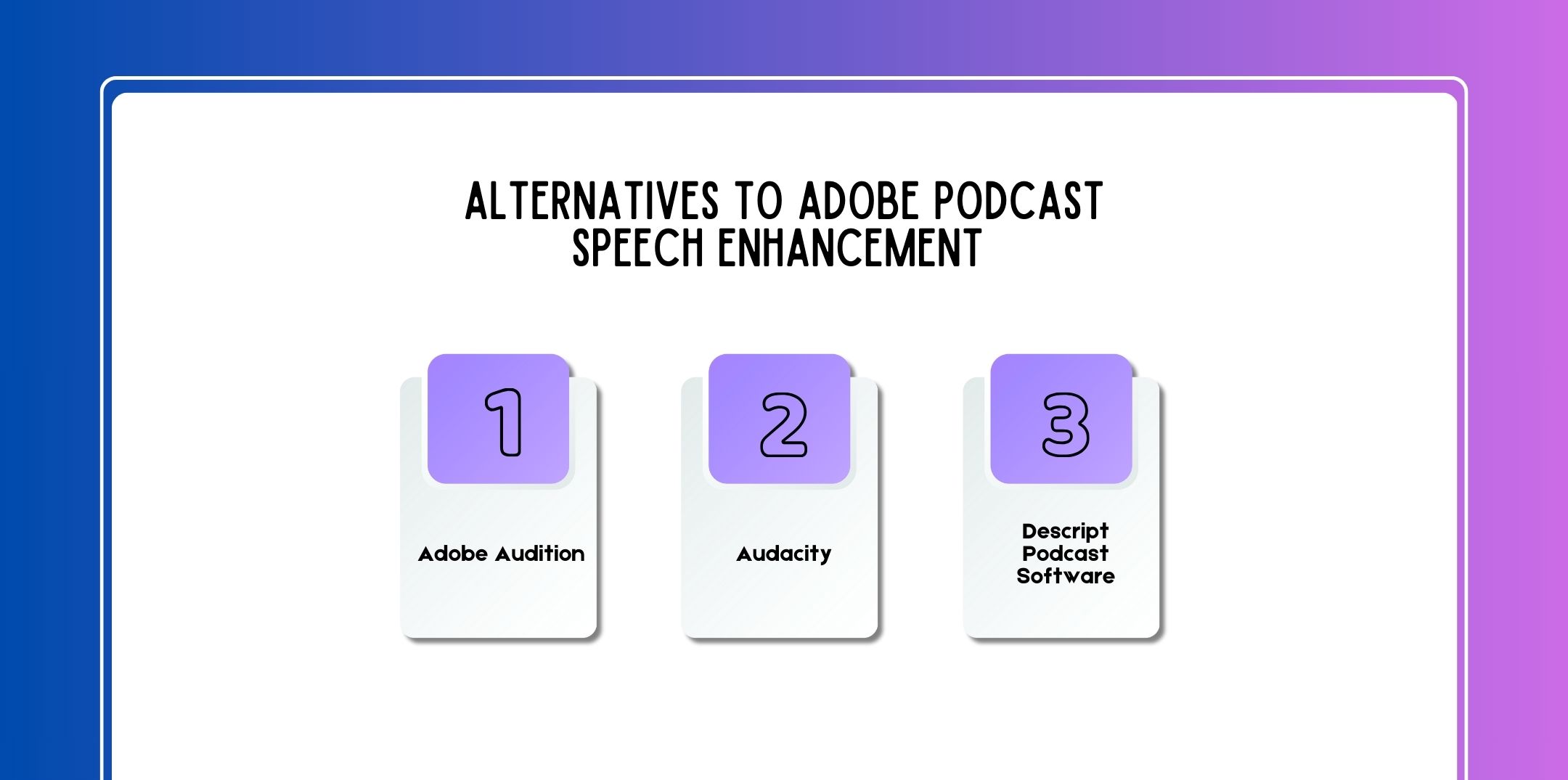
There are multiple alternatives to Adobe Podcast that you should know about.
Full-featured professional audio workstation with manual and automated noise reduction.
Free, open-source editing software with Noise Gate and Compressor plugins included.
AI-powered text-based editing and sound studio tools; the closest competitor to Adobe Enhance.
This is a platform that competes head-to-head with Adobe Podcast’s mic check feature.
Provides room noise detection, mic placement feedback, and loudness analysis.
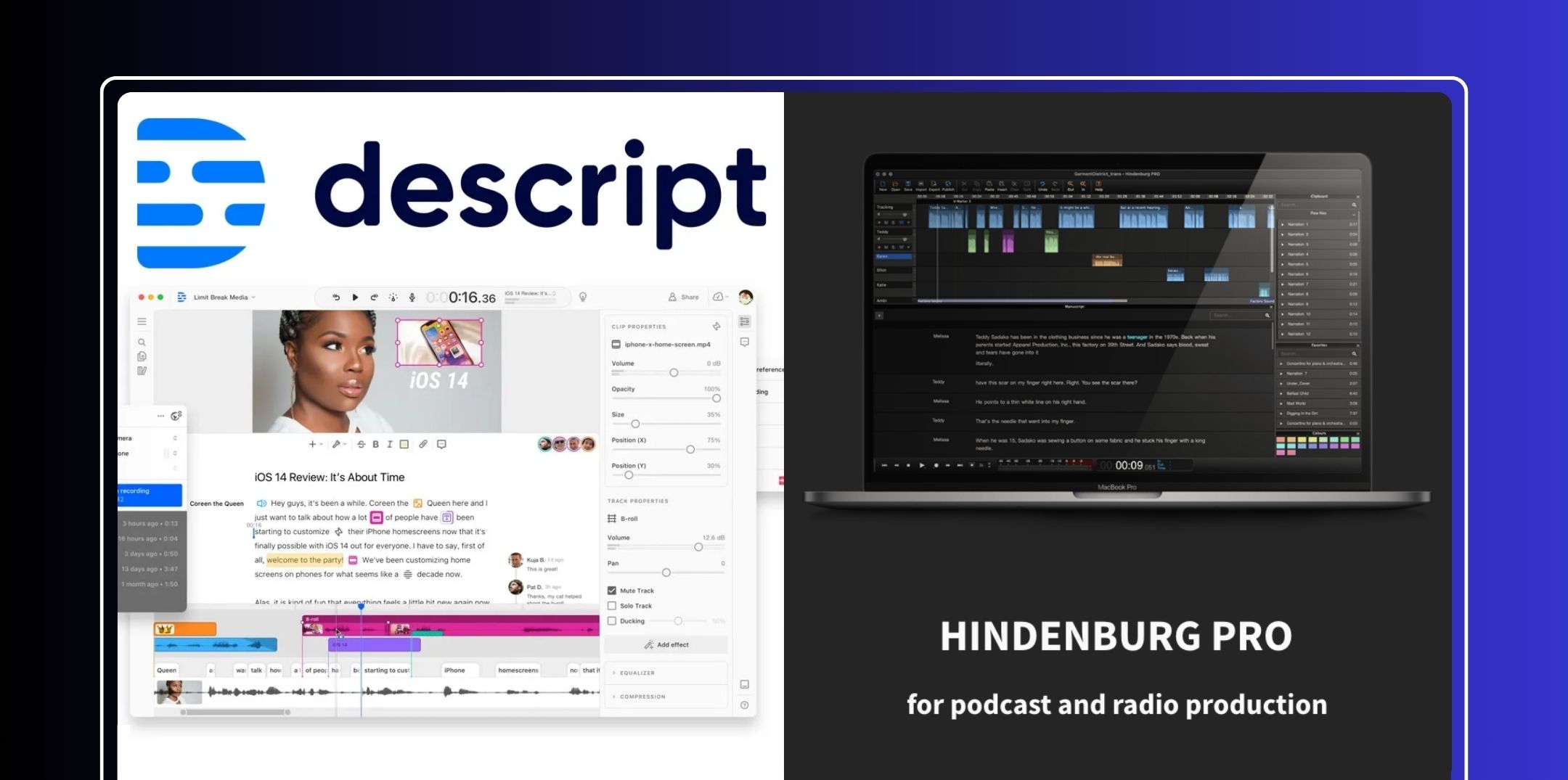
These platforms compete head-on with Adobe’s browser-based Studio:
The best overall alternative includes Overdub, filler-word removal, and text-based editing.
Preferred by journalists and audiobook producers for editing in narrative format.
Here are a few questions and queries that others have asked on the topic of the Adobe podcast that you might find helpful.
Yes, Adobe Podcast offers a free plan that includes essential tools such as Enhance Speech (up to 30 minutes per file), basic transcription, mic check, and limited project downloads.
For more advanced features like bulk processing, extended durations, and video support, a Premium subscription (~$9.99/month) is recommended.
For many creators, yes. Adobe Podcast AI simplifies workflows greatly and can replace traditional DAWs for typical podcast production.
However, professionals who need granular control over audio design might still prefer tools like Adobe Audition or Pro Tools for complex sound design.
As of 2026, Adobe Podcast does not include a built-in text-to-speech AI voice generator. While Adobe is expanding audio capabilities elsewhere, creators still need to record human voices for narration.
Yes, Adobe Podcast’s transcription is reliable and allows you to edit your audio by editing text directly.
This feature dramatically speeds up the editing process and reduces technical hurdles for new creators.
Absolutely. The platform supports remote guest recording by sending guests a link — their audio is captured in separate high-quality local tracks, making editing easier and more professional.
Mic Check uses AI to analyze your hardware and environment before recording, providing tips to optimize setup.
This reduces common issues like background noise, low capture levels, or weak signal strength especially helpful for beginners.
No, Adobe Podcast is a standalone browser app, though integration with Creative Cloud and Adobe Express enhances value for subscribers already invested in Adobe’s ecosystem.
Adobe Podcast operates one of the most powerful suites for audio enhancement currently available in the year 2026.
It makes production easier, repairs many common recording issues, and allows beginners to sound professional without expensive gear or advanced editing skills.
Whether you’re a seasoned podcaster, elevating your podcast reviews, preparing interview episodes, or just getting started, Adobe Podcast offers the powerful mix of convenience and quality.
It is not a full replacement for advanced digital audio workstations, but for most creators-especially storytellers, educators, and solo podcasters, it’s a game-changer. Adobe Podcast AI tools can make all the difference if you want a seamless workflow with studio-quality sound.

Nabamita Sinha loves to write about lifestyle and pop-culture. In her free time, she loves to watch movies and TV series and experiment with food. Her favorite niche topics are fashion, lifestyle, travel, and gossip content. Her style of writing is creative and quirky.

Barsha Bhattacharya, 2 weeks ago

Barsha Bhattacharya, 1 month ago