How To Make A Collage On Instagram Story? [Complete Guide]
Barsha Bhattacharya, 23 hours ago
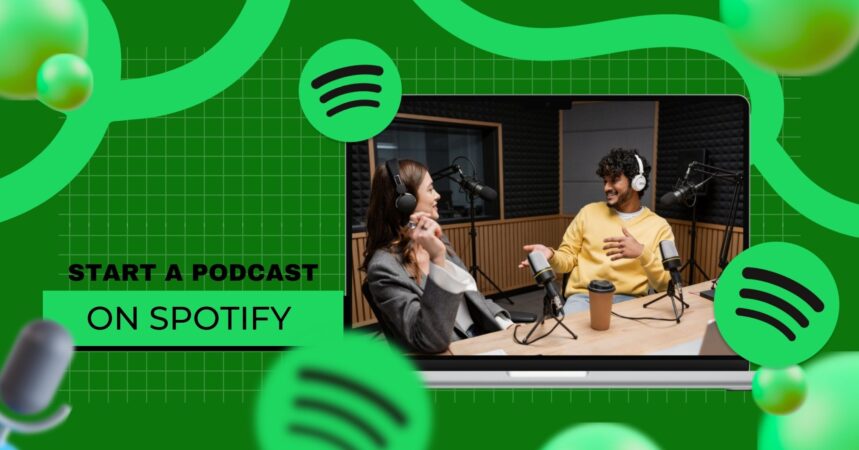
Podcasting has evolved from a niche hobby into a global media powerhouse. Today, millions of creators are building brands, communities, and income streams through audio content. More importantly, Spotify has become one of the most influential platforms for podcast distribution worldwide.
With over 500+ million users on Spotify, the opportunity to reach new listeners has never been greater. Therefore, whether you want to build authority, grow a business, share stories, or simply explore your creativity, launching a podcast on Spotify can be a strategic and rewarding move.
In this comprehensive beginner’s guide on how to start a podcast on Spotify, you’ll learn:
So, without further delay, let’s dive in.
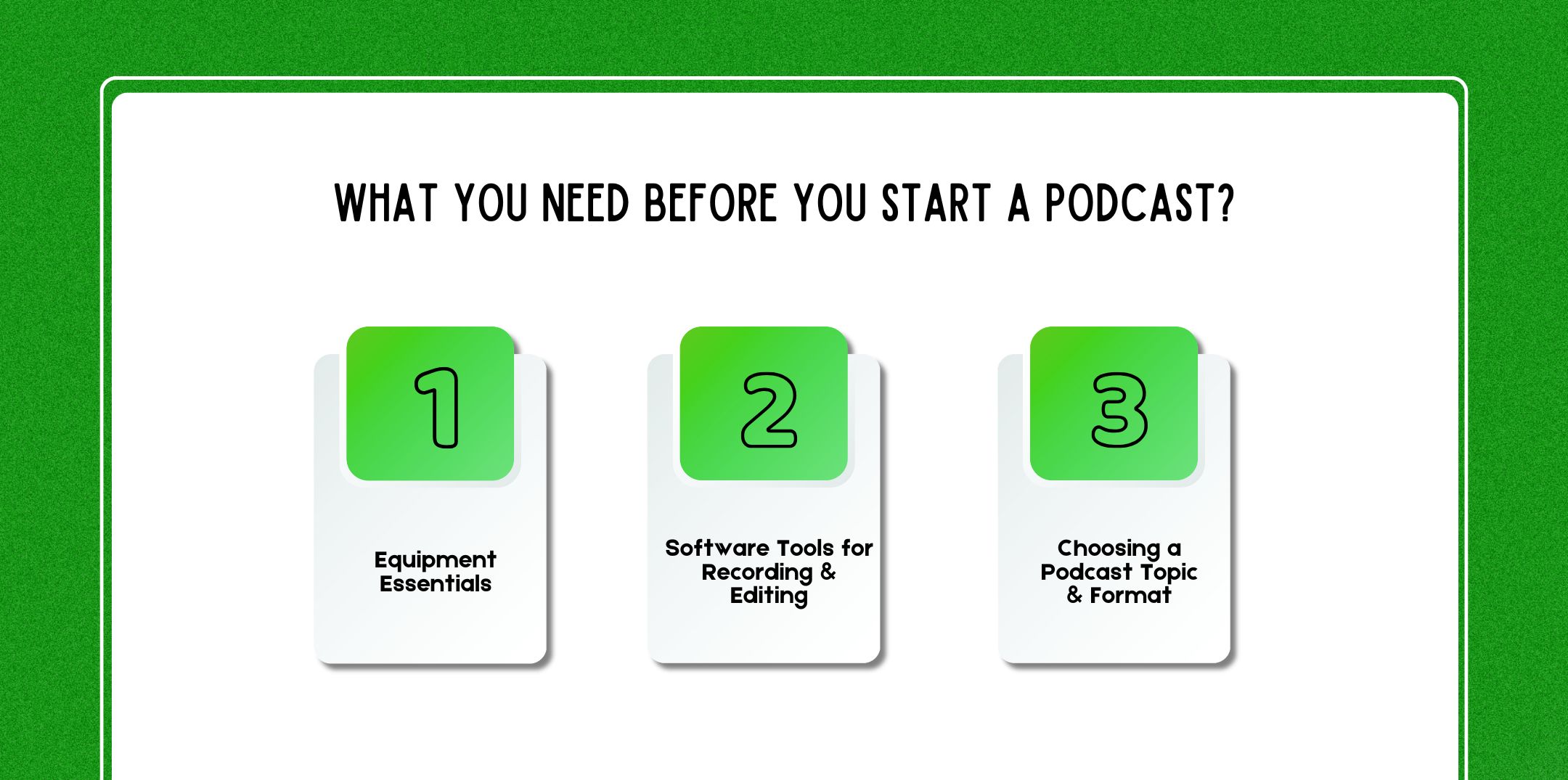
Before you record a single word, preparation is absolutely essential. Although podcasting is accessible, successful podcasts are rarely accidental. Instead, they are carefully planned and strategically structured.
First and foremost, you need clarity in three areas:
In other words, why are you starting this podcast? Who is it for? And what makes it different?
To begin with, you don’t need a professional studio. However, you do need reliable equipment.
Your microphone is the most important investment. After all, poor audio quality will drive listeners away quickly.
Popular beginner microphones include:
However, beyond the brand itself, proper mic technique matters just as much. For example:
Even more importantly, consider basic acoustic treatment. Although it sounds technical, it simply means improving your recording space. For instance:
However, as a result, your podcast will immediately sound more professional.
Next, invest in closed-back headphones. These prevent audio bleed and allow you to monitor your recording clearly.
If you’re using an XLR microphone, you’ll need an interface like:
Although USB microphones can work initially, upgrading later improves flexibility and sound quality.
Once your hardware is ready, you’ll need recording and editing software.
Meanwhile, if you plan to host remote interviews with a podcast guest, tools like Riverside or Zencastr are especially useful.
Editing shapes your final sound. Therefore, mastering podcast editing basics is crucial.
Key editing steps include:
Additionally, consistent editing builds brand identity. For example, using the same intro music and structure helps listeners recognize your show instantly.
Now comes one of the most critical decisions: your topic.
Strong podcast ideas typically fall into:
However, instead of choosing something broad, narrow your focus. For instance:
Moreover, choose a format you can sustain long-term. Consistency, after all, matters more than complexity.
At this stage, brainstorm possible podcast names. Ideally, your name should be:
Before finalizing, check availability on Spotify and other directories.
Contrary to popular belief, you cannot upload directly to Spotify without a hosting platform. Instead, you must use a podcast host that generates an RSS feed.
Let’s break this down.
Pros:
Cons:
Pros:
Therefore, if you’re serious about growth, paid hosting is generally worth the investment.
| Platform | Free Plan | Analytics | Monetization | Ease of Use |
| Buzzsprout | Limited | Strong | Yes | Very Easy |
| Podbean | Yes | Good | Yes | Easy |
| Captivate | No | Advanced | Yes | Moderate |
| Spotify for Podcasters | Yes | Integrated | Yes | Very Easy |
Notably, Spotify also offers its own hosting solution.
Here is how you can easily set up your podcast hosting account.
However, after publishing, your host generates an RSS feed, which is essential for Spotify submission.
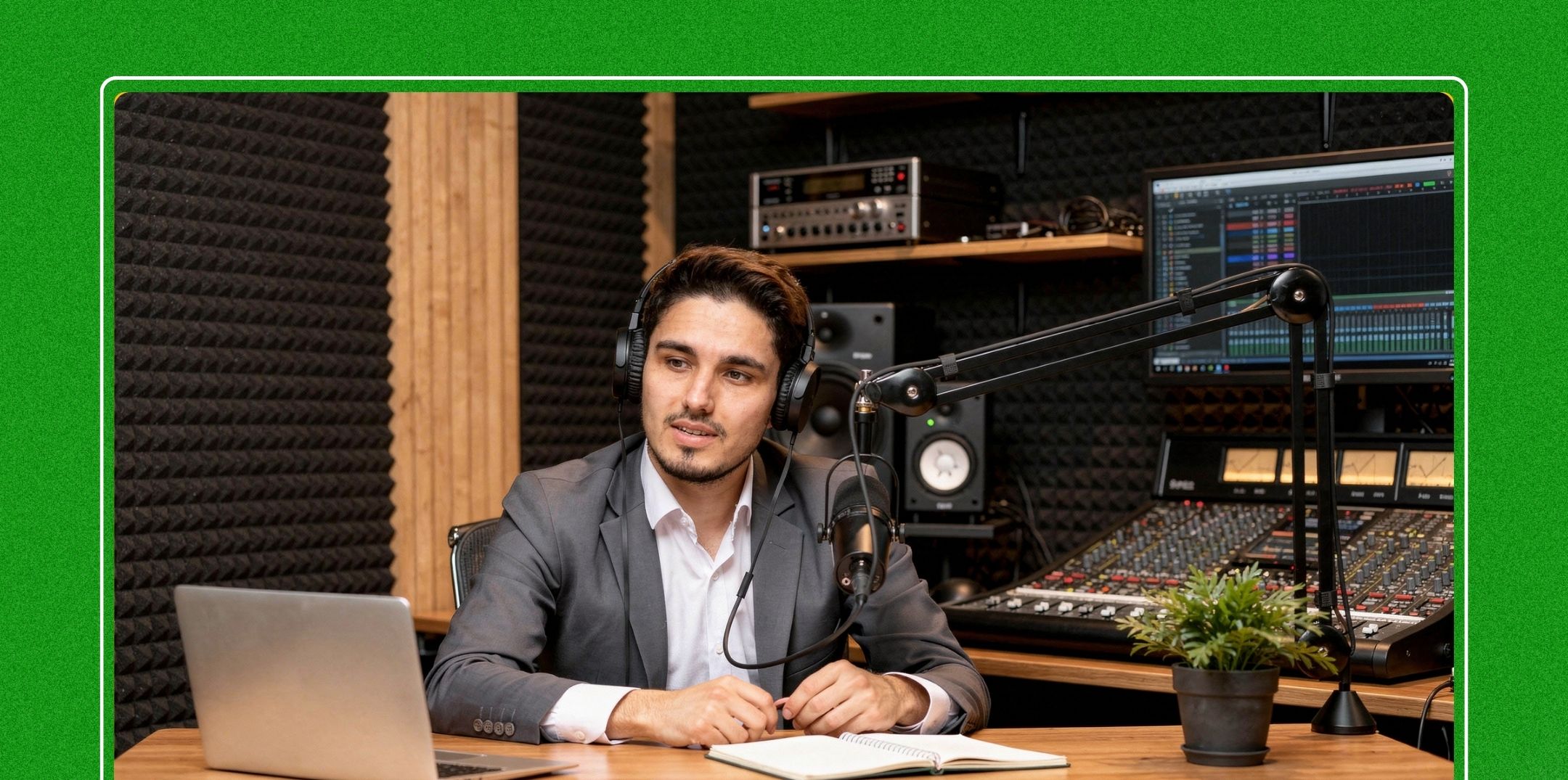
This is where your podcast becomes real.
To begin with, record in a quiet room.
Additionally:
Furthermore, structure your episode clearly:
However, if you’re interviewing a podcast guest, prepare questions in advance. Consequently, conversations will feel smoother and more engaging.
Editing is where beginners often struggle. However, following a simple workflow helps.
However, as a result, your episode will meet Spotify’s loudness standards.
Metadata determines discoverability.
Your title should be:
Additionally, your description should include natural keywords like:
However, for keyword research, tools like Listen Notes can help analyze top-ranking shows.
Spotify requires:
Importantly, avoid cluttered text. Instead, use bold, readable fonts.
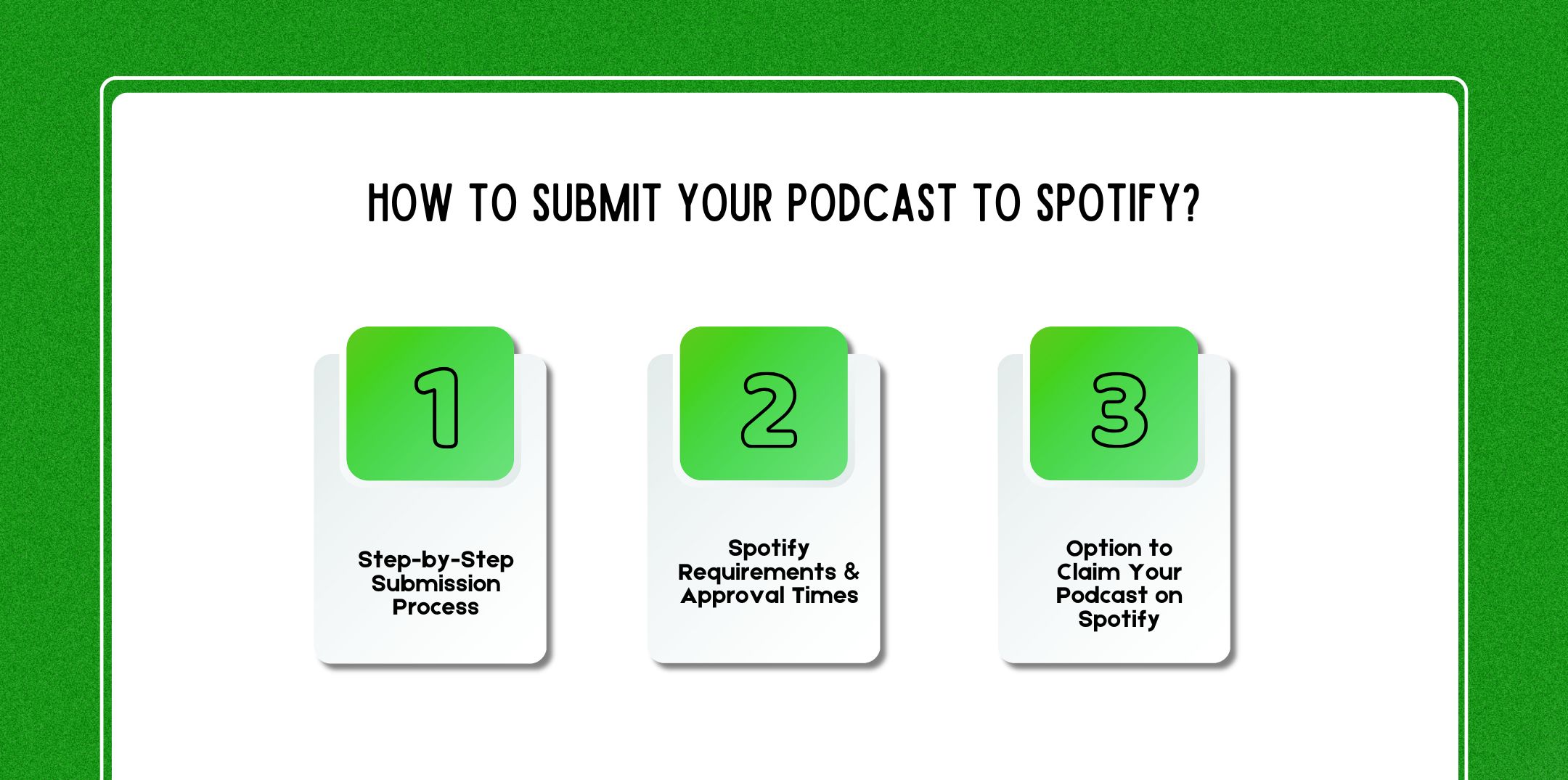
Now comes the exciting part, here you will know how to upload your podcast to Spotify.
Alternatively, if using another host, submission happens through their dashboard.
Typically, Spotify reviews podcasts within a few hours to 5 days.
However, ensure:
Otherwise, delays may occur.
Therefore, if your show is already listed, you can claim it via Spotify for Podcasters. As a result, you gain access to analytics and audience insights.
Once approved, publishing becomes streamlined.
Most hosts allow scheduling. Therefore, you can batch-record episodes and release them weekly. Consistency builds trust.
Importantly, you do NOT need to submit each episode manually. Instead, Spotify pulls new episodes automatically through your RSS feed.
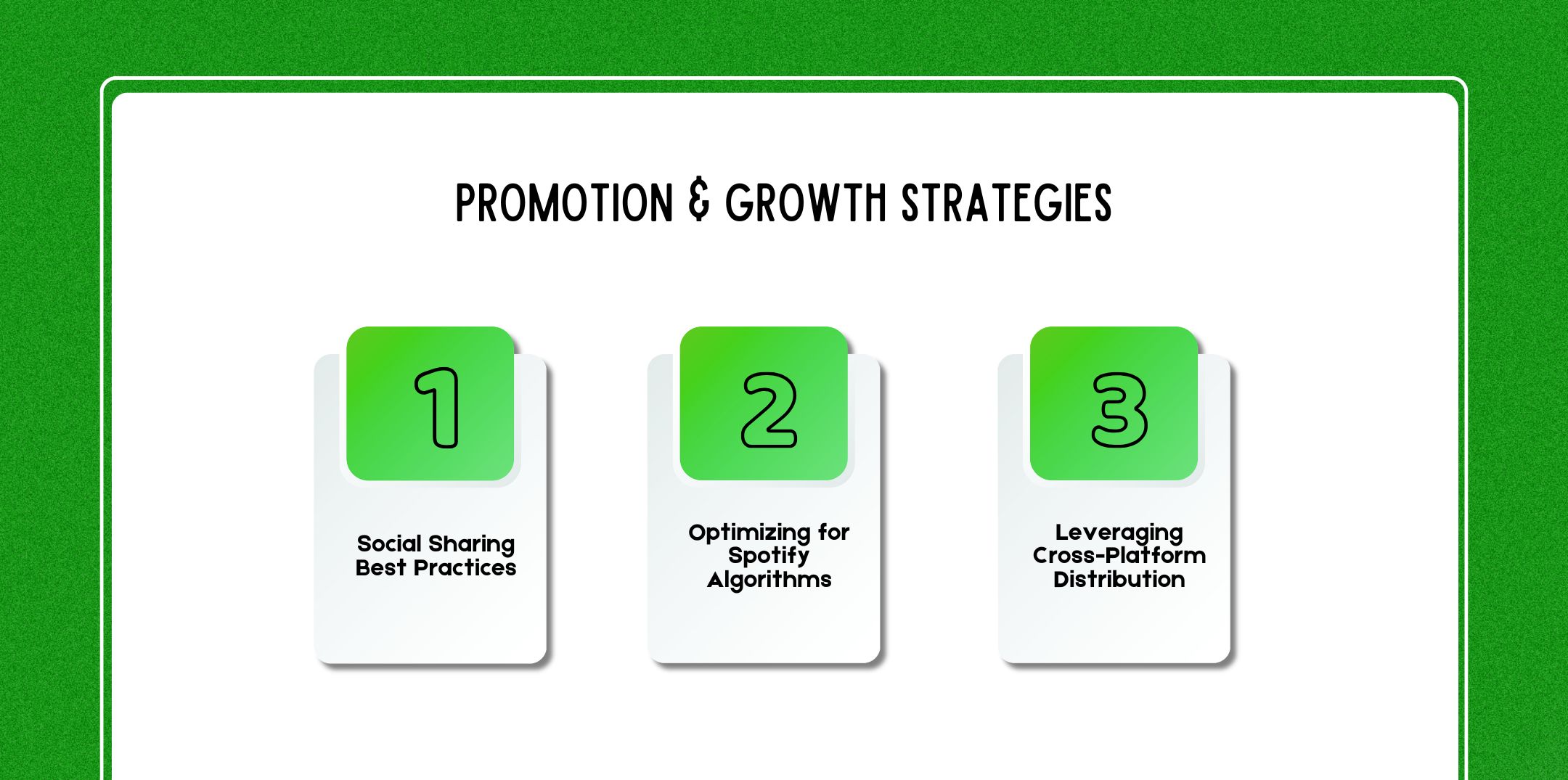
While publishing is only half of the battle. Promotion drives growth.
Share:
Furthermore, repurpose content across platforms like:
To improve visibility:
In other words, engagement signals boost ranking.
Additionally, distribute to:
For example, complete your TuneIn podcast submission to expand reach. However, cross-listing increases discoverability significantly.
Eventually, you may want to monetize.
Options include:
Therefore, as your audience grows, sponsors become more accessible.
Meanwhile, Spotify offers subscription features. Additionally, platforms like Patreon allow direct support. However, recurring revenue creates sustainability.
Above all, focus on long-term consistency rather than short-term perfection.
Here are a few questions and queries on the topic of how to start a podcast on Spotify. That others have asked that you might find helpful at the same time.
Yes. You can use free hosting platforms or Spotify for Podcasters.
Yes. Spotify requires an RSS feed.
Typically, between a few hours and 5 days.
MP3 and MP4 (for video podcasts).
Minimum 1400 x 1400 pixels.
Consequently, updates happen automatically via RSS.
Yes, Spotify supports video podcasts.
Through SEO, consistent publishing, cross-platform promotion, and engagement.
Yes, it builds anticipation.
No. RSS updates automatically.
Knowing how to start a podcast on Spotify may seem overwhelming at first. However, when broken down step by step, the process becomes manageable and even exciting.
Ultimately, podcasting rewards consistency, clarity, and audience focus.
Therefore, if you approach it strategically while continuously improving your podcast editing, branding, and promotion, your Spotify podcast can grow into a powerful long-term asset.

Nabamita Sinha loves to write about lifestyle and pop-culture. In her free time, she loves to watch movies and TV series and experiment with food. Her favorite niche topics are fashion, lifestyle, travel, and gossip content. Her style of writing is creative and quirky.