How Social Media And SEO Work Together To Build Nationwide Brand Reach
Barsha Bhattacharya, 2 weeks ago
Podcasting in 2026 is no longer just a content channel; instead, it has evolved into a full-scale media business model. Brands are steadily reallocating marketing budgets from traditional advertising into creator-led platforms because podcast audiences are:
However, while the opportunity is massive, most podcasters still struggle with:
Therefore, this is your complete, in-depth guide to podcast sponsorship in 2026, covering strategy, pricing, positioning, negotiation psychology, reporting systems, and sustainable revenue building.
Whether you’re experimenting with new podcast ideas, building authority through a podcast course, or learning how to create a private podcast for premium members, this guide will help you monetize more strategically.
Additionally, even if you’re refining your technical skills, such as mastering Audacity cut track or understanding how to save an Audacity file as MP3, the principles here will ensure your podcast evolves from a passion project into a scalable business asset.
Podcast sponsorship is a paid partnership between a podcast and a brand, where the host promotes a product, service, or initiative in exchange for compensation.
However, in 2026, sponsorship is no longer “just an ad.” Instead, it has evolved into:
In contrast to social media ads, which are often scrollable and interruptive, podcast advertisements are:
As a result, brands are increasingly prioritizing podcasts over banner ads or paid display placements, since the impact is deeper, more personal, and ultimately more conversion-driven.
Sponsors aren’t simply buying downloads.
Instead, they’re buying:
In other words, what truly matters is influence, not just volume.
For example, if your podcast teaches audio editing workflows, such as how long a podcast should be for retention optimization, or provides step-by-step tutorials on exporting properly in Audacity, then software companies will value your niche authority far more than raw download numbers.
Ultimately, relevance and trust carry significantly more weight than scale alone.
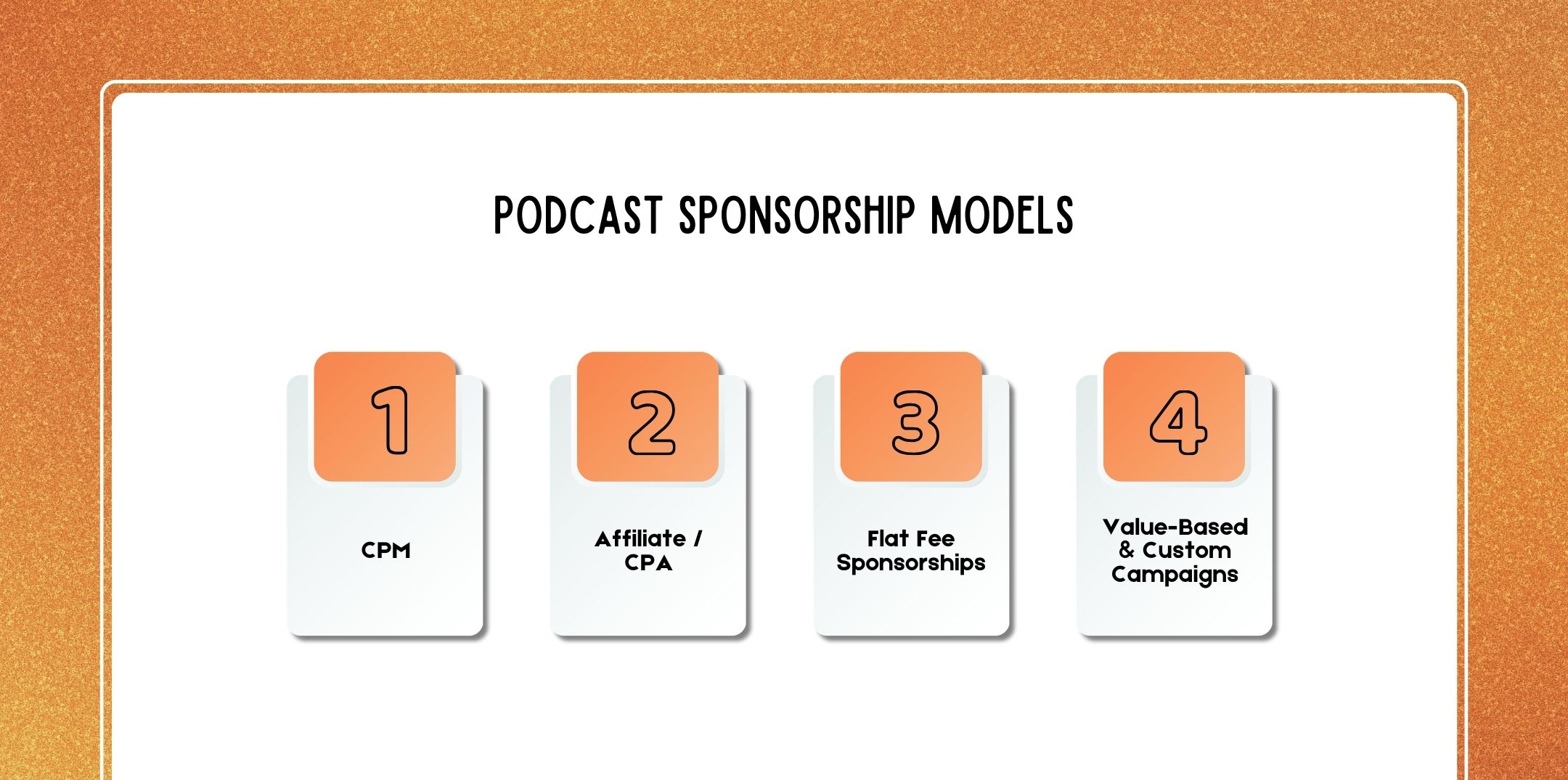
Understanding sponsorship structures is critical because the model you choose determines:
Let’s break down each model thoroughly.
CPM means “Cost Per 1,000 downloads.”
This is the industry standard for scalable advertising.
If you charge $25 CPM and your episode gets 10,000 downloads:
If you run two ads per episode:
Mid-roll commands the highest rate because:
CPM is powerful for scale, but it’s not always ideal for niche authority shows.
CPA means you’re paid when a listener takes action:
This model is common for:
If you teach how to create a private podcast, affiliate partnerships with hosting providers can generate ongoing commissions.
You may only have 1,000 downloads.
But if your audience is highly targeted and you convert at 5–8%, you could outperform a 10,000-download generalist show.
Hybrid deals (flat fee + affiliate) are becoming popular in 2026.
Flat fee deals are negotiated based on perceived value. Instead of tying compensation to downloads, you agree on a fixed amount per episode or per campaign.
Example:
Flat fee works well when:
If your podcast supports creators building monetized content systems, including launching a podcast course or refining workflow systems, education platforms may value brand alignment more than download count.
This is where serious revenue happens. Instead of selling ads, you sell outcomes.
You package:
Example Campaign:
Total value: $7,500
Custom campaigns create:
This is the future of podcast sponsorship.
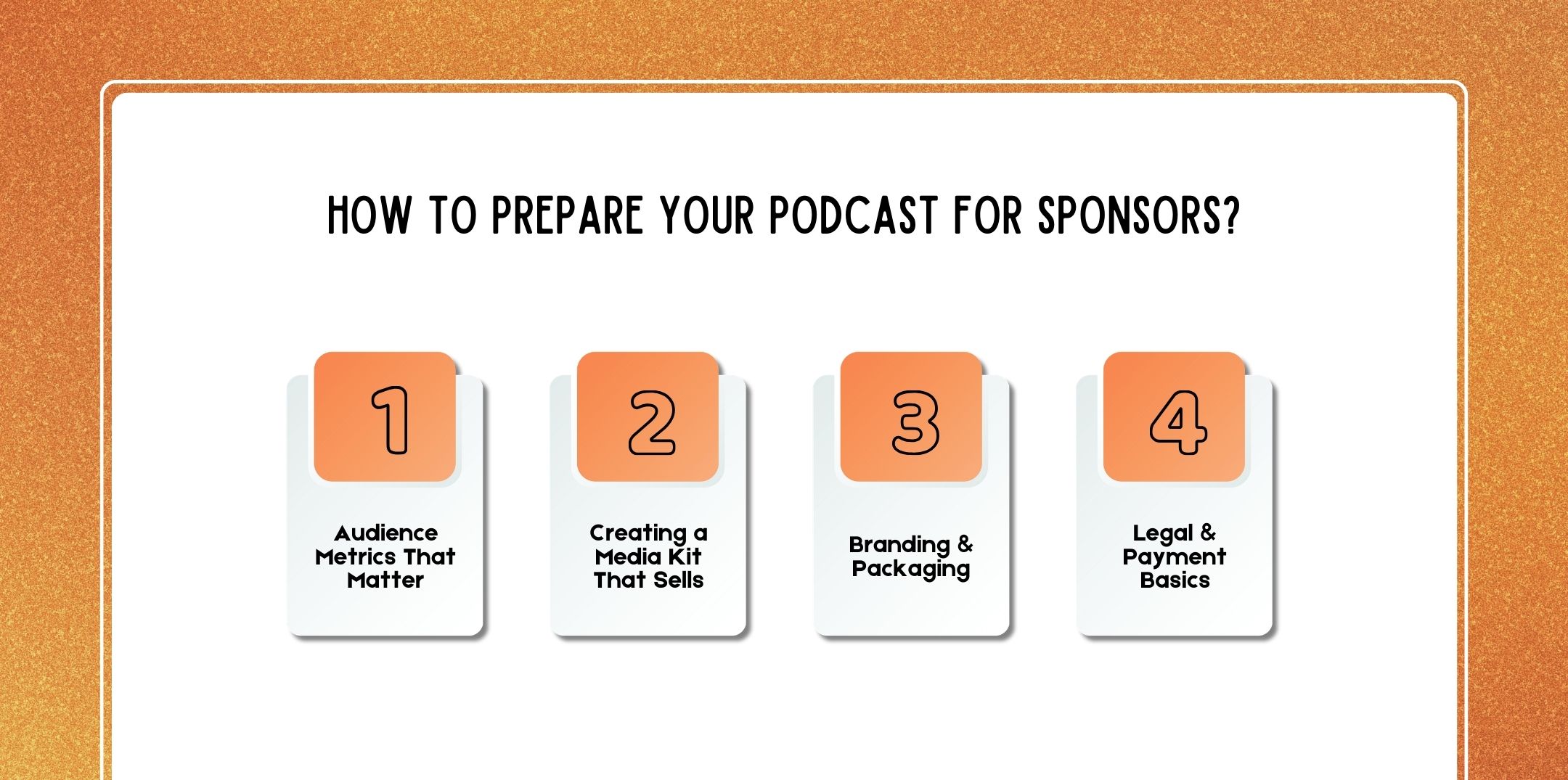
Before pitching, your podcast must look sponsor-ready.
Sponsors evaluate:
Let’s break preparation into key pillars.
Sponsors care about:
But here’s what truly matters in 2026:
If your listeners are actively searching for:
They are high-conversion listeners.
Intent beats size.
Your media kit must feel like a professional sales document.
Include:
Design principles:
Instead of:
“We get 3,000 downloads.”
Say:
“Our audience consists of 78% digital entrepreneurs actively investing in tools to grow monetized podcasts.”
Brand perception directly impacts sponsor rates.
Ask:
If you’re teaching technical content like Audacity cut track or exporting files correctly, your production must reflect expertise. Brand trust increases sponsor confidence.
Never operate informally.
Have:
Payment models:
Professional documentation builds long-term credibility.
Sponsor acquisition requires a proactive strategy.
Direct outreach gives you full control.
Direct outreach closes the highest-value deals.
Popular platforms include:
These simplify sponsorship matching.
Pros:
Cons:
Use them strategically, not exclusively.
Ideal for early monetization.
Platforms like ShareASale, Impact, and PartnerStack offer:
If your show discusses podcast ideas or monetization systems, affiliate integration can create passive income streams.
Some of the best sponsorships come from:
Relationship capital closes premium deals.
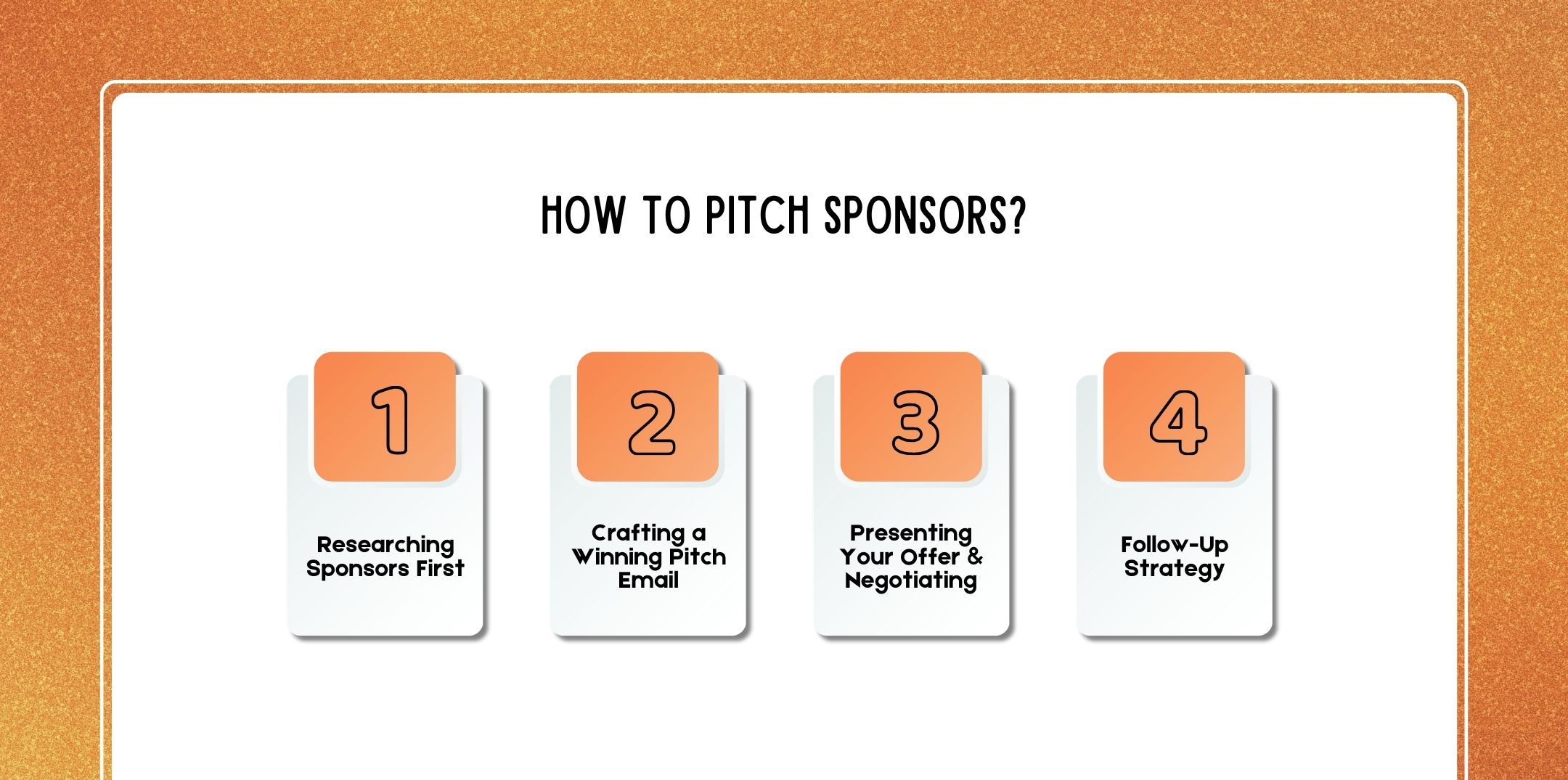
Pitching is persuasion + clarity + positioning.
Before reaching out:
Never send generic pitches.
Structure:
Keep it concise. Attach media kit. Confidence > desperation.
Always:
Instead of lowering the price, add value.
Example:
“Instead of reducing the price, we can include one additional newsletter placement.”
Negotiation is a positioning of power.
Most deals close after 2–4 follow-ups.
Timeline:
Persistence wins.
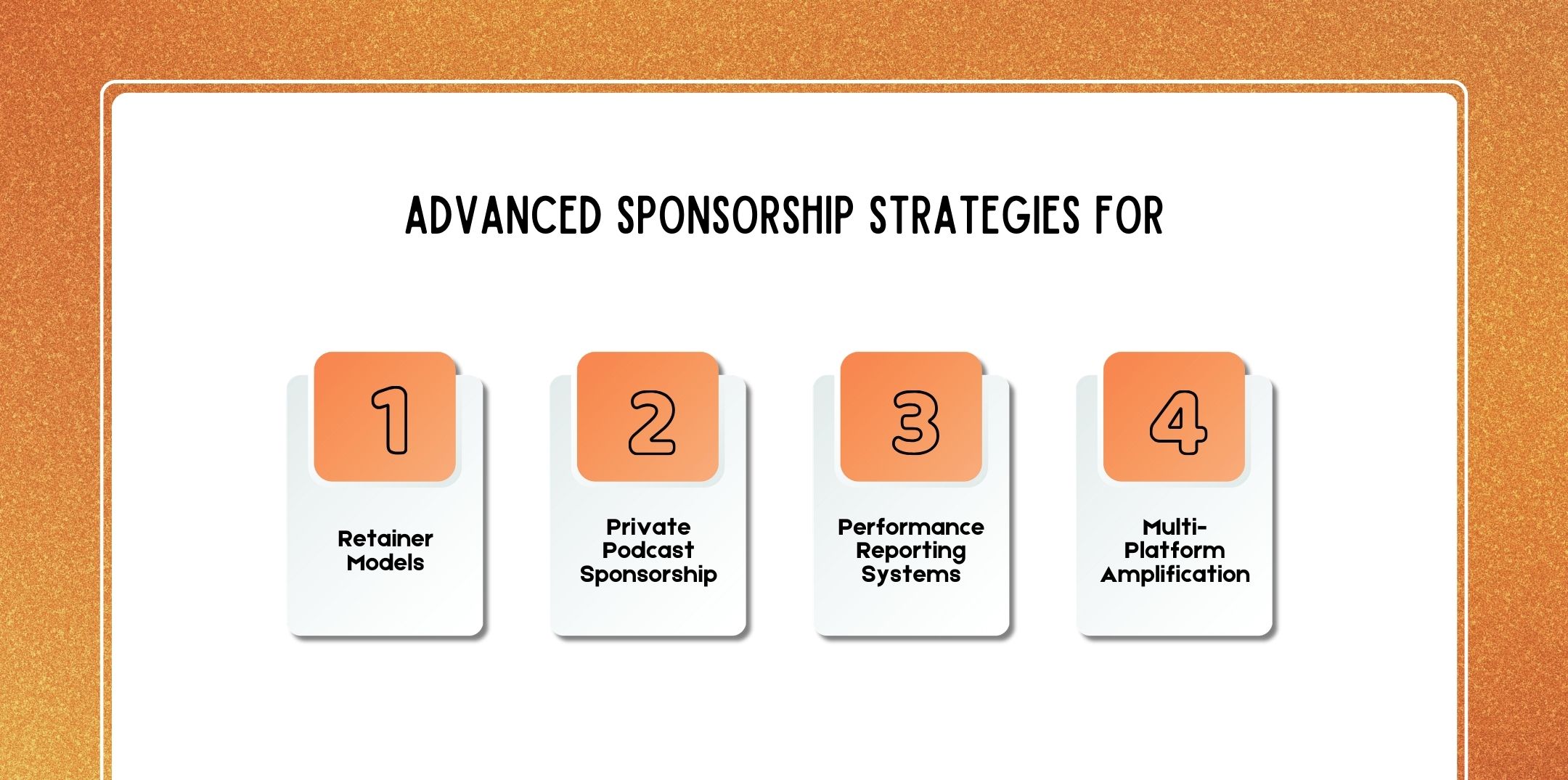
Let’s go deeper.
Offer:
Predictable income stabilizes your business.
If you know how to create a private podcast, you can:
Private feeds create premium positioning.
Sponsors stay when ROI is measurable.
Track:
Send structured reports after campaigns.
Below are expanded, strategic breakdowns of three realistic podcast sponsorship models showing exactly how positioning, packaging, and audience clarity translate into revenue.
These examples illustrate an important truth:
Niche: Audio production & podcast editing education
Focus Areas:
Average Downloads: 3,500 per episode
Release Schedule: Weekly
This podcast didn’t target “general podcast fans.”
It targeted:
Demographics:
This audience had clear purchase intent. That made it sponsor-ready even at 3,500 downloads.
The host identified two aligned sponsor categories:
Instead of pitching CPM, they pitched a value-based flat fee + affiliate hybrid.
This wasn’t a generic ad read.
It was structured as:
The sponsor offered:
Conversion rate: Approximately 4.5% of listeners clicked through.
Of those, 12–18% converted.
Because the podcast audience was already learning editing tools, the sponsor integration felt like education, not advertising.
Flat fees:$800 × 4 episodes = $3,200
Affiliate average: $700 monthly recurring commissions. However, some months were lower.
On average, stable monthly revenue: $2,500 recurring.
The sponsor didn’t see it as “buying ads.”
They saw it as:
Niche: Business growth & digital marketing strategy
Inspired by: Practical frameworks and systems similar to those discussed on Viraltips Online.
Average Downloads: 8,000 per episode
Email List: 6,500 subscribers
LinkedIn Following: 18,000
Listeners included:
Income level:
Purchase behavior:
This podcast positioned itself as:
Instead of selling per-episode ads, the host offered:
Quarterly package included:
This created multi-touch exposure. Sponsors love repetition across platforms.
$6,500 quarterly sponsorship.
Broken down:
The webinar alone generated:
Conversion rate:
Therefore, the sponsor renewed for another quarter. Because measurable results were delivered.
Mid-sized podcasts should not think in:
However, they should think:
Niche: Teaching creators how to build, monetize, and structure podcasts
Core Topics:
Average Downloads: 5,500 per episode
Email List: 4,200
Private Community: 900 members
Highly motivated:
Therefore, listeners weren’t hobbyists. They were builders. That’s a powerful distinction.
The host identified a sponsor aligned with:
Rather than pitching one-off ads, the host pitched a retainer partnership.
However, they framed the campaign as:
Notice:
Initial sponsor budget: $3,500
Host counter-offered: $5,000 with webinar included.
However, they justified pricing by:
The sponsor agreed to a $5,000 retainer for 3 months.
The host positioned themselves not as:
But as:
| Key Strategic Takeaways Across All Case Studies 1. Niche Authority Outperforms Size: 3,500 targeted listeners can outperform 15,000 random listeners. 2. Hybrid Deals Increase Stability: Flat fee + affiliate = predictable + scalable. 3. Bundling Multiplies Revenue: Podcast alone = moderate income.Podcast + email + webinar = premium income. 4. Retainers Beat One-Off Campaigns. Quarterly deals reduce income volatility. 5. Sponsors Renew When ROI Is Clear. Structured reporting = recurring revenue. |
Each podcast:
Meanwhile, none relied purely on massive downloads.
However, all relied on:
Clarity + Alignment + Value Packaging.
Here are a few questions and queries on the topic of podcast sponsorship, that others have asked, and you might find helpful at the same time.
A sponsor is a brand that compensates you for promoting its products. However, this can be a flat fee, CPM, affiliate commission, or hybrid deal. True sponsorship includes clear deliverables, payment terms, and a defined campaign period.
There’s no fixed number. Even 500–1,000 niche downloads can attract sponsors if the audience is targeted. Relevance and engagement matter more than volume.
Small shows may earn $100–$300 per episode. Mid-level podcasts can charge $500–$1,500. Larger shows can command $3,000+ per episode, depending on niche and authority.
Smaller podcasts should pitch directly. Mid-sized shows can test both networks and outreach. Established creators benefit most from direct, long-term brand relationships.
Include average downloads, audience demographics, engagement rates, email subscribers, and past campaign results. Sponsors want proof of reach and conversion potential.
At least 3 episodes. Ideally, 3–6 months for better results. Longer campaigns improve trust, recall, and overall ROI.
Yes. A contract protects payment terms, deliverables, timelines, and brand rights. Even small deals should be formalized.
Use unique links, promo codes, UTMs, and affiliate dashboards. Share post-campaign reports with clicks, conversions, and engagement data.
Yes, but limit to 2–3 per episode. Too many ads reduce trust and listener retention.
While ads are short-term placements. Sponsorships are long-term partnerships with deeper brand integration.
Podcast sponsorship in 2026 is not about waiting for massive numbers.
It’s about:
You don’t need 100,000 downloads.
You need:
Whether you’re exploring podcast ideas, building a premium podcast course, mastering editing tools like Audacity, or cutting tracks.
Or learning how to create a private podcast for high-value communities, sponsorship revenue is achievable.
Therefore, podcasting is no longer just content creation. And now you have the advanced blueprint to build sustainable, scalable sponsorship income in 2026.

Nabamita Sinha loves to write about lifestyle and pop-culture. In her free time, she loves to watch movies and TV series and experiment with food. Her favorite niche topics are fashion, lifestyle, travel, and gossip content. Her style of writing is creative and quirky.

Barsha Bhattacharya, 2 weeks ago

Barsha Bhattacharya, 1 month ago