How Long Can A Reel Be On Instagram In 2026? What 10 Years On This Platform Has Taught Me?
sibashree bhattacharya, 4 days ago
In today’s hyper-connected world, your digital footprint is constantly expanding. Every click, search, like, comment, purchase, and download leaves a trace behind.
While this digital presence enables convenience and personalization, it also exposes you to risks like identity theft, data breaches, profiling, and surveillance.
Therefore, understanding how to protect your digital footprint is no longer optional; it’s essential. In this comprehensive guide, you’ll learn everything you need to know about safeguarding your online identity.
Moreover, you’ll discover practical strategies, tools, and future trends that will help you stay secure in an increasingly data-driven world.
To begin with, your digital footprint represents your online identity. It includes both active data (like posts and comments) and passive data (such as browsing history and cookies). While many users underestimate its importance, the consequences of neglecting it can be severe.
Firstly, identity theft is one of the biggest risks. Cybercriminals can collect bits of your personal information from multiple sources and combine them to impersonate you. As a result, they may access your bank accounts, apply for loans, or commit fraud in your name.
Secondly, data brokers and advertisers constantly track your behavior. Consequently, your data is bought and sold without your explicit consent, leading to invasive targeted ads and profiling.
Thirdly, your digital footprint affects your professional reputation. Employers, clients, and even educational institutions often review your online presence before making decisions. Therefore, inappropriate or outdated content can harm your opportunities.
Fourthly, cyberstalking and harassment have become more common. Oversharing personal details makes it easier for malicious individuals to target you.
Finally, when you wanna know how to protect your digital footprint ensure privacy, control, and peace of mind. By taking proactive steps, you can significantly reduce risks while maintaining a healthy online presence.
Now that you understand its importance, let’s explore actionable strategies. These methods, when combined, create a strong defense against digital threats.
First and foremost, using a password manager is one of the simplest yet most effective steps. Instead of reusing weak passwords, you can generate and store strong, unique passwords for each account. As a result, even if one account is compromised, others remain secure.
In addition, enabling two-factor authentication adds an extra layer of security. Even if someone steals your password, they cannot access your account without the second verification step, such as an OTP or authentication app.
Moreover, a VPN encrypts your internet connection and hides your IP address. This is especially useful when using public Wi-Fi networks. Consequently, hackers cannot easily intercept your data.
Another important step is installing tracker blockers. These tools prevent websites from collecting your browsing behavior. Therefore, you reduce targeted ads and data tracking significantly.
Equally important, always keep your software and devices updated. Updates often include security patches that fix vulnerabilities. Ignoring them, on the other hand, leaves your system exposed.
Instead of traditional search engines, consider privacy-focused alternatives. These platforms do not track your searches or store personal data. As a result, your browsing activity remains private.
Over time, you may create multiple online accounts and forget about them. However, inactive accounts can still store personal data. Therefore, regularly deleting unused accounts minimizes exposure.

Data brokers collect and sell your personal information. Fortunately, many allow you to opt out. Although the process can be time-consuming, it significantly reduces your digital footprint.
While not foolproof, private browsing modes prevent your browser from saving history, cookies, and form data. Consequently, it adds a basic layer of privacy during sessions.
Social media platforms often default to public settings. Therefore, adjusting your privacy settings ensures only trusted individuals can view your content.
Before sharing anything online, ask yourself: “Would I be comfortable with this being public forever?” Because once posted, content can be copied or archived, even if deleted later.
Before entering sensitive information, check if a website uses HTTPS. A secure connection ensures your data is encrypted during transmission.
For communication, choose apps that offer end-to-end encryption. This ensures that only you and the recipient can read the messages.

When shopping online, virtual credit cards provide temporary card numbers. As a result, your real financial details remain protected from breaches.
Finally, review app permissions regularly. Many apps request unnecessary access to contacts, location, or the camera. By limiting permissions, you reduce data exposure.
Related: How To Delete Your Digital Footprint (Complete Step-by-Step Guide For 2026)?
To simplify the process, several tools are available. Below is a comparison table to help you choose the right ones:
| Tool Type | Purpose | Examples |
| Password Manager | Secure password storage | Bitwarden, 1Password |
| VPN | Hide IP and encrypt traffic | NordVPN, ProtonVPN |
| Data Removal Services | Remove personal data from brokers | Incogni, DeleteMe |
| Privacy Browsers | Block tracking | Brave, Firefox |
These tools, when used together, create a comprehensive privacy ecosystem.
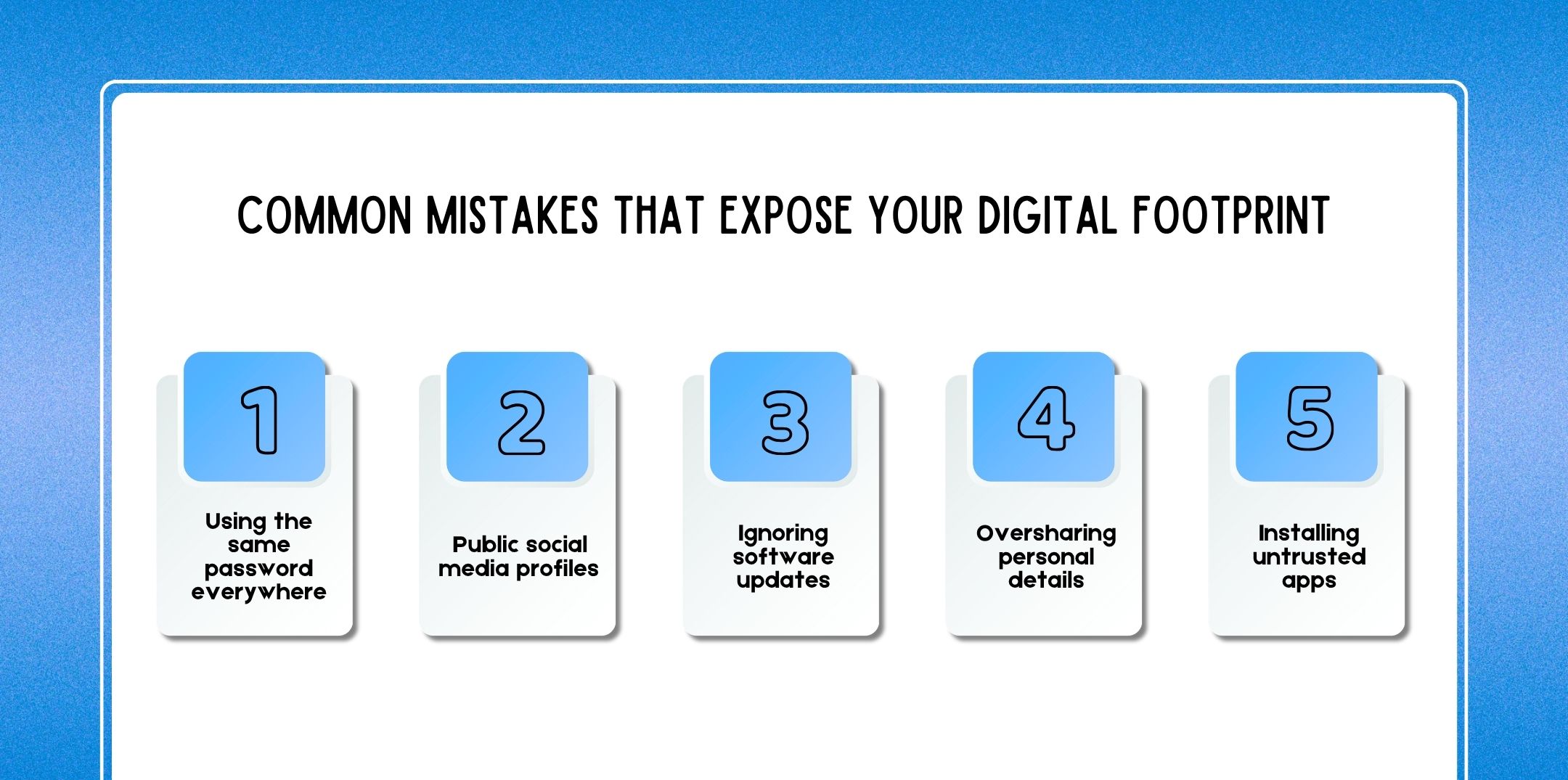
Despite best intentions, many users make critical mistakes. Therefore, being aware of them is equally important.
Reusing passwords increases risk significantly. If one account is breached, attackers can access multiple platforms.
Leaving profiles public exposes personal details to strangers. Consequently, it increases risks of stalking and identity theft.
Skipping updates may seem harmless; however, it leaves vulnerabilities open for exploitation.
Sharing information like your address, phone number, or travel plans can be dangerous. Therefore, always limit what you disclose online.
Downloading apps from unknown sources can introduce malware. As a result, your data may be stolen without your knowledge.
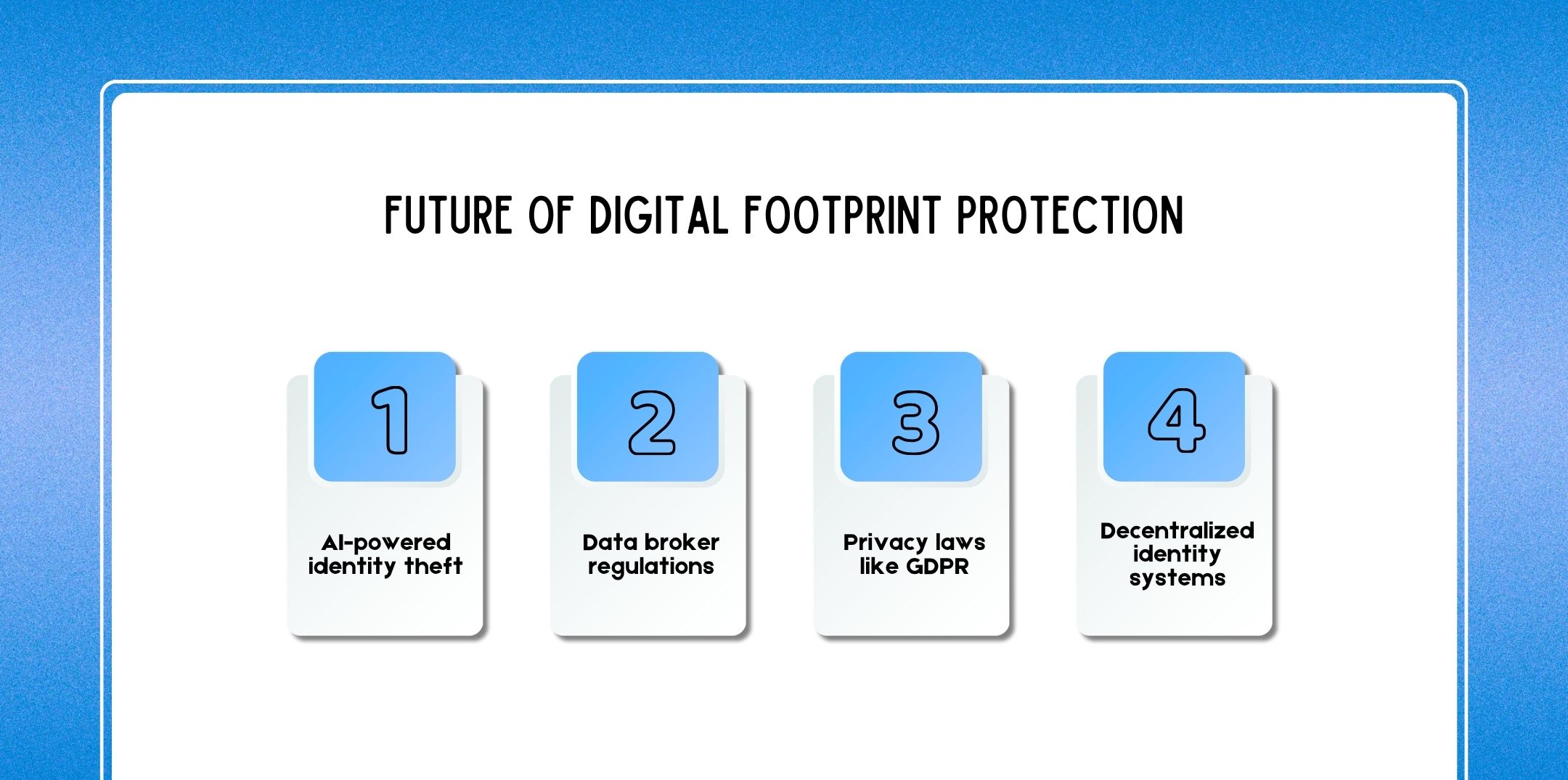
As technology evolves, so do privacy challenges. Let’s explore what lies ahead.
Artificial intelligence is making cyberattacks more sophisticated. For instance, deepfakes and automated phishing attacks are becoming harder to detect. Therefore, stronger security measures will be necessary.
Governments are increasingly regulating data brokers. Consequently, companies may be required to be more transparent about data collection and usage.
Regulations such as the General Data Protection Regulation have set global standards for data protection. As similar laws emerge worldwide, users will gain more control over their data.
In the future, decentralized identity systems may allow users to control their personal data without relying on centralized platforms. This could significantly reduce data breaches.
In conclusion, knowing how to protect your digital footprint is a continuous process rather than a one-time task.
As technology evolves, so do the methods used by cybercriminals. Therefore, staying proactive, informed, and cautious is essential.
By implementing the strategies discussed above, you can significantly reduce your online exposure. Moreover, using the right tools and avoiding common mistakes will strengthen your digital security even further.
Ultimately, your digital footprint is a reflection of your online identity. Taking control of it not only protects your privacy but also ensures a safer and more secure digital future.
Additional Resources:

Nabamita Sinha loves to write about lifestyle and pop-culture. In her free time, she loves to watch movies and TV series and experiment with food. Her favorite niche topics are fashion, lifestyle, travel, and gossip content. Her style of writing is creative and quirky.

sibashree bhattacharya, 4 days ago

Subham Kamila, 4 days ago